 Historical Figure MBTI
#1325 · 10-3-26 · The Heian–Kamakura Transition
Hōjō Masako
Dynastic Matriarch · Defender of the Kamakura Government
1157–1225
6 min read
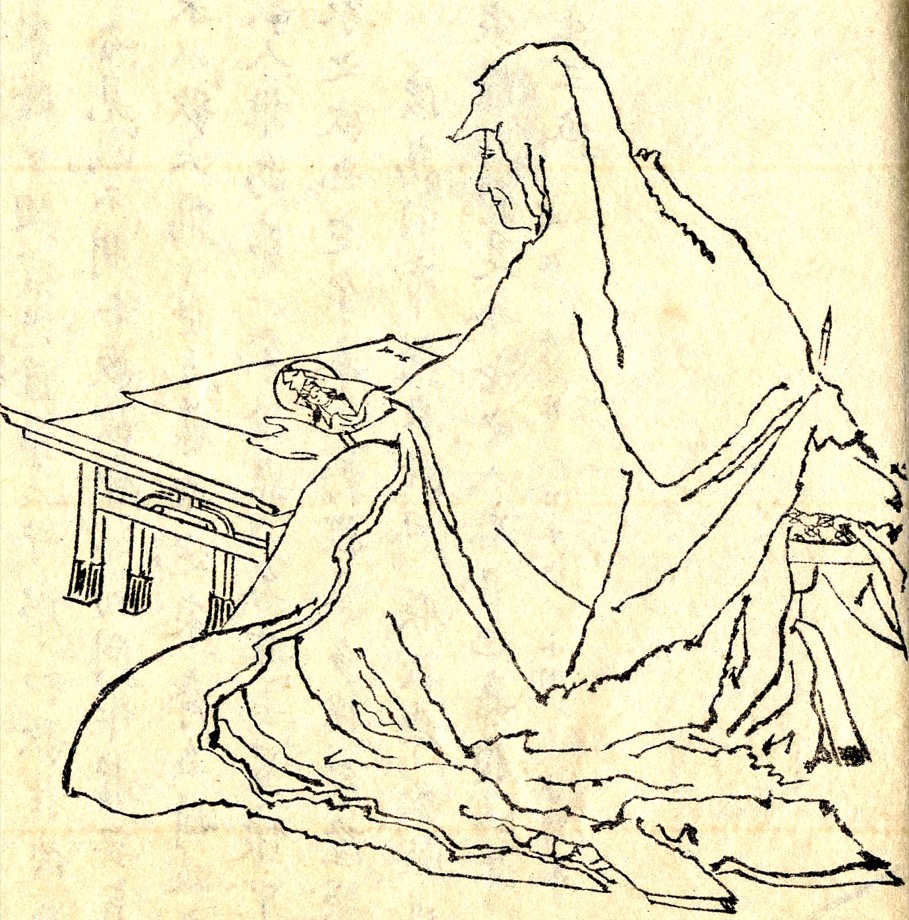
Portrait of Hōjō Masako — 19th century (later depiction)
The obligation that outlived its founder
Hōjō Masako’s political story did not end when she became a nun. After Yoritomo died in 1199, the government centered at Kamakura still needed people to hold its relationships together. Succession brought conflict rather than automatic continuity. Masako remained influential in a world where family connections, obligations to the dead founder, and collective decisions could carry authority without placing her in the office of shogun.
She lived from 1157 to 1225, long enough to see both her sons become shoguns and the direct succession from Yoritomo come to an end. Her later fame as the nun shogun captures the weight of her presence but can obscure how that presence worked. She was not an isolated ruler issuing every decision. Relatives, experienced officials, and military followers formed a political community within which she exercised consequential influence.
The tentative ESTJ reading emphasizes direct coordination in defense of a continuing institution, with low confidence. Its strongest evidence belongs to her later Kamakura career. It does not assume that marriage, motherhood, religious vows, or an ability to give a moving speech determines type. The question is the recurring public purpose to which her authority was applied.
The low-confidence ESTJ reading associates dominant Te with Masako’s practical coordination of support for Kamakura’s continuing authority.
Influence within a working coalition
Yoritomo’s death created a problem of organization as well as succession. A new shogun had to operate among established military families and officials who possessed resources and interests of their own. Masako’s influence rested partly on her relationship to the founder, but a relationship alone could not ensure agreement. Maintaining government required intervention in an active and often dangerous political setting.
Extraverted thinking is a tentative lens for her attention to workable coordination. She could bring authority to bear on who supported a decision and whether a response would preserve the organization. The pattern is more specific than a generic description of a strong woman. It concerns connecting people and obligations to practical action when the institution faced a threat.
The evidence must remain collective. Her brother Yoshitoki and experienced advisers were central to Kamakura’s leadership. Treating their work as simply the execution of Masako’s private will would erase the processes through which decisions were made. Her significance lies in being a consequential participant with unusual standing, not in a claim that no one else exercised judgment.
The founder’s favors as present obligations
The most famous account of her authority comes from the Jōkyū crisis of 1221, when the retired emperor Go-Toba challenged Kamakura’s leadership. The later Azuma Kagami presents an address in her name that recalls Yoritomo’s rewards and demands a clear choice of allegiance. The speech survives in a politically interested account, not as a verbatim recording of her voice.
Introverted sensing is suggested by that appeal to established relationships and remembered obligations. The past becomes a practical standard for conduct in the present: people who had benefited from the founder’s order should consider what they owed to its preservation. This was not merely nostalgia. It supplied a language through which a threatened community could recognize a common stake.
That language also served Hōjō interests. The chronicles should not be allowed to equate defense of the government automatically with disinterested service to everyone within it. Masako’s authority belonged to a family deeply involved in the distribution of power. Institutional continuity and family advantage could reinforce one another. A careful profile can recognize both without reducing either to a simple accusation.
A crisis answered through consultation
Christoffer R. Bovbjerg’s study of Kamakura law examines the chronicles’ account of the deliberations in 1221. It presents Masako supporting an offensive response and consulting an experienced official when delay threatened the plan. The important historical pattern is her participation in a process involving several advisers, rather than an image of one dramatic speech instantly sending an enormous army west.
The same study explicitly notes the sources’ pro-Hōjō bias. Their unity may be narratively sharpened, and their huge army totals require skepticism. What can be discussed more securely is the political choice the accounts describe: Kamakura’s leaders retained enough support to respond effectively. Masako’s remembered role helped explain that cohesion within the tradition of the victorious government.
Consultation is significant for the proposed reading because direct leadership need not mean refusing advice. Seeking an informed judgment can be a way of making action effective. But the episode cannot establish her entire psychology. It supports a picture of practical engagement at a moment of danger, with the degree of certainty appropriate to a retrospective narrative.
Motherhood within a violent succession
Masako’s sons Yoriie and Sanetomo held the shogunal office in succession, yet neither provided an enduring direct line. The deaths and conflicts surrounding them make any simple portrait of serene dynastic guardianship impossible. Her family’s political interests intersected with relationships that were also intimate and personal. The sources do not give us sufficient access to resolve those intersections into one uncomplicated motive.
In 1205, she helped oppose her father Tokimasa when Sanetomo's position came under threat. The episode matters because defense of an established succession could divide the Hōjō family itself. Continuity was not equivalent to obedience to the oldest relative. It required a choice about which authority to preserve, and a coalition capable of making that choice effective.
Nor should their deaths become an invitation to repeat every suspicion as fact. Interested accounts, later accusations, and the advantages gained by surviving relatives require separate evaluation. Political benefit after an event does not establish authorship of that event. Masako’s role in the government can be described without confidently assigning her responsibility for every act of violence around the succession.
Her religious life likewise resists a modern separation between private withdrawal and public action. Taking vows did not necessarily mean abandoning property, relationships, or influence. Medieval women’s authority should not be treated as inherently impossible simply because it did not resemble a modern office. Historians of inheritance have shown that women’s claims formed part of early warrior society, even as practices changed over time.
Why this tentative reading?
Why not ENTJ?
Masako’s capacity to influence consequential decisions and organize a response to danger could support ENTJ. The tentative ESTJ preference emphasizes defense of an established community and its recognized obligations more than a securely documented program of new political design. This is a distinction in the interpretation of her public priorities, not a claim that she lacked strategic ability.
An ESFJ interpretation might focus on the address’s emotional force and her place within a network of relationships. Persuasive language is not enough to establish that preference. The speech is mediated by later chroniclers, and its apparent emotion serves a political demand. The proposed reading gives more weight to coordination and continuity while leaving her private interpersonal habits uncertain.
Connected Figures
Further Reading
- The Kamakura Bakufu, in Warrior Rule in Japan — Jeffrey P. Mass; edited by Marius B. JansenAn institutional history that complicates the familiar story of a sudden military replacement of the imperial court.
- The United State in Kamakura Law — Christoffer R. BovbjergA scholarly study of collective government; its discussion of 1221 distinguishes the chronicles’ political bias from the decisions they describe.
- Women and Inheritance in Japan’s Early Warrior Society — Hitomi TonomuraPlaces women’s authority and property claims within the changing institutions of warrior society.
- Azuma Kagami accounts of the Jōkyū War — Anonymous Kamakura chroniclers; discussed by William H. McCulloughAn important retrospective primary tradition, whose speeches and pro-Hōjō presentation require qualification.
