 Historical Figure MBTI
3 min read
#36 · 2-11-26 · Victorian Britain
Richard Monckton Milnes
Poet · Politician · Patron of Minds
1809 — 1885
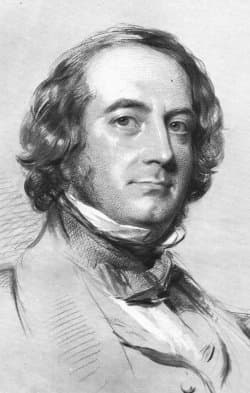
Portrait of Richard Monckton Milnes.
The Man Who Loved the Visionary
Richard Monckton Milnes moved comfortably through Victorian society — not as a rigid administrator, but as a connector.
He was a poet before he was a peer. A conversationalist before a commander. His influence operated through relationships, introductions, salons, and intellectual networks. He cultivated circles rather than institutions.
Where Florence Nightingale compressed the world into singular reform, Milnes expanded through people. He admired her deeply — not only her intelligence, but her intensity. He proposed marriage not to contain her, but to stand beside her.
Milnes aligns most cleanly with ENFP: outward exploration, emotional expressiveness, and relational idealism more than strategic system-building.
That attraction to Florence is not random. ENFPs are often magnetized by intensity and purpose.
Ne — Dominant
Milnes thrived in dynamic social environments. He moved fluidly between literature and politics, patronage and debate. His curiosity was wide rather than singular.
His poetry reflects exploratory thought and human-centered themes — less architectural compression, more relational reflection. He animated rooms. He did not isolate to construct systems.
Fi — Auxiliary
He appears sincere in attachment. His affection for Florence was genuine and emotionally transparent. He admired her mission rather than attempting to domesticate it.
There is no evidence of manipulation or strategic proposal. His letters suggest internal value-driven admiration — classic Fi warmth. He felt first.
Te — Tertiary
Though politically capable, Milnes does not read as structurally obsessed. He participated in institutions; he did not fundamentally redesign them.
He navigated power structures, but he was not driven by structural optimization. Action served connection, not the other way around.
Si — Inferior
Unlike Florence's singular devotion to one calling, Milnes maintained breadth. His life was not defined by one consuming mission. He moved socially and intellectually rather than anchoring to tradition or duty.
The INTJ–ENFP Dynamic
If Florence Nightingale was INTJ, Milnes as ENFP makes psychological sense. This pairing is historically common: the INTJ provides depth, vision, and direction; the ENFP brings expansion, warmth, and human connection.
Florence rejected him. That rejection does not automatically imply queerness — marriage in Victorian England required domestic surrender, and Florence's devotion to reform may have superseded any romantic path. But several historians have noted her emotionally intense bonds with certain women, and her resistance to heteronormative domestic identity.
Milnes loved expansively. Florence chose singularly.
Whether that choice was about autonomy, sexuality, or both remains open to interpretation.
Connected Figures
Further Reading
- Monckton Milnes: The Years of Promise, 1809–1851 — James Pope-HennessyThe first volume of the definitive two-part biography; richly detailed on Milnes's literary and political circles.
- Monckton Milnes: The Flight of Youth, 1851–1885 — James Pope-HennessyThe second volume, covering his later career, peerage as Baron Houghton, and enduring influence.
- Florence Nightingale — Cecil Woodham-SmithThe classic 1950 biography; indispensable for understanding the Milnes proposal and Nightingale's rejection of domestic life.
