 Historical Figure MBTI
#826 · 6-15-26 · The American Civil War
Roger B. Taney
The Chief Justice Who Tried to Settle Slavery by Law
1777–1864
7 min read
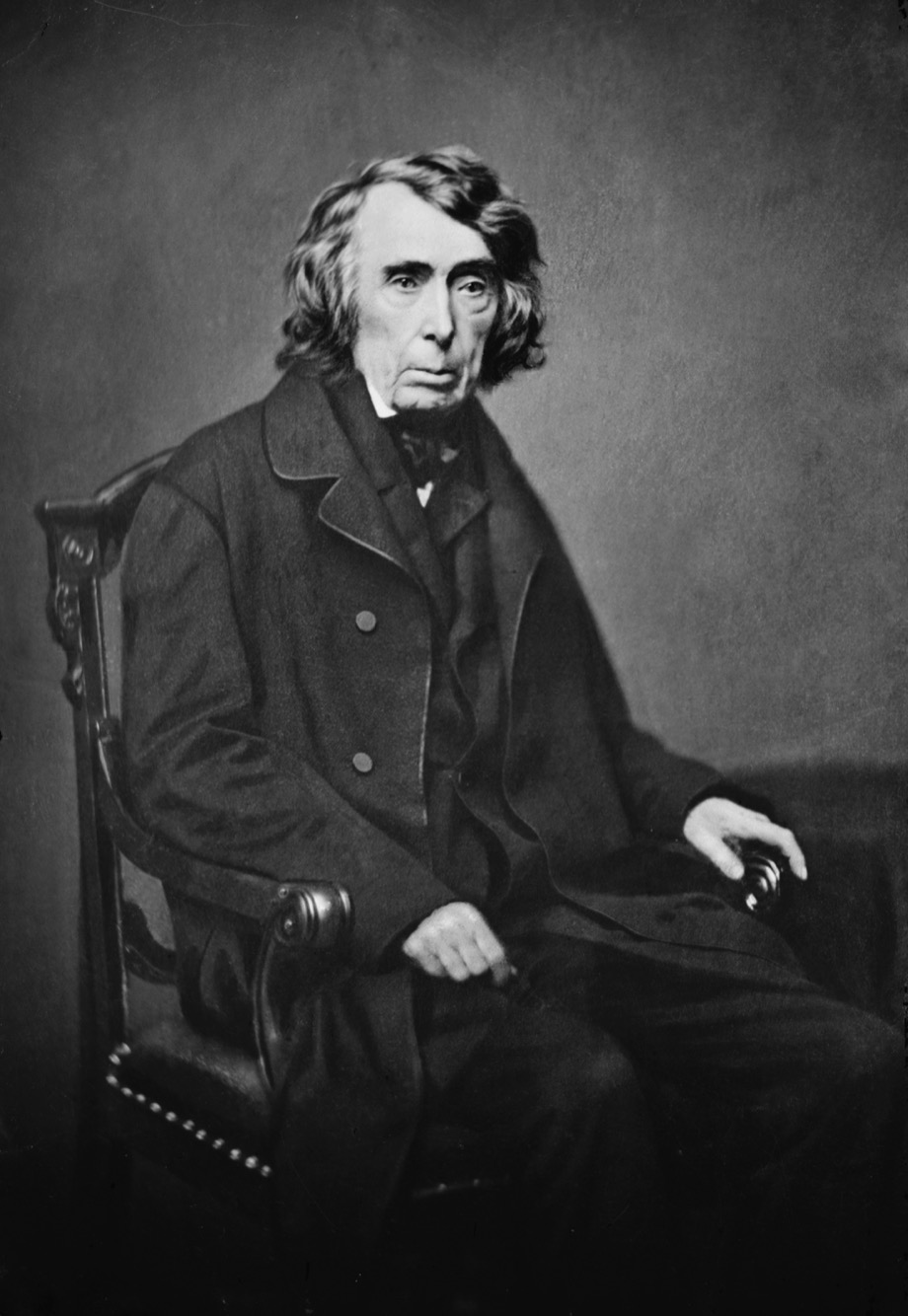
Portrait of Roger B. Taney
One Ruling, Meant to End the Argument Forever
Roger B. Taney did not stumble into the most reviled decision in American judicial history. He built it, deliberately, as a permanent settlement. By 1857 the Chief Justice of the Supreme Court had spent two decades watching the slavery question metastasize through Congress, through the territories, through every compromise that bought a few more years of uneasy peace. Taney believed the country needed something no legislature could offer: a single, binding constitutional ruling that closed the issue for good. In Dred Scott v. Sandford he delivered exactly that — Black Americans, free or enslaved, could never be citizens; Congress had never possessed the power to bar slavery from the territories at all. It was sweeping by design.
He was, by every available account, brilliant at the mechanics of law and catastrophically wrong about the effect of wielding it. The ruling did not settle the sectional crisis; it detonated it, discrediting the Court, hardening the North, and helping put Abraham Lincoln in the White House three years later. Taney's INTJ mind is visible in both halves of that failure — the totalizing, doctrine-first vision that produced the ruling, and the near-total inability to read how it would land in the world outside his chambers.
Taney did not miscalculate the law. He miscalculated the room — and mistook total conviction for a plan.
A Single Fixed Vision of Where the Law Must Land
Taney's dominant Ni is what made Dred Scott possible in the first place — not the racism of the ruling, which was common enough among his contemporaries, but its architecture. He did not want a narrow ruling that dismissed Scott's suit on a technicality, which the Court could easily have issued. He wanted the whole question closed: citizenship, federal power over the territories, the constitutional status of slavery itself, resolved in one document so thorough that no future Congress or court could reopen it. That is dominant Ni doing what it does at its most confident — collapsing years of political noise into a single, internally coherent long-range answer and then trusting that answer completely.
The same pattern shows earlier in his career. As Andrew Jackson's Treasury Secretary, Taney had already proven willing to act on a settled internal conviction — pulling federal deposits from the Bank of the United States — well ahead of any consensus that the move was wise. He was a man who reasoned his way to a destination in private, alone, and then moved toward it with total certainty, impatient with anyone who wanted to argue about the route. Dred Scott was that same instinct, applied to the one question no single ruling could actually close.
The Craftsmanship of a Catastrophe
Whatever else it was, the Dred Scott opinion was a formidable piece of legal engineering. Taney's auxiliary Te built the case methodically, marshaling constitutional history, precedent, and statute into an argument that read, to its author, as airtight — a structure built to survive every challenge except the one that mattered. That executional confidence is the signature of Te in service of an Ni conviction: once the destination was fixed, Taney's energy went entirely into building the most rigorous possible case for it, not into questioning whether the destination was sound.
It shows again in how he ran the Court and, later, how he ran his conflict with Lincoln. In Ex parte Merryman in 1861, Taney — sitting as a circuit judge — ruled that the president had no constitutional authority to suspend habeas corpus unilaterally, and wrote the opinion with the same unbending procedural confidence he had brought to Dred Scott, fully aware Lincoln would simply ignore it. Te aux gave him the discipline to build watertight arguments under pressure; it never gave him the instinct to ask whether a watertight argument was the tool the moment actually required.
Blind to the Room He Was Standing In
This is where Taney's story turns from a legal biography into a psychological one. He genuinely seems to have believed that Dred Scott would calm the country — that a definitive ruling from the nation's highest court would take slavery off the table as a live political question the way a verdict ends a trial. That belief required an almost total blindness to the immediate, sensory reality of 1857 America: an inflamed North, an antislavery press hungry for exactly this kind of provocation, a Republican Party built on the argument the ruling had just declared unconstitutional. Inferior Se left him reasoning from the map in his head rather than the terrain in front of him.
The consequences arrived almost immediately and Taney never fully registered them as consequences of his own choice. The ruling that was supposed to remove slavery from politics became the single most effective recruiting document the antislavery movement ever received, cited constantly in the debates and campaigns that put Lincoln in office in 1860. A leader with a stronger grip on present, real-time reality might have reached for a narrower ruling, or braced for the reaction he triggered. Taney, having settled the question to his own satisfaction inside his own mind, was caught almost completely unprepared by the world's answer.
Why INTJ Over ENTJ
Why not ENTJ?
ENTJ would explain the executional confidence and the command of legal argument, but not the source of Taney's certainty. An ENTJ builds conviction through engagement — testing plans against other people, adjusting under real-time pushback, treating the room as data. Taney did the opposite: he arrived at Dred Scott through solitary, internal reasoning, then presented it as finished and unchallengeable. The ruling was not negotiated into existence or stress-tested against political reality; it was revealed, fully formed, from a private constitutional vision. That is Ni leading, not Te — a mind that trusts what it has already concluded over what the world is currently telling it.
The distinction matters because it explains the specific shape of Taney's failure. An ENTJ who badly misjudged the political fallout of Dred Scott would likely have adjusted afterward, recalibrating strategy once the backlash arrived — Te dominant types course-correct against results. Taney never really did. He held to the ruling's logic through the backlash, through the 1860 election it helped produce, and into the war, defending its reasoning to the end. That is Ni's stubbornness, not Te's adaptability — a settled internal vision, defended long after the world made clear it had settled nothing.
Connected Figures
Further Reading
- Dred Scott and the Problem of Constitutional Evil — Mark A. GraberThe definitive study of the ruling's legal and moral logic
- Roger B. Taney: Chief Justice in Crisis Times — Carl Brent SwisherThe standard biography of Taney's life and jurisprudence
- The Impending Crisis: America Before the Civil War, 1848–1861 — David M. PotterThe political context Dred Scott detonated
- Ex parte Merryman and Debates on Civil Liberties During the Civil War — Jonathan W. WhiteTaney's 1861 clash with Lincoln over habeas corpus
