 Historical Figure MBTI
#1312 · 9-30-26 · Heian Japan
Ryōgen
Tendai Abbot · Rebuilder of Mount Hiei
912–985
5 min read
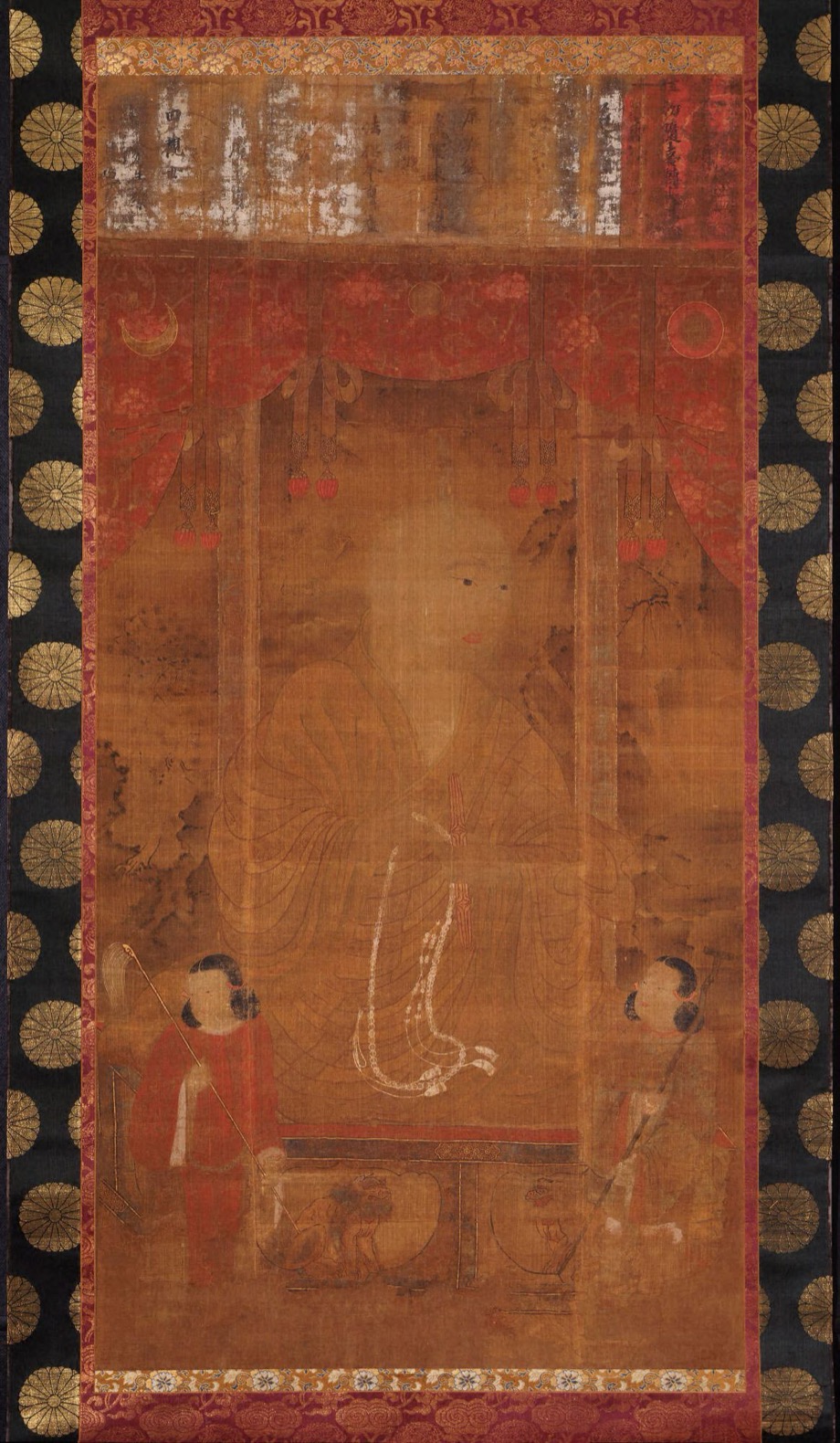
Portrait of Ryōgen (Jie Daishi) — 13th–14th century (later devotional depiction)
Rebuilding Required More Than Buildings
Ryogen's task on Mount Hiei was not simply to restore structures. A religious institution also required trained people, functioning rituals, dependable provision, and an authority that competing lineages would recognize. His rebuilding and disciplinary work addressed those conditions together. A tentative ENTJ interpretation concerns this coordination of institutional capacity. It is low confidence, because the duties of a successful abbot cannot by themselves establish his private temperament.
Born in 912, Ryogen entered the Tendai world established through Saicho and developed relationships with powerful court patrons. He became head of the community in 966 and remained a leading figure until his death in 985. The monastery was not a uniform body waiting for one reformer to supply a purpose. Its halls and lineages had histories, competing claims, and connections to aristocratic households.
ENTJ is a low-confidence reading of dominant Extraverted Thinking: Ryogen repeatedly joined resources, rules, training, and ritual obligations into a stronger monastic institution.
Making the Institution Function
Reconstruction required continuing supplies as well as an initial gift. Religious buildings needed food for personnel, oil for lamps, and material provision for rituals. Ryogen's dealings with aristocratic supporters therefore involved the practical conditions under which monks could perform services and maintain the establishment. Patronage was a relationship of obligations, not a resource that arrived without interests attached.
His twenty-six regulations of 970 addressed the performance of ceremonies, education, deportment, and prohibited behavior. They criticized inadequate preparation and insisted on serious attention to lectures and examinations. These details make the institutional argument more specific than a vague claim that he valued order. The rules connected scholarly and ritual standards to the conduct through which a community made those standards effective. Complaints about audiences attending examinations for food or advancement rather than instruction reveal the particular distractions he sought to counter. Such provisions make education an institutional problem involving incentives and conduct as well as the ability of an individual lecturer.
Extraverted Thinking is proposed for the repeated insistence that commitments have operational consequences. The inference remains limited because regulations describe desired behavior. Their existence can indicate problems rather than success in eliminating them. A prohibition on disorder is not evidence that a monastery was orderly, and an abbot's announced standard is not a complete record of how he handled every disagreement.
The Strength Behind a Religious Position
Aristocratic connections helped Ryogen restore and extend Mount Hiei's position. Fujiwara no Morosuke and his family supplied important support, while their relationships with monks also affected appointments and lineage interests. A stronger Tendai institution could provide prestigious and useful services to its patrons. Each side had reasons to sustain the connection, and those reasons were not identical.
Introverted Intuition offers a tentative description of the larger arrangement in which reconstruction, learning, and support reinforced one another. Strengthening a hall without the people and provisions around it would accomplish less. Ryogen's public record shows attention to the institution as a connected undertaking. It does not establish a solitary master plan or prove that he anticipated the later history of Mount Hiei.
Genshin's scholarship belonged to this strengthened religious environment. The connection should not make the student's later work a mere execution of Ryogen's wishes. Institutional leadership can create conditions for learning while leaving a scholar room to develop questions and methods of his own. The historical relationship is more useful than a theory in which teacher and pupil become matching instruments of a single intention.
Discipline and Faction Were Intertwined
The rules also condemned fighting with weapons, concealed identities, and arbitrary punishment of attendants. Those prohibitions complicate the familiar label that treats Ryogen simply as a founder of a warrior-monastic force. Religious institutions had coercive capacities and conflicting interests, but later images of armed monks should not be projected backward without regard to chronology or evidence.
Ryogen's own networks could strengthen one faction while he attempted to control misconduct across the community. This is a tension in institutional practice rather than proof of a single hidden motive. The same patronage that funded rebuilding could deepen differences over succession and precedence. Leadership did not stand outside those relationships; it operated through them and faced their consequences.
The disciplinary code drew on earlier Tendai rules and precepts. Innovation therefore occurred within an inherited framework, not through rejection of tradition. Ryogen's authority depended partly on making his proposals recognizable as appropriate monastic conduct. The modern distinction between a conservative administrator and a strategic reformer is less clear in a setting where effective change often required the language of precedent.
Testing the ENTJ Reading
Why not ESTJ?
ESTJ is a strong alternative because Ryogen worked through precedent, discipline, and established duties. ENTJ is preferred only tentatively for the coordination of reconstruction, patronage, and training as a broader institutional undertaking. The evidence does not cleanly separate a personal preference from what leadership of Mount Hiei required.
The type remains low confidence: rules and patronage establish public decisions, while the inner balance of conviction, ambition, and everyday habit remains partly unavailable.
Connected Figures
Further Reading
- Ryōgen and Mount Hiei: Japanese Tendai in the Tenth Century — Paul GronerA detailed study using institutional documents, rules, patronage records, and later religious narratives.
- Genshin’s Ōjōyōshū and the Construction of Pure Land Discourse in Heian Japan — Robert F. RhodesA study of Genshin’s life and teachings that places his major work within earlier Tendai and Pure Land traditions.
- The Cambridge History of Japan, Volume 2: Heian Japan — Donald H. Shively and William H. McCullough, editorsHistorical studies of aristocratic government, religious institutions, and the social settings of Heian Buddhism.
- The Enryaku-ji and the Gion Shrine-Temple Complex in the Mid-Heian Period — Neil McMullinAn article on institutional relationships and the political and economic setting around the Tendai establishment.
