 Historical Figure MBTI
#1288 · 9-24-26 · Heian Japan
Saichō
Tendai Founder · Advocate of Monastic Reform
767–822
7 min read
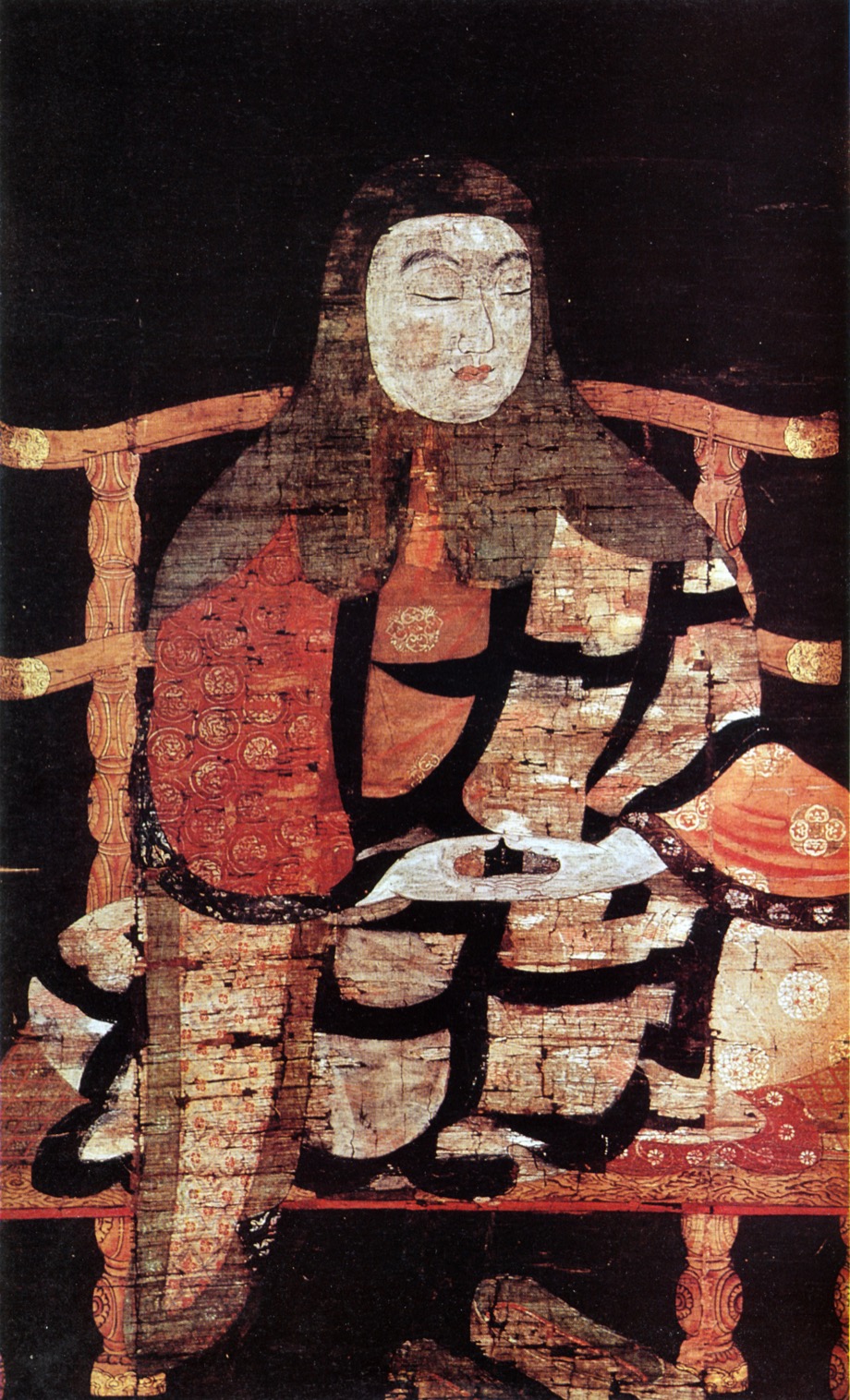
Portrait of Saichō — 11th century (later depiction)
A promise larger than a hermitage
Saichō’s project on Mount Hiei began with study and practice, but its ambition could not remain private. He wanted a community capable of carrying the Lotus teaching into the future, with its own disciplined training and an ordination appropriate to the bodhisattva path. He spent his final years arguing for an institutional change that he would not live to see authorized. The distance between a religious promise and the arrangements needed to sustain it defines much of his surviving career.
A low-confidence INFJ interpretation begins with that relation between a unifying vision and a community formed to serve it. The evidence consists largely of religious arguments, regulations, petitions, and correspondence. These reveal chosen priorities more readily than ordinary temperament. They support a tentative reading of Introverted Intuition with Extraverted Feeling; they cannot make universal enlightenment or compassionate language automatic signs of a personality type.
Born in 767, Saichō trained in the established Buddhist world before making Mount Hiei his base. In 804 he traveled to China with a mission departing under Emperor Kanmu. His study of Tiantai teachings and acquisition of other transmissions helped shape the Japanese Tendai project. This was not the simple importation of a sealed package. He had to decide how different practices belonged together and how a new community could obtain recognition at home.
An INFJ reading gives dominant Introverted Intuition a concrete task: Saichō wanted one religious promise to become a lasting community of practice.
Ni — one purpose through several forms of practice
The Lotus Sutra gave Saichō an organizing claim: the path to Buddhahood was not permanently closed to particular classes of beings. His defense of universal awakening disputed rival accounts of spiritual capacity. The argument mattered because it changed what education and discipline should expect of a practitioner. A teaching about the ultimate destination became a reason to reconsider the route by which students were trained.
His vow to maintain Lotus study makes the vision unusually concrete. A surviving passage prescribes the recurring reading of a volume every two days and insists that the practice continue without interruption. Its horizon extends beyond one teacher’s lifetime to the preservation of the teaching in Japan. The proposed intuitive preference lies in that governing continuity: a daily act belongs to an envisioned future in which the community continues the same work.
This is not an absence of boundaries. Saichō could be sharply polemical, and his accounts of the relation among Buddhist teachings were hierarchical. A universal capacity for awakening did not mean that every doctrinal formulation or training arrangement was equally satisfactory. His synthesis selected, ranked, and interpreted. Reading him as a benign advocate of modern tolerance would erase the very disputes through which he explained his position.
His Tendai project accommodated more than one curriculum, including contemplative study and esoteric practice. The interpretive question was how these belonged within a Lotus-centered whole. A unifying intention is visible, but its components developed through travel, borrowing, encounters, and disagreements. An INFJ reading should not turn that development into a claim that he foresaw every later achievement of Mount Hiei. Successors made their own consequential choices.
Fe — training people for a shared obligation
Saichō’s attention to a community is more informative than the generic statement that a monk cared about others. He argued for students formed by sustained study and practice, with religious cultivation directed toward service beyond the self. Training was supposed to produce a particular kind of person, not merely someone able to recite a text or possess an official credential. The student’s eventual contribution gave the discipline its public justification.
Auxiliary Extraverted Feeling is proposed in the movement from spiritual capacity to a shared obligation. The vision becomes consequential through the people who accept it and the standards under which they live together. This does not require imagining Saichō as socially effortless. Petitions and polemical works can be demanding, and commitment to a community may sharpen rather than soften disagreement. The evidence concerns the purpose of formation, not an undocumented charm.
Imperial patronage nevertheless mattered. Kanmu’s support helped the new teaching obtain official standing, while Saga ruled during its later development and the final struggle over ordination. A community on the mountain did not exist outside the political order. Saichō had to explain why its distinct arrangements would benefit a realm whose authorities already regulated monks and their training. The religious ideal therefore entered a language of institutional recognition.
The same dependence cautions against a heroic story in which he alone emancipated religion from politics. His proposed autonomy required permission from the state. Reform meant renegotiating authority within a historical system, not simply escaping it. The INFJ argument rests on what he repeatedly wanted that recognition to enable: a community whose education, discipline, and service cohered with the promise he drew from the Lotus teaching.
Ti — the meaning of an authorized path
The ordination controversy required distinctions as well as inspiration. Saichō advocated an ordination based on Mahayana bodhisattva precepts and a separate platform for his community, challenging the necessity of the established route through Nara institutions. This was a dispute over what made a monk’s commitments valid and which authorities could recognize them. His arguments cannot be reduced to a desire for organizational independence, although independence was one important consequence.
Tertiary Introverted Thinking is a possible reading of the insistence that practice should fit its stated religious basis. If the community claimed a particular understanding of awakening and obligation, its formal entry into religious life needed to be justified accordingly. The argument tests an inherited arrangement against a conceptual criterion. Yet any trained Buddhist polemicist was expected to reason from texts. Analytical skill alone does not locate a function in a stack.
The relationship with Kūkai reveals another contested criterion. They exchanged texts and Saichō received esoteric initiations, but their cooperation faltered over the requirements of transmission and the place of esoteric practice. Saichō sought to incorporate that practice into his broader Tendai undertaking. Kūkai defended requirements that could not be met simply by borrowing and copying texts. The disagreement involved real interpretive and educational questions, not merely competing personal ambitions.
Why INFJ Over INTJ
Why not INTJ?
INTJ is credible because Saichō pursued doctrinal coherence and institutional reform with considerable persistence. The INFJ preference gives slightly greater weight to his repeated presentation of training as the formation of people for a shared religious and social obligation. His administrative petitions cannot decide between those readings by themselves. Nor can Buddhist compassion be treated as proof of a feeling preference. The public record is too selective for a confident distinction.
An INFP interpretation could emphasize personal conviction and religious aspiration. The recurring effort to coordinate a community around a comprehensive path gives INFJ a modest advantage here. There is too little reliable evidence of ordinary sensory behavior or stress to make an inferior Se argument substantive; leaving that part of the proposed stack unillustrated is more honest than inventing it.
Connected Figures
Further Reading
- Saicho: The Establishment of the Japanese Tendai School — Paul GronerA detailed study of the founder’s training, institutional ambitions, and ordination reform.
- Saichō and Kūkai: A Conflict of Interpretations — Ryūichi AbéReconstructs cooperation and rupture through letters, transmissions, and competing educational projects.
- Sources of Japanese Tradition, Volume 1 — Compiled by Wm. Theodore de Bary, Donald Keene, George Tanabe, and Paul VarleyPrimary texts place religious argument, court institutions, and literary culture within their historical settings.
- Sources of Japanese Buddhist Philosophy of Education: Saichō (766/7–822) on Study, Reflection, and Cultivation — Ryotaro KusumotoAn educational perspective on the relationship between study and religious formation.
