 Historical Figure MBTI
#1289 · 9-24-26 · Heian Japan
Emperor Kanmu
Emperor · Founder of the Heian Capital
737–806
7 min read
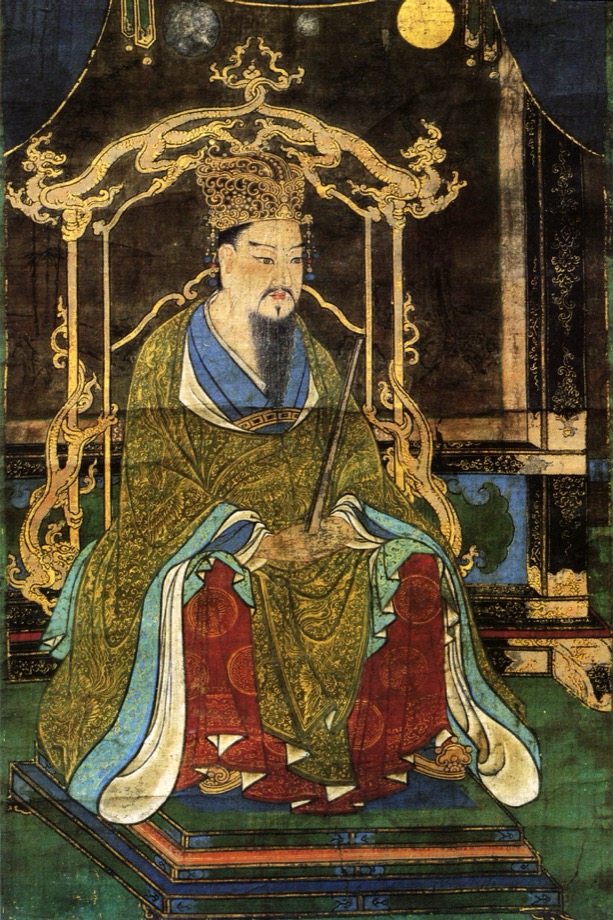
Portrait of Emperor Kanmu — 16th century (later depiction)
A capital could be moved
Emperor Kanmu did not treat the inherited location of government as immovable. In 784 he transferred the court from Nara to Nagaoka; in 794 he moved it again to Heian-kyō. The second city endured far longer, but hindsight can obscure the scale of the first undertaking. Nagaoka was a serious capital, with a palace, public ceremonies, transport arrangements, and a population whose land and labor entered the project. It was not merely a waiting room for Kyoto.
A low-confidence ENTJ reading rests on Kanmu’s repeated effort to reshape the conditions under which the monarchy operated. Capital building, patronage, and campaigns on the northeastern frontier show active direction, but the title of emperor cannot itself establish Extraverted Thinking. The proposed preference concerns a ruler prepared to reorganize major instruments of power around a changed political setting. His private habits are much less visible than his orders.
Born in 737, Kanmu came to the throne in 781 after a succession that had not initially favored him. His maternal ancestry connected him to kinship groups claiming descent from Baekje. Scholarly study of the contemporary records places those connections within the patronage and personnel of his reign. They should not be turned into a modern national identity, or a psychological explanation for every decision he made. Lineage mattered in the political categories of his own court.
An ENTJ reading gives dominant Extraverted Thinking a visible field: Kanmu changed the places, resources, and institutions through which the monarchy ruled.
Te — moving the means of government
The first relocation required government to act on a landscape. A chronology compiled by Mukō City records funds assigned to officials for residences, payments to households displaced by the palace precinct, and orders to provinces to provide materials for a bridge. These details make capital building more intelligible than an image of one sovereign drawing a city on empty ground. Existing households, tax resources, transport, and court residence had to be coordinated.
This is the most useful setting for a dominant Extraverted Thinking hypothesis. Kanmu’s policy mobilized resources and changed arrangements rather than merely proclaiming a desired renewal. The court’s ceremonies subsequently occupied the new palace, converting a construction program into a functioning center of authority. Yet these acts were carried out through officials and established administrative forms. The record does not justify assigning every successful logistical decision to the emperor’s individual foresight.
Nagaoka’s river connections offered practical advantages, while distance from Nara changed the relationship between the monarchy and established religious powers. Archaeological work has complicated older accounts that explain the whole move through hostility to monasteries. The city also incorporated innovations later associated with Heian-kyō. The responsible portrait treats religious politics, transport, court relationships, and urban design as interacting circumstances, rather than searching for a single motive that fits a type.
Kanmu’s northeastern campaigns likewise sought to extend the reach of government. They brought violence to Emishi communities and required men and supplies from other regions. Fortresses served administrative as well as military purposes. To call this efficient expansion without examining its burden would adopt the conqueror’s perspective too easily. A capacity for direction is not an ethical endorsement of the objectives it serves; the consequences for people outside the court remain part of the portrait.
Ni — a different setting for the same monarchy
The proposed auxiliary Introverted Intuition concerns the intended relationship between a new setting and renewed authority. A capital was more than a convenient office complex. Its placement, ceremonies, and arrangement expressed what kind of order the monarchy claimed to represent. Kanmu’s continental ritual references and his handling of lineage belong to that symbolic setting. These were inherited political languages, but he deployed them in the circumstances of a changed succession.
His support for Saichō is useful because it qualifies the idea that leaving Nara meant rejecting Buddhism. He encouraged a China mission and supported the recognition of a new Tendai undertaking. Religious authority could be cultivated in a different relationship to the throne. A new location and a new patronage arrangement could therefore serve related purposes without making Kanmu a secular reformer. He ruled in a world where ritual efficacy was part of public government.
The hypothesis remains weaker than the observable administrative initiative. Moving a capital can follow precedent, immediate opportunity, or crisis as readily as a long-range conception. The second move especially resists a polished story of uninterrupted strategy. Problems at Nagaoka and the political and religious consequences of deaths within the dynasty altered its setting. A later success does not establish that the earlier plan secretly aimed at the same destination all along.
In 785 the official Fujiwara no Tanetsugu was assassinated. Kanmu’s brother, Crown Prince Sawara, was implicated, stripped of his position, and exiled; he died on the journey. Later misfortunes were interpreted through fears of his resentful spirit. These beliefs were consequential for the court, but a biographer should distinguish an accusation from demonstrated guilt and a feared spiritual cause from an independently established explanation. The episode also exposes the violence inside a program often remembered principally through urban achievement.
Se — the cost of a project could change the decision
A decisive late act complicates the picture of relentless expansion. In 805 Kanmu heard opposing advice about the burdens of military campaigns and capital construction. He accepted Fujiwara no Otsugu’s recommendation to discontinue those major undertakings. A ruler who had invested heavily in them could nevertheless authorize a change. The decision belongs to the reign’s concrete record, rather than to a modern assumption that forceful leaders never retreat.
Tertiary Extraverted Sensing is offered only as a limited reading of responsiveness to present conditions. The clearest observation is that large plans encountered costs which the court had to confront. Accepting retrenchment can fit an ability to revise action when circumstances make continued effort less defensible. It can also follow age, political advice, depleted resources, or administrative precedent. None of those alternatives requires a particular psychological function.
There is little sound basis for reconstructing an inferior Introverted Feeling response from Sawara’s death or the subsequent appeasement of his spirit. Guilt is a tempting narrative explanation, but the sources do not grant transparent access to Kanmu’s conscience. Political danger, dynastic obligation, and contemporary religious belief all shaped the response. The profile therefore leaves that part of the proposed stack largely unillustrated. A difficult episode should not become evidence for an invented private confession.
Why ENTJ Over ESTJ
Why not ESTJ?
ESTJ is a substantial alternative. Much of Kanmu’s action worked through inherited offices, ritual models, and administrative procedures. The ENTJ preference gives modest additional weight to the scale of reconfiguration: he repeatedly changed the setting of rule rather than chiefly preserving its familiar location. That distinction is vulnerable to the limits of the record. Capitals can move for immediate reasons, and organizational initiative does not establish an intuitive preference.
Low confidence is essential. Official orders and later assessments preserve what mattered to public government, not a balanced sample of the person. The proposed type should help frame a question about direction and renewal, while leaving room for crisis, advice, religious convictions, and institutional pressures to explain the same decisions.
Connected Figures
Further Reading
- Nagaoka: Japan’s Forgotten Capital — Ellen Van GoethemCombines court records and archaeology to reassess the capital and the motives for its establishment and abandonment.
- The Status of Descendants of the Baekje Kingdom during Emperor Kanmu’s Reign — Ellen Van GoethemExamines ancestry, patronage, and political status without imposing modern national categories.
- The Relocation of Japan’s Capital to Nagaoka: Emperor Kanmu and the Age of Upheaval — National Museum of Japanese HistoryAn exhibition account of archaeological findings and the transformation of the state’s center and margins.
- Sources of Japanese Tradition, Volume 1 — Compiled by Wm. Theodore de Bary, Donald Keene, George Tanabe, and Paul VarleyPrimary texts place religious argument, court institutions, and literary culture within their historical settings.
