 Historical Figure MBTI
4 min read
#208 · 3-21-26 · The Age of Alexander
Stateira II
The Daughter of the Last Achaemenid
c. 350 – 323 BCE
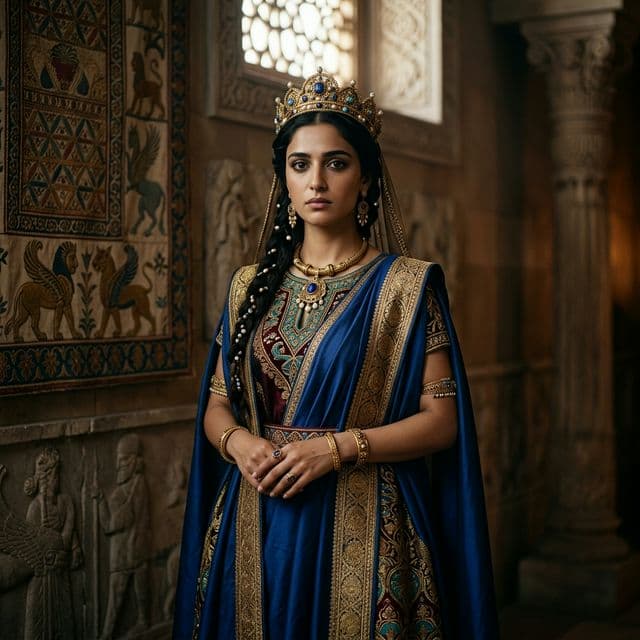
AI-assisted portrait of Stateira II
The Architecture of Duty
Stateira II was born into the center of an empire that was already beginning to dissolve. As the daughter of Darius III, the last Persian King of Kings, her life was a series of massive, involuntary shifts in fortune. While her husband Alexander the Great sought a visionary expansion of the world (Fe-Ni), Stateira’s core mode was the preservation of dignity and tradition in the face of total collapse. Her personality was oriented toward the stable, internal values of her noble heritage (Si), providing a quiet, regal continuity even as the world of Persepolis was being replaced by the world of Babylon.
She lived as a symbol of endurance and grace. Her cognitive focus was on the maintenance of the standards she had been raised with, using her auxiliary Fe to navigate the complex social landscape of being a captive princess-turned-queen. For Stateira, survival was not just about staying alive, but about doing so in a way that honored the memory of her house.
Historical Context
Stateira II was the daughter of Darius III and Stateira I. After the Battle of Issus in 333 BCE, she was captured by Alexander the Great alongside her mother and grandmother. Alexander famously treated the Persian royal family with great respect, eventually marrying Stateira II at the Susa weddings in 324 BCE as part of his policy of Persian-Macedonian integration. However, following Alexander's death in 323 BCE, she was murdered by Roxana, who sought to eliminate any rivals to her son's succession. Her life is a poignant reminder of the high human cost of imperial transition.
The Psychological Verdict
Stateira II reads most clearly as an ISFJ. She was a figure defined by her commitment to the traditions and values of her heritage (Si), guided by a desire for harmony and social grace (Fe), and supported by a quiet, internal logical processing of her precarious situation (Ti).
Si — Dominant
Her primary mode was the preservation of the past. Even in captivity, Stateira maintained the dignity and protocols of the Persian court. Her Si allowed her to anchor herself in the sensory and social certainties of her upbringing, providing a sense of internal stability that allowed her to endure the loss of her empire and her family. She was the living memory of a world that had vanished.
Fe — Auxiliary
Supporting her sense of duty was a refined ability to navigate social relationships. Both Persian and Greek sources remark on the grace with which she handled her life as a royal hostage. Her auxiliary Fe manifested in her ability to win the respect and protection of Alexander, ensuring the survival of her family for as long as he lived. She was the emotional bridge between the old world and the new.
Ti — Tertiary
Beneath her social grace lay a quiet, analytical mind. Her tertiary Ti allowed her to process the complex political realities of the Macedonian court with a detached, internal logic. She understood the chess game being played around her, even if she lacked the external power (Te) to change its course. Her survival depended on her ability to think clearly while feeling deeply.
Ne — Inferior
What stayed in the background was a fear of the unpredictable and the unknown. Her life was characterized by sudden, catastrophic changes that she could neither foresee nor control. Her inferior Ne manifested in the shock and eventual exhaustion of having to deal with the endless, unpredictable ways in which the Macedonian generals would upend her world after Alexander’s death.
The Daughter of a Fallen World
Stateira II was the daughter of Darius III, which made her a symbol before she was a person. When Alexander captured her and her family at Issus in 333 BCE, he reportedly treated the royal women with conspicuous respect — an act of political theater as much as decency. He married her at the mass wedding at Susa in 324 BCE, alongside Hephaestion’s marriage to her sister. Within months of Alexander’s death, Roxana — the Bactrian queen who needed her unborn child to be the only Argead heir — had her killed and the body hidden. Stateira II’s life spanned one of history’s most violent transitions: the end of the Achaemenid Empire and the beginning of the Hellenistic world. She did not survive it, but she moved through it with a dignity that even her conqueror chose to honor. The grace she maintained was not passivity. It was the only power available to her, and she used it fully.
Connected Figures
Further Reading
- Women and Monarchy in Macedonia — Elizabeth Donnelly CarneyCovers Stateira II's captivity, her Susa marriage to Alexander, and her murder at Roxana's hands.
- From Cyrus to Alexander: A History of the Persian Empire — Pierre BriantGives the Achaemenid royal household context for Darius III's daughter before Issus shattered it.
- The Age of Alexander — PlutarchRecords Alexander's celebrated treatment of the captured Persian royal women, Stateira among them.
