 Historical Figure MBTI
5 min read
#207 · 3-21-26 · The Age of Alexander
Roxana
The Queen of the Sogdian Rock
c. 340 – 310 BCE
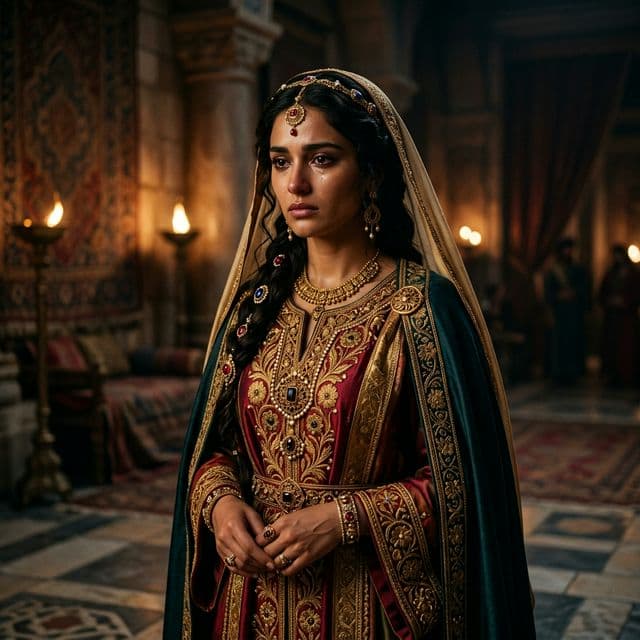
AI-assisted portrait of Roxana
The Architecture of Survival
Roxana did not just enter a marriage; she entered a hurricane. As the daughter of the Sogdian noble Oxyartes, her union with Alexander the Great in 327 BCE was both a political necessity and a testament to her individual presence. While others in the court operated through the overt application of power, Roxana’s personality was oriented toward a quiet, internal strategic processing (Ni). She was the survivor who watched the disintegration of the most vast empire in history and fought with a cold, analytical precision to preserve a future for her son.
She lived as a figure of contained resilience. Her cognitive mode was focused on the internal synthesis of her increasingly precarious environment, allowing her to stay one step ahead of the political fires that consumed the Diadochi. For Roxana, the world was a complex system of shifting loyalties that required a detached, objective strategy to navigate.
Historical Context
Roxana was the first wife of Alexander the Great and the mother of his heir, Alexander IV. After Alexander's death in Babylon, she was thrust into the center of the wars of the Diadochi (Successors). She eventually sought refuge in Macedon under the protection of Olympias, only to be imprisoned and ultimately executed by Cassander. Her life represents the tragic intersection of personal dignity and the unforgiving mechanics of imperial succession.
The Psychological Verdict
Roxana is most clearly an INTJ. She was a figure of deep, internal vision and strategic independence (Ni), supported by a pragmatic, logical approach to her external environment (Te) and an unwavering internal set of standards (Fi).
Ni — Dominant
Her primary mode was the internal synthesis of complex patterns. Roxana understood the symbolic and political weight of her position better than most. She was able to look past the immediate chaos of the court to see the long-term dangers facing her family. Her decisions, including her alliance with Olympias, were driven by an intuitive grasp of the systemic forces at play, always focused on a singular, protected future.
Te — Auxiliary
Supporting her internal vision was an objective, effective application of logic. After Alexander's death, she took decisive, often ruthless action to eliminate threats to her son’s legitimacy, including the execution of Stateira II. This auxiliary Te manifests in her ability to operate within the brutal logic of the era, focusing on the efficient removal of obstacles to her singular goal.
Fi — Tertiary
Beneath her strategic exterior lay a deeply private and unwavering set of internal values. Her tertiary Fi manifests in her intense, singular loyalty to her son and her refusal to bend to the will of the various generals who sought to use her as a political pawn. Her endurance was fueled by an internal conviction that remained invisible to the world but provided the bedrock for her survival.
Se — Inferior
What stayed in the background was a vulnerability to the sudden, overwhelming physical realities of her environment. Her final years, spent in the confinement of Cassander's fortress, reflect the eventual exhaustion of a life spent in constant, high-stakes mental processing. Her inferior Se manifests in the eventual collapse of her world when the mental strategies could no longer hold back the physical force of her enemies.
The Queen Nobody Could Afford to Ignore
Roxana’s entire existence after Alexander’s death was a race she could only survive by winning every round. She had Stateira II murdered within weeks of Alexander’s death — and reportedly had the body thrown down a well to hide it. Her ally and protector was Olympias, who crossed from Epirus to defend the claim of Roxana’s son, Alexander IV. When Olympias was executed by Cassander in 316 BCE, Roxana lost her only real protector. Cassander kept her and her son imprisoned in Amphipolis. In 309 BCE, he had them both killed — quietly, without public announcement — and claimed it afterward as a fait accompli. The son of Alexander the Great was about fourteen years old. Roxana had kept him alive for fourteen years against impossible odds, in a world where every surviving general had reason to want him dead. That she made it as long as she did was not luck. It was the result of someone who understood the board completely and played every piece she had.
Connected Figures
Further Reading
- Alexander the Great — Robin Lane FoxThe richest narrative account of Alexander's campaigns; covers Roxana's marriage and her role as queen.
- The Wars of Alexander's Successors 323–281 BC — Bob Bennett & Mike RobertsDetailed military and political history of the Diadochi period in which Roxana navigated for her son's survival.
- Alexander the Great: The Hunt for a New Past — Paul CartledgeA scholarly reassessment of Alexander and his circle, with attention to the women of his court.
- Dividing the Spoils: The War for Alexander the Great's Empire — Robin WaterfieldFocuses directly on the Successor wars — the era Roxana spent her widowhood surviving.
