 Historical Figure MBTI
5 min read
#213 · 3-21-26 · The Age of Alexander
Cassander
The Architect of the Post-Argead World
c. 350 – 297 BCE
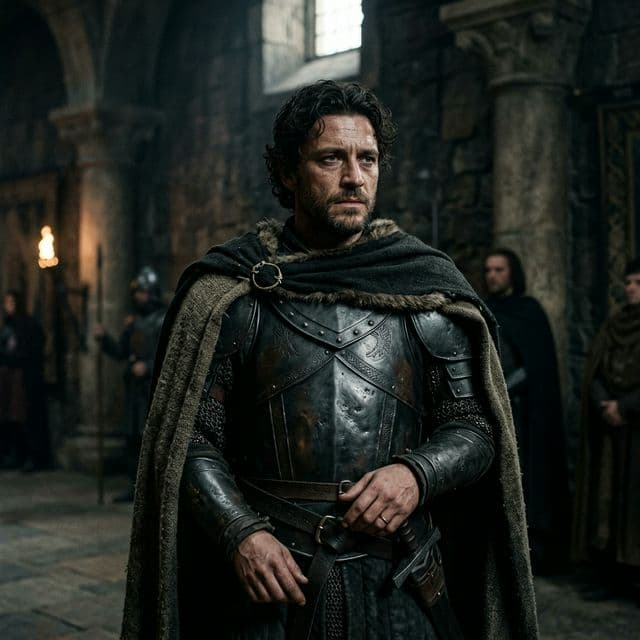
AI-assisted portrait of Cassander
The Architecture of Realpolitik
Cassander did not just inherit a throne; he executed a legacy. As the son of Antipater, his life was defined by a profound, often ruthless detachment from the mythological idealism of Alexander’s circle. While others were blinded by the vision of a universal empire, Cassander’s genius was profoundly internal and strategic (Ni). He saw the Argead house—and the very memory of Alexander—as a systemic threat to the stability of Macedonia, and he acted with a cold, analytical precision (Te) to dismantle the past and build a new, more modular world.
He was the master of the necessary act and the cold calculation. From the execution of Olympias to the systematic removal of Alexander’s heirs, Cassander’s cognitive mode was focused on the internal synthesis of political reality, unburdened by the Fe-driven "vision" that had propelled the previous generation. For Cassander, order was something to be engineered through the elimination of chaos, no matter the human or historical cost.
Historical Context
Cassander was the eldest son of Antipater and a key figure in the wars of the Diadochi. Unlike most of Alexander's companions, he remained in Macedon for much of the Persian campaign, which reportedly led to a deep-seated resentment of the king's deification. After his father's death, he seized control of Macedon and Athens, eventually declaring himself King. He is most infamous for the execution of Alexander's mother Olympias, his wife Roxana, and his son Alexander IV, effectively ending the Argead dynasty. He founded the city of Thessaloniki, naming it after his wife—Alexander's half-sister.
The Psychological Verdict
Cassander is a definitive INTJ. He was a figure of deep, internal vision and strategic independence (Ni), supported by a pragmatic, logical approach to his external environment (Te) and an unwavering, if brutal, internal set of standards (Fi).
Ni — Dominant
His primary mode was the internal synthesis of complex patterns. Cassander understood the shifting political landscape better than almost any of his rivals. He saw the inevitable failure of the "unified" empire and the need for a strong, localized Macedonian state. His auxiliary Ni allowed him to look past the immediate prestige of the Argeads to see the systemic instability they caused. His decisions were driven by an intuitive grasp of the long-term mechanics of power.
Te — Auxiliary
Supporting his internal vision was an objective, effective application of logic. Cassander was a master of political and military engineering. His actions were decisive, calculated, and entirely oriented toward the efficient consolidation of power. He dismantled his enemies with the same precision he used to build the defenses of Macedon. He didn't seek glory (Fe); he sought the structural finality of a completed goal.
Fi — Tertiary
Beneath his strategic exterior lay a deeply private and unwavering internal world. His tertiary Fi manifests in his apparent immunity to the social and religious pressures of his era. He was the only general who refused to worship Alexander as a god, a stance that reflects an internal set of values that did not require external validation. His ruthlessness was not impulsive, but a function of an internal standard of necessity.
Se — Inferior
What stayed in the background was the immediate, visceral experience of the physical world. Cassander was often described as gloomy and detached, a man who preferred the strategy of the court to the sensory chaos of the battlefield. His inferior Se manifests in his eventual physical collapse and the intense anxiety he reportedly felt when confronted with the physical symbols of Alexander’s legacy.
The Man History Needed to Hate
Cassander killed Olympias, Roxana, and Alexander IV — the last living heir of the Argead line. He also rebuilt Thebes, which Alexander had destroyed. He founded Thessaloniki and named it after his wife Thessalonice, Alexander’s half-sister. He was despised in the ancient sources written under dynasties that needed him to be the villain, and largely vindicated in modern scholarship as the administrator who actually kept Macedonia functional. His father Antipater had been the steady anchor while Alexander was abroad; Cassander extended that logic to its brutal conclusion. He died in 297 BCE of disease, having outlasted every rival of his generation except Ptolemy and Seleucus. His dynasty collapsed within a decade of his death. But Macedonia itself survived. That was what he had been working toward, even if no one wanted to give him credit for it.
Connected Figures
Further Reading
- The Wars of Alexander's Successors 323–281 BC — Bob Bennett & Mike RobertsThe most focused modern treatment of the Diadochi wars, covering Cassander's campaigns in detail.
- Alexander the Great: The Unique History of Quintus Curtius — Quintus Curtius Rufus (tr. John Yardley)Primary ancient source that preserves much of the Successor period, including Cassander's early career.
- After Alexander: The Time of the Diadochi (323–281 BC) — Edward AnsonA scholarly overview of the successor states and the political world Cassander helped create.
- The Successors of Alexander the Great — Diodorus Siculus (Books XVIII–XX, tr. Russel Geer)The fullest ancient narrative of the Diadochi, essential for reconstructing Cassander's reign.
