 Historical Figure MBTI
5 min read
#212 · 3-21-26 · The Age of Alexander
Seleucus I Nicator
The Victor of the East
r. 305 – 281 BCE
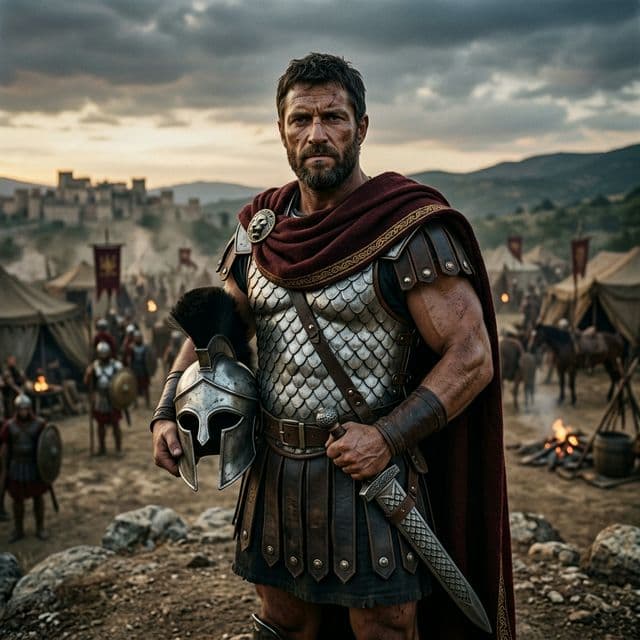
AI-assisted portrait of Seleucus I Nicator
The Architecture of Ambition
Seleucus I Nicator did not just inherit an empire; he reclaimed a continent. While others like Ptolemy chose the stability of a single region, Seleucus’s genius was profoundly structural and expansive (Te). He was the only one of the Diadochi who sought to preserve the eastern vastness of Alexander's vision, but he did so through a more grounded, logistical command of reality. His personality was oriented toward the building of cities and the establishment of a colossal, multi-ethnic administrative frame.
He was the master of the long march and the resilient state. From his escape from Babylon with nothing to his final victory at Corupedium, Seleucus’s cognitive mode was focused on the objective expansion of a single, coherent system. He was a leader who saw the map as a set of problems to be solved through strategic urbanism and military efficiency.
Historical Context
Seleucus I Nicator was a Macedonian general and companion of Alexander the Great. After Alexander's death, he survived the initial chaos of the Diadochi to establish the Seleucid Empire, which covered the vast territories of Persia, Mesopotamia, and parts of India. He founded dozens of cities—including Antioch and Seleucia—and successfully negotiated the "Elephant Treaty" with Chandragupta Maurya. His reign saw the most successful attempt to maintain the geographic scale of Alexander's world through Macedonian administrative principles.
The Psychological Verdict
Seleucus I Nicator is a definitive ENTJ. He was a leader defined by his relentless drive to organize the external world (Te), guided by a clear, long-term strategic vision for an intercontinental empire (Ni), and supported by an intense, physical command of the vast landscapes he ruled (Se).
Te — Dominant
His primary mode was the application of logic to the map. Seleucus’s strategy was built on the foundation of the Seleucid urban network; he knew that to rule the East, he had to physically plant Macedonian structure into the soil. His decisions were characterized by a focus on logistical continuity and the efficient mobilization of resources over enormous distances. He was the ultimate planner of the Hellenistic expansion.
Ni — Auxiliary
Supporting his will was a deep, intuitive sense of how different civilizations could be woven into a single narrative. Like Alexander, he used marriage and cultural synthesis to stabilize his rule, but he did so with a more detached, auxiliary Ni that focused on the systemic health of his empire. He could see the potential of an empire that linked the Mediterranean to the Indus, and he spent his life making that vision a structural reality.
Se — Tertiary
Seleucus was a man of immense physical endurance. His "marches of the elephants" and his constant movement across the vastness of the East reflect a tertiary Se that was perfectly aligned with his strategic goals. He understood the tactical value of the physical terrain and the sensory impact of a massive army. He didn't just command from a throne; he commanded from the saddle.
Fi — Inferior
His narrow focus on the building of a world-state often left his internal world as a secondary consideration. His decisions, including the strategic divorce from his wife Apama's children to secure his succession, reflect an inferior Fi that prioritized the objective health of the dynasty over personal sentiment. He was a man who sacrificed his own subjectivity to the altar of the empire he built.
The Empire Built on Patience
Seleucus was the Diadochos who absorbed the most punishment and came back anyway. He lost Babylon to Antigonus, fled to Egypt, spent years rebuilding, and retook it. He then built an empire stretching from the Aegean to the borders of India — the largest of all the successor kingdoms. Where Ptolemy won by consolidating, and Cassander won by holding the center, Seleucus won by enduring. He fought Antigonus at Ipsus and killed him. He fought Lysimachus at Corupedium and killed him too — making him, at the very end, the last man standing from the original generation of Alexander’s generals. He was assassinated in 281 BCE, months before he could have claimed Macedonia itself. The universe, apparently, had seen enough.
Connected Figures
Further Reading
- Seleucus Nicator: Constructing a Hellenistic Kingdom — John D. GraingerThe definitive modern biography of Seleucus — traces his career from companion of Alexander to founder of the largest successor state.
- The Hellenistic Age: A Short History — Peter GreenEssential context for the Diadochi wars and the world Seleucus shaped.
- Dividing the Spoils: The War for Alexander the Great's Empire — Robin WaterfieldReadable account of how the Macedonian generals carved up Alexander's inheritance — Seleucus plays a central role.
- The Syrian Wars — John D. GraingerCovers the dynastic conflicts of the Seleucid kingdom in the generations after its founder.
