 Historical Figure MBTI
#627 · 5-9-26 · Sengoku Japan
Tachibana Ginchiyo
Lady of Tachibana · The Warrior Woman of Kyūshū · Castellan in Her Own Right
1569 — 1602
6 min read
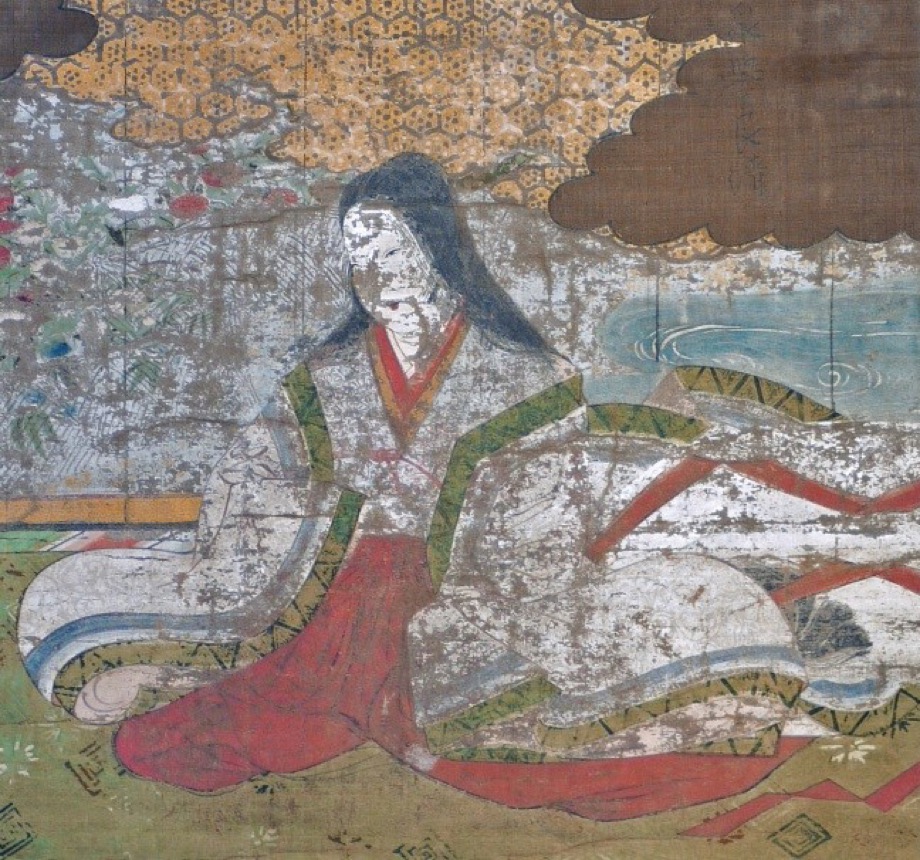
Portrait of Tachibana Ginchiyo
The Woman Who Armed Her Ladies
When the men expected her to wait behind the walls and pray, she handed her ladies-in-waiting the naginata and the matchlock and prepared to meet the enemy at the gate herself. That gesture — practical, physical, entirely without hesitation — is the whole of Tachibana Ginchiyo in a single image. She did not belong to the age's repertoire of grieving widows and patient wives. She was a soldier who happened to be a woman, and the century that produced her, the blood-soaked Sengoku, gave her exactly one thing to be good at: not flinching.
Born in 1569 to Tachibana Dōsetsu, the fearsome one-legged general who was the sword-arm of the Ōtomo clan in Kyūshū, she was her father's only child. Rather than let his house pass to a stranger, Dōsetsu made his daughter his heir outright — and so at seven she became head of the Tachibana and castellan of Tachibanayama Castle in her own name, a status almost no woman of the age held. She married Tachibana Muneshige, who took the family name; theirs was a marriage of two soldiers, proud and reportedly often strained, each unwilling to yield the field. Much of what came down about her is Edo-era legend, embroidered long after her death, but the hard core is documented and extraordinary: a woman recognized as a clan chief and a commander of troops.
Ginchiyo is the ESTP stripped to the bone: Se that met a threat with immediate physical action, and Ti's cold tactical sense underneath it — a mind that saw a castle to be defended, reached for the nearest weapon, and moved before anyone finished arguing about whether she could.
The Weapon in the Hand
Se — dominant
Dominant Se lives in the immediate, the physical, the here-and-now — and it answers danger with the body, not the letter. Where another lord's wife might have dispatched a courier and awaited relief, Ginchiyo's recorded instinct was to arm. In the most famous episode of her life — placed by various accounts in the turbulence around Hideyoshi's Kyūshū campaign or amid the pressure of the rival Shimazu — she is said to have mustered the women of the household, issued them naginata and firearms, and readied Tachibanayama's defense with herself in command. Whatever the layers of legend, the gesture rings true to type: threat translated instantly into a plan you can hold in your two hands.
This is not the courage of principle or the courage of despair. It is the courage of someone for whom action is the natural response to a live situation, faster than fear and faster than deliberation. The age valued exactly this in its men and punished it in its women; Ginchiyo simply refused the distinction. Raised inside her father's garrison, heir to a warrior who had lost a leg and kept fighting, she absorbed the soldier's fundamental reflex — that a castle menaced is a castle to be manned, by whoever is standing there. That she was standing there, and female, was to her beside the point.
The Soldier's Cold Eye
Ti — auxiliary
Se supplies the nerve; auxiliary Ti supplies the competence that keeps nerve from becoming mere recklessness. Ginchiyo was not a mascot who waved a blade for morale — the record remembers her as an actual commander, one who armed and organized troops and was reckoned a hard hand in her domain. Arming ladies-in-waiting with matchlocks is not a romantic flourish; it is a tactical calculation about how to hold a wall with the bodies available. That is the auxiliary at work: a private, impersonal logic assessing the fight on its own terms, indifferent to whether the defenders fit anyone's idea of a garrison.
The same edge shows in her household. Her marriage to Muneshige is remembered as a stand-off of equals — two commanders who would not defer, a wife who by several accounts kept her own guard and her own authority and expected to be treated as the ranking officer she formally was. It reads less like temperamental coldness than like Ti's refusal to pretend a hierarchy it does not accept. She had been made a clan head in her own right; she behaved like one. The competence was real, and she declined to soften it into the pose the era wanted from a lady.
Command as a Rallying Cry
Fe — tertiary
Ginchiyo's boldness was never solitary — it was always turned outward, at the head of others. Tertiary Fe gives the ESTP a talent for galvanizing the people in the room, and her defining act was precisely that: not defending a wall alone but summoning the women around her and making them a fighting force. To arm your attendants is to lead them, to hold their nerve with your own presence. She read the mood of a household under threat and answered it by putting weapons in their hands and standing in front.
That outward, commanding energy is why her legend hardened the way it did. She became, in the Edo imagination and after, the archetype of the onna-musha, the woman warrior — an emblem others could rally to. It is Fe in the service of Se and Ti: the personal courage made contagious, the private competence turned into a banner that other people would follow. She did not merely survive her moment. She organized the people beside her to meet it with her.
Why ESTP Over ISTP
Why not ISTP?
ISTP shares the Se–Ti core — the physical cool, the tactical hand — and one could read Ginchiyo as a detached, private technician of violence. But the ISTP's boldness is inward and self-contained; it acts alone and asks to be left alone. Ginchiyo's was the opposite: outward, assertive, socially forward. She did not slip off to defend a wall by herself — she mustered a company, imposed her authority on a household, and led women into arms by the force of her own presence. That commanding, mobilizing energy is the extraverted Se of an ESTP, not the withdrawn self-sufficiency of an ISTP.
The distinction is simply the direction of the nerve. Both types keep their heads in a crisis; the ESTP spends that composure out loud, in front of people, taking command of the moment for everyone in it. Ginchiyo's whole legend is a public act — a leader rallying a garrison — not a loner's quiet competence. She reached for the room as readily as she reached for the weapon.
Connected Figures
Further Reading
- Samurai Women 1184–1877 — Stephen TurnbullThe essential survey of the onna-musha tradition — the context in which Ginchiyo's arming of her ladies makes sense, and a corrective to the legend.
- The Samurai: A Military History — Stephen TurnbullThe wider narrative of the Sengoku wars and the Kyūshū campaigns that shaped the Tachibana's fortunes and their fall.
- War in Japan 1467–1615 — Stephen TurnbullA compact military history of the Sengoku through Sekigahara — the battles and sieges that framed a castellan's world.
- Hideyoshi — Mary Elizabeth BerryThe standard scholarly life of the unifier whose Kyūshū campaign reordered the island's clans, including Ginchiyo's Ōtomo overlords.
