 Historical Figure MBTI
#623 · 5-9-26 · Sengoku Japan
Toyotomi Hideyoshi
Taikō of Japan · The Peasant Who Ruled · Second of the Three Unifiers
1537 — 1598
12 min read
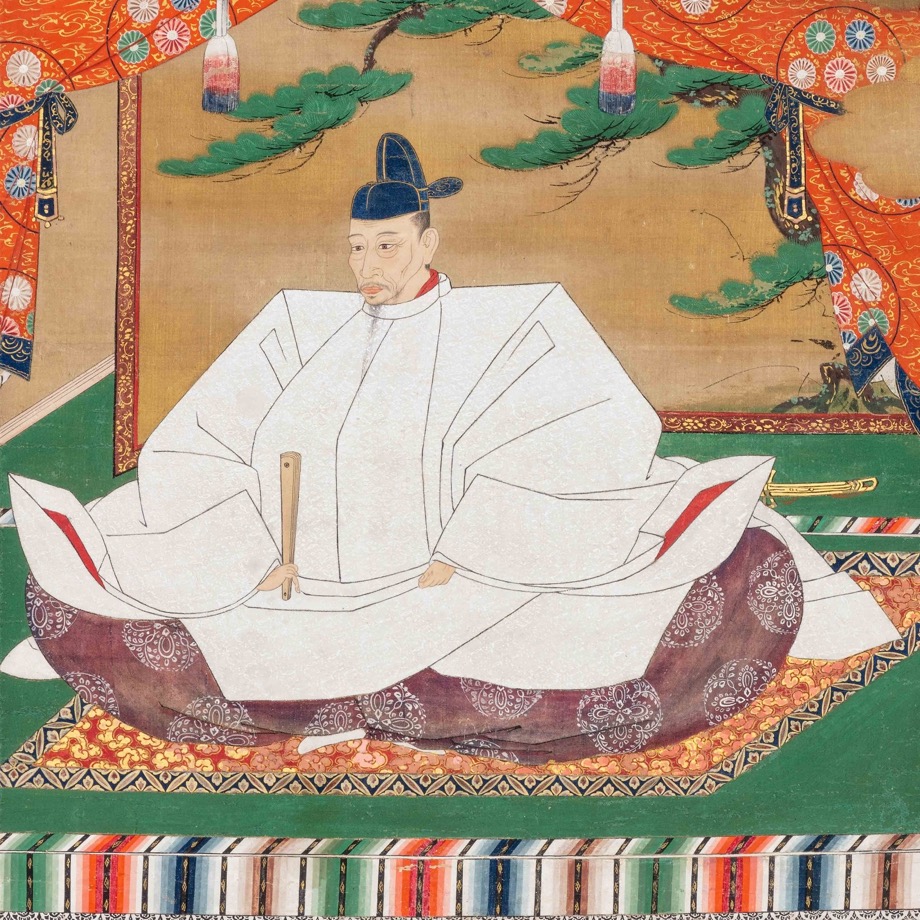
Portrait of Toyotomi Hideyoshi
The Monkey Who Talked His Way to a Throne
No one in Japanese history rose so far from so little. Toyotomi Hideyoshi was born in 1537 the son of a foot-soldier or a peasant farmer in Owari province — a small, homely, unpromising boy with, by the accounts that survive, a face like a monkey's. He had no name worth recording, no land, no lineage, none of the blood that in his world was supposed to be the only door to power. He ended his life as the absolute master of all Japan, master of a country that had torn itself apart for a century, staging tea ceremonies of unimaginable extravagance and dreaming of the conquest of China. Between those two points lies one of the most improbable careers ever lived — and it was won not by birthright, not by brute force alone, but by sheer wit.
He began as a sandal-bearer. Sometime around 1558 he attached himself to Oda Nobunaga, the terrifying warlord then clawing his way toward the unification of Japan, and started at the very bottom as a servant. Nobunaga nicknamed him Saru — the Monkey — and the Monkey climbed. He rose because he was useful in ways no one else thought to be useful: he rebuilt a fort in a night, he took a castle by drowning it, he turned problems inside out until they became opportunities. When Nobunaga was murdered in 1582, it was Hideyoshi who avenged him within a fortnight and then, with a con man's brilliance and a statesman's patience, made himself heir to the whole unfinished project and completed it. Too low-born to be named shōgun, he simply invented other titles — Kampaku, regent; then Taikō — and ruled anyway.
He is the ENTP as self-made sovereign: the improviser who saw an opening in every wall, out-thought every better-born rival, and charmed or dazzled or out-schemed his way up a ladder that had no rungs for a man like him. And he is also the ENTP's cautionary tale — because the same restless, unbounded imagination that built an empire, once nothing was left to check it, conjured a fantasy war across the sea that consumed the empire's strength and left his heir defenseless.
Hideyoshi is the ENTP in its most spectacular form: Ne's inexhaustible ingenuity — the overnight castle, the flooded siege, the enemy won over instead of destroyed — harnessed to a Ti cunning that read every strategic board better than the men born to sit at it. He did not inherit power. He improvised it.
The Man Who Saw the Opening
Ne — dominant
Dominant Ne is the compulsive generation of possibility — the mind that looks at a fixed situation and instantly sees three ways around it that no one else has imagined. Hideyoshi's whole legend is a catalogue of such moments. The first great one is the fort at Sunomata. Nobunaga needed a stronghold planted deep in hostile Saitō territory, where any conventional construction would be attacked and destroyed long before it was finished. Hideyoshi, so the story goes, prefabricated the components upriver, floated them down, and threw the whole castle up almost overnight — presenting his enemies at dawn with a fortress that had not existed the evening before. Whether embroidered or not, the tale became inseparable from him because it captured exactly how his mind worked: reframe the problem, and the impossible becomes a logistics exercise.
The purest expression came at Takamatsu in 1582. The castle sat on low ground, and a conventional siege would have cost him months and thousands of men against its walls. So Hideyoshi did not attack the walls. He looked at the land around the castle and saw water. He built a great embankment, dammed the nearby river, and let the rains do the rest — turning the fortress into an island in a rising artificial lake, its defenders trapped, its relief army left to watch helplessly from the far shore. It is the signature Ne solution: unconventional, oblique, almost theatrical, winning by imagination where force would have bled him white. He did not out-fight Takamatsu. He out-thought it.
And then, in the same fortnight, came the improvisation that made him. Word arrived that Nobunaga had been betrayed and killed at the Honnō-ji temple in Kyoto. Any ordinary commander, mid-siege in the far west, would have been paralyzed. Hideyoshi instead saw the whole future rearrange itself in an instant. He made a lightning secret peace with the very enemy he was drowning, wheeled his entire army around, and drove it back across Japan in a forced march of astonishing speed — some two hundred kilometres in days — to fall on the traitor Akechi Mitsuhide at Yamazaki and crush him within thirteen days of the murder. In a single improvised stroke he transformed catastrophe into the greatest opportunity of his life, made himself Nobunaga's avenger, and seized the moral claim to everything his dead lord had built. That is Ne: not a plan, but the genius of the sudden, brilliant opening seized before anyone else has even understood the board.
The Cold Logic Under the Charm
Ti — auxiliary
Ne without Ti is only a fountain of clever ideas; Ti is the auxiliary that tests them, sequences them, and turns brilliance into strategy. Hideyoshi's cunning was famous, and it was analytic. After Yamazaki he did not simply seize power — he read the political board with a chess player's cold precision. He convened the council at Kiyosu to decide Nobunaga's succession and quietly maneuvered it into backing Nobunaga's infant grandson, a figurehead through whom Hideyoshi himself would rule. He isolated the rival senior general Shibata Katsuie, defeated him at Shizugatake in 1583, and picked off the coalition against him one relationship at a time. Each move was calculated to leave him stronger and his enemies divided.
His handling of Tokugawa Ieyasu is the cleanest proof of the Ti mind at work. The two fought to a bloody stalemate at Komaki and Nagakute in 1584 — a war Hideyoshi could not simply win on the battlefield. So he stopped trying to win it there. He calculated, correctly, that Ieyasu was too dangerous to destroy and too valuable to waste, and he brought him to heel not by force but by an elaborate campaign of binding: honors, marriage alliance, even sending his own mother to Ieyasu's camp as a hostage to guarantee good faith. He converted his most formidable enemy into his most powerful vassal by out-reasoning the problem rather than out-bleeding it.
The same analytic detachment shaped the peace he imposed once Japan was his. The great cadastral survey — the Taikō kenchi — measured and registered every rice field in the country, fixing wealth, tax, and rank into a single legible system. The Sword Hunt of 1588 disarmed the peasantry entirely, and the edicts that followed froze every man into his class: warrior, farmer, townsman, forever separate. There is a striking, chilly logic in the peasant's son slamming shut the very door he had climbed through — sealing the social ladder behind him so that no second Hideyoshi could ever rise the way he had. Ne had seen every opening; Ti, having reached the top, closed them all.
The Charm That Won Men Over
Fe — tertiary
A man with no lineage cannot command; he must persuade. Tertiary Fe gave Hideyoshi a genius for reading people and for winning them — the warmth, the flattery, the theatrical generosity that made allies out of men who by every rule of blood should have despised him. Where Nobunaga ruled by terror and Ieyasu by patience, Hideyoshi ruled by seduction. He was a gifted, disarming talker, quick with a joke, lavish with reward, and shrewd about exactly what each man wanted — and he gave it to them. He preferred, whenever he could, to buy a rival rather than kill him: to defeat an enemy and then heap him with lands and honors so that gratitude did the work that swords could not.
His self-fashioning was pure Fe performance. Barred from the shogunate by birth, he had himself adopted into a noble family and elevated to Kampaku, then staged his legitimacy in grand public theatre. The most dazzling instance was the vast tea gathering he held at Kitano in 1587, thrown open to everyone from great lords to common townsmen — a spectacle of cultivation and largesse designed to show the whole nation that the Monkey was now the arbiter of taste itself. He built the immense golden tea room, staged processions of staggering extravagance, and understood, as a natural showman does, that power is partly a story you tell people until they believe it.
But tertiary Fe is unstable, and its need for the room's admiration curdles easily into a tyrant's need for the room's submission. The break that shows this most painfully is Sen no Rikyū, the great tea master who had shaped Hideyoshi's own aesthetic and served as his intimate. In 1591, over offenses that remain murky — pride, a statue, some slight to the Taikō's dignity — Hideyoshi ordered the old man to take his own life. The ruler who had charmed a nation could not, in the end, bear to be looked at as an equal by the one man whose judgment he most respected. The charm and the cruelty were the same faculty, pointed in different directions.
The Dream That Devoured Him
Si — inferior
Inferior Si is the ENTP's blind spot: the sober sense of limit, precedent, and physical reality that a mind addicted to possibility never quite develops. For most of his life Hideyoshi's boundless imagination was disciplined by real opponents — a Nobunaga to serve, an Ieyasu to reckon with, a war to win. But by 1590, when the fall of the Hōjō at Odawara completed the unification and left all Japan at his feet, there was nothing left to push back against. And an unchecked Ne does not rest. With no rival to check it and no ground sense to restrain it, his imagination simply invented a bigger canvas: he would conquer Korea, and then China, and rule an empire spanning Asia. He even mused about parcelling out the Chinese provinces and installing the emperor in Beijing.
The two invasions of Korea — in 1592 and again in 1597 — are inferior Si in catastrophe. They were built on fantasy rather than fact: no realistic grasp of distance, supply, the Korean navy under Yi Sun-sin, or the vast weight of Ming China that would come to Korea's aid. The initial advance swept up the peninsula, then bled out and collapsed against exactly the logistical and material realities the Taikō had never bothered to weigh. Hundreds of thousands died; whole provinces were laid waste; nothing was gained. It was the overreach of a man who had solved every problem by out-imagining it and had finally met a problem that imagination could not dissolve — only the dull, ground-level facts he had spent a lifetime leaping over.
Everything Ne built, unchecked Ne unbuilt. The mind that saw an opening in every wall could not, at the last, see the wall that was real — and it hurled the empire it had made against the coast of Korea until both were broken.
The same untethered quality poisoned his succession. Having no son, he had adopted his nephew Hidetsugu as heir and passed him the Kampaku title — and then, when Yodo-dono bore him a natural son at last, he turned on Hidetsugu, forced him to suicide in 1595, and had the young man's wives and children slaughtered in Kyoto to clear the path. A paranoid old man was mortgaging the future of his house to a five-year-old. When Hideyoshi died in 1598, still dreaming of China, he left that child under a council of regents he begged, in his last letters, to protect the boy — a council led by the one man patient enough to wait him out.
Why ENTP Over ESTP
Why not ESTP?
The ESTP reading is tempting, and it catches something true: Hideyoshi was bold, opportunistic, and thrilling in a crisis, a man who thrived on the live moment. But the ESTP's gift is Se — a tactical reflex, a superb read of the physical present and a strike at the immediate opening. Hideyoshi's signature was not reflex but invention. He did not seize Takamatsu; he re-engineered its landscape into a lake. He did not simply out-fight Ieyasu; he out-imagined the problem and turned an enemy into a vassal by hostage and marriage. He won men by cleverness and staged largesse, and fashioned a peasant into a Kampaku by sheer theatrical invention. That is Ne conceiving new possibilities, not Se exploiting present ones.
The clinching evidence is his ruin. An ESTP's characteristic failure is the miscalculated risk — a bold bet on a real situation that goes wrong. Hideyoshi's failure was nothing so grounded. The invasions of Korea and the dream of conquering China were not risks a present-focused realist would have taken; they were a fantasy untethered from supply, distance, and the material weight of Ming China — the runaway overreach of an imagination that had never learned to respect a limit. An ESTP is defined by contact with reality; Hideyoshi was destroyed by his loss of it. The peasant who out-thought a whole age of warlords was an inventor to the end — and it was his last, ungrounded invention that undid everything the first ones had built.
Connected Figures
Further Reading
- Hideyoshi — Mary Elizabeth BerryThe standard scholarly biography in English — especially strong on how a low-born ruler manufactured legitimacy and built the institutions of national order.
- Toyotomi Hideyoshi — Stephen TurnbullA compact, well-illustrated military life of the unifier — clear on the campaigns, the sieges, and the rise from servant to Taikō.
- The Imjin War: Japan's Sixteenth-Century Invasion of Korea and Attempt to Conquer China — Samuel HawleyThe definitive narrative of the Korea invasions — the fullest account of the overreach that consumed Hideyoshi's last years.
- Sengoku Jidai: Nobunaga, Hideyoshi, and Ieyasu — Danny ChaplinA sweeping narrative of the three unifiers together — useful for seeing Hideyoshi's place between Nobunaga's violence and Ieyasu's patience.
- History of Japan — Luís FróisThe contemporary account of the Jesuit missionary who observed Hideyoshi's court firsthand — a vivid outsider's portrait of the man and his theatre of power.
