 Historical Figure MBTI
#628 · 5-10-26 · Sengoku Japan
Tokugawa Ieyasu
Shōgun of Japan · The Patient One · Third of the Three Unifiers
1543 — 1616
11 min read
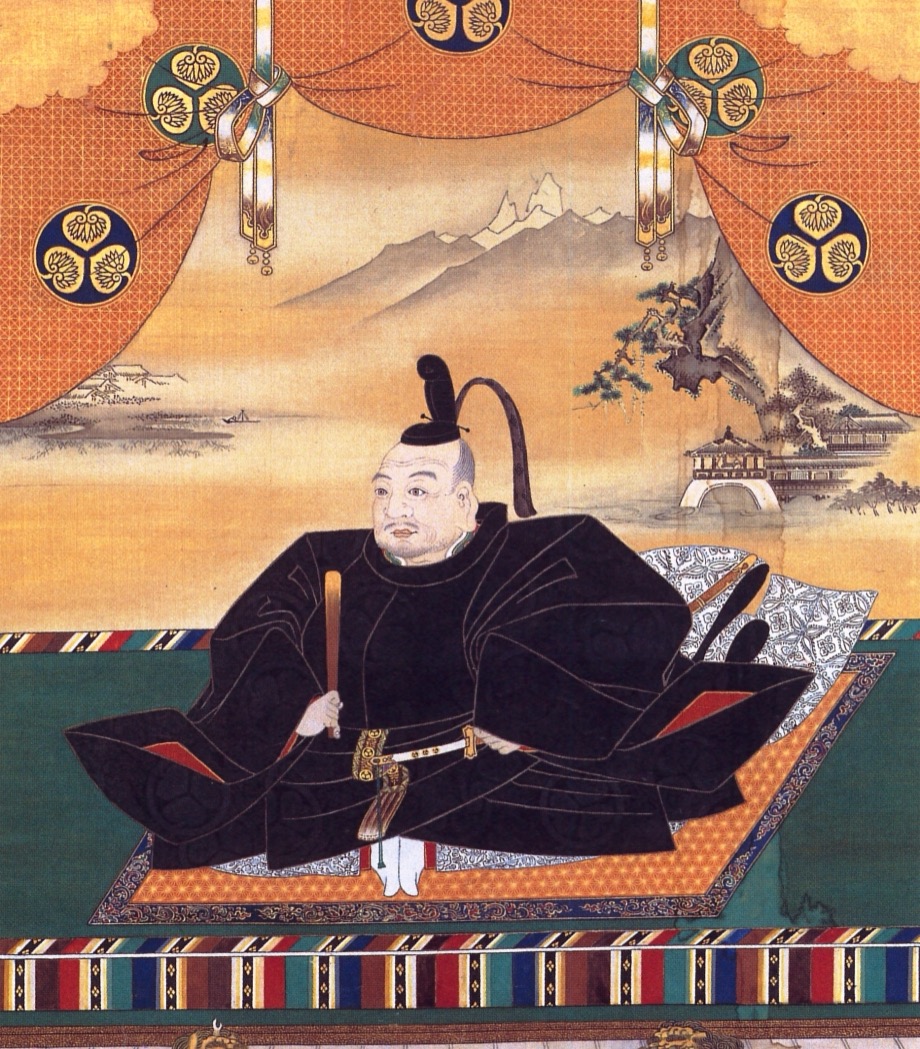
Portrait of Tokugawa Ieyasu
The Man Who Waited for the Bird to Sing
There is an old Japanese verse about the three men who unified the country, and it turns entirely on a cuckoo that refuses to sing. Oda Nobunaga, the verse says, would kill the bird. Toyotomi Hideyoshi would coax and flatter it until it sang. And Tokugawa Ieyasu would simply wait — sit still, say nothing, and let the bird sing in its own time. It is doggerel, invented long after all three were dead, but it is also the most accurate character sketch ever written of any of them. Nobunaga burned like a fuse. Hideyoshi dazzled and charmed his way from peasant to regent. Ieyasu outlived them both by doing almost nothing spectacular for fifty years — and then inherited everything.
He was born in 1543 into the small Matsudaira clan of Mikawa, a minor house caught between larger predators, and he spent his boyhood as a hostage — first of the Imagawa, briefly of the Oda — a bargaining chip traded between warlords who could have killed him at any moment. It was an education in the one discipline that would define his life: how to survive by making yourself useful, patient, and impossible to read. From that beginning he rose across seven decades of civil war to become, in 1603, the shōgun of a unified Japan, founder of a dynasty that would hold power for more than two and a half centuries. He did not seize the country. He waited for it, and when it finally fell into his hands he built around it a structure so durable that it froze Japan in peace until the arrival of American warships in the 1850s.
This is the psychology of the long game — the rarest and coldest kind of strategic mind, one that can hold a picture of the endgame for decades while stronger, brighter men rise and burn out in front of it. Ieyasu is the INTJ not as brooding theorist but as architect of empire: a man who saw exactly how the pieces would fall, and then built a machine to keep them there.
Ieyasu is the INTJ in its most patient and dangerous form: Ni's decades-long vision of the endgame welded to Te's cold organizational genius — the man who did not seize the moment but waited for it, and then engineered a system of power designed to last centuries.
The Endgame Held for Fifty Years
Ni — dominant
Dominant Ni is the faculty that fixes on a single distant outcome and bends everything toward it, and Ieyasu's outcome never wavered from the day he understood the game he was in. Consider what patience actually cost him. After the battle of Okehazama in 1560 broke the Imagawa, he allied himself with Oda Nobunaga — and he held that alliance, loyally and without a visible flicker of ambition, for more than twenty years, through campaign after campaign in which he was always the junior partner. The alliance demanded a horrifying price. When Nobunaga grew suspicious that Ieyasu's wife and eldest son were conspiring with his enemies, Ieyasu did not fight, did not flee, did not protest. He ordered his own wife killed and his own heir to commit seppuku. A man driven by feeling could not have done it; a man without a vision would not have needed to. Ieyasu paid because the alliance was the road to the future he could see, and the future mattered more than the son.
The same iron patience governed his dealings with Hideyoshi. After Nobunaga's death, Ieyasu fought Hideyoshi to a bloody draw at Komaki and Nagakute — and then, having proven he could not be beaten cheaply, he did the unthinkable for a proud warlord: he submitted. He bent the knee, sent hostages, accepted the humiliating transfer of his clan out of its ancestral lands and into the undeveloped marshlands of the Kantō. To his retainers it looked like defeat. It was the opposite. On that swampy plain Ieyasu began building a fishing village called Edo into the greatest power base in Japan — the city that would one day be Tokyo. He had traded pride for position, and he waited. When Hideyoshi died in 1598 leaving only a five-year-old heir, Ieyasu was the strongest of the five regents sworn to protect the child, sitting on the richest domain in the country, exactly where his decades of patience had placed him.
The bird verse gets him exactly right. Where other men killed or coaxed, Ieyasu waited — not out of timidity but because he could see, with cold clarity, the single moment when the whole board would be his, and he refused to spend himself before it arrived.
That is the essence of the Ni long game: the ability to lose the son, swallow the submission, and move the whole clan to a swamp — each an unbearable concession in the present — because none of them touched the one outcome held steady in the mind. Sekigahara in 1600, the greatest battle in Japanese history, was not a gamble Ieyasu stumbled into. It was the confrontation he had spent forty years positioning himself to win.
Engineering a Peace That Would Last Centuries
Te — auxiliary
If Ni gave Ieyasu the vision, auxiliary Te gave him the machine to make it real — and his genius was never clearer than in what he did after the fighting stopped. Winning Sekigahara made him the master of Japan; it did not make his power permanent, and Ieyasu understood the difference perfectly. A lesser victor enjoys the throne. Ieyasu treated victory as a raw material to be engineered into something that could not be undone. He had himself named shōgun in 1603, then abdicated the title to his son just two years later — a cold, brilliant stroke that established, before anyone could contest it, that the shogunate was hereditary Tokugawa property and not a personal prize to be fought over again. He kept the real power himself as retired shōgun. He was building an institution, and institutions outlive men.
What he constructed over the following years was a system of almost inhuman precision. He redistributed the domains of the entire country, ringing his own heartland with trusted vassals and pushing the defeated lords to the distant edges. He classified every daimyō by loyalty and graded their obligations accordingly. He drew up codes governing the conduct of the warrior houses and the imperial court alike, subordinating even the emperor to Tokugawa oversight. The later refinement of his design would compel every lord in Japan to spend alternate years in Edo and to leave his family there permanently as hostages — a bureaucratic masterpiece that bankrupted potential rebels through sheer travel and kept their wives and heirs perpetually within the shōgun's reach. It is the same instinct that once moved a whole clan to a swamp, now operating on the scale of a nation: control the structure, and you need not win the battle, because the battle can never be fought.
This is the signature that separates Ieyasu from every other warlord of his century. Others won wars; he abolished the conditions for war. The order he engineered gave Japan roughly 260 years of unbroken internal peace — the Pax Tokugawa — an achievement with few equals in world history. Nobunaga shattered the old order and Hideyoshi assembled the pieces, but it was Ieyasu's Te that fused them into a state so stable it did not so much govern Japan as freeze it, holding the country in a deliberate, administered stillness until the modern world forced the doors open two and a half centuries later.
The Private Ledger of Loyalty and Grudge
Fi — tertiary
Tertiary Fi in an INTJ is a quiet, internal register of value — not warmth worn on the surface, but a deeply held, privately kept sense of who is owed what. Ieyasu was famously cold, and famously unreadable; contemporaries and later historians alike struggled to find the man beneath the mask of prudence. Yet his Fi shows in two directions. Toward those who stood by him it produced a loyalty that was itself a kind of policy: the retainers of Mikawa who had followed him since the hostage years were bound to the Tokugawa house across generations, their devotion repaid with a place in the structure he built. He inspired a famous, almost ferocious loyalty precisely because his sense of the bond ran deeper than sentiment — it was principle.
Toward his enemies, the same interior ledger kept its own patient accounts. Ieyasu did not rage; he remembered. The destruction of the Toyotomi was, on one level, cold political necessity — Hideyoshi's heir was the one focus around which the loyalists of a lost cause could still rally. But there was something more than calculation in the thoroughness with which Ieyasu, an old man of seventy, ground the last of the Toyotomi into extinction at Osaka. He had submitted to Hideyoshi, sent hostages to Hideyoshi, taken orders from Hideyoshi for years. The obliteration of that house closed an account that had been open for a long time.
It is the mark of the tertiary function that this inner world rarely surfaced cleanly — Ieyasu almost never let feeling drive a decision, which is exactly why the ordered death of his own wife and son remains the most chilling episode of his life. What Fi gave him was not openness but conviction: a private, unshakable sense that he was in the right, that the peace he was building justified its terrible costs, and that the men who had earned his trust and the men who had earned his enmity would each, in the end, be paid in full.
The Body He Refused to Gamble
Se — inferior
Inferior Se is the INTJ's weakest and most uneasy relationship — with the present moment, the physical body, the raw immediacy of the fight. In Ieyasu it produced not a taste for danger but a lifelong wariness of it, and an almost obsessive attention to the one asset his whole strategy depended on: his own survival. Where Nobunaga courted risk and Hideyoshi loved spectacle, Ieyasu guarded his body like a miser guarding capital. He was famously careful about his health, mixing his own medicines, moderate in his habits, disciplined in a way that read as dullness to flashier men — and it was this care that let him win the ultimate victory of simply outliving everyone. His edge over Nobunaga and Hideyoshi was, in the end, that he did not die first.
But the inferior function does not vanish; it erupts under pressure, and Ieyasu's worst moments were the ones where the strategist lost control of the immediate field. At the siege of Osaka in 1615 — the last act of the wars, the extermination of the Toyotomi — the brilliant defender Sanada Yukimura launched a desperate, ferocious charge that broke clean through the Tokugawa lines and drove straight at Ieyasu's own command post. For a few chaotic moments the old shōgun, seventy-two years old and within sight of total victory, was in genuine danger of being cut down — his standard reportedly toppled, an event that had not happened in decades. The whole edifice of patience and planning nearly ended on the point of one young warrior's spear, in exactly the kind of raw physical melee Ieyasu had spent his life arranging to avoid.
He survived, Yukimura fell, and the Toyotomi were destroyed — the last threat to the order he had built extinguished at Osaka along with Hideyoshi's heir and the matriarch Yodo-dono. Within a year Ieyasu himself was dead, in 1616, aged seventy-three. He was deified after death as a divine protector of the realm — a fitting apotheosis for a man whose greatest and most deliberate achievement had been, quite simply, to last.
Why INTJ Over ISTJ
Why not ISTJ?
The ISTJ case is seductive, because the surface fits so well: the caution, the patience, the discipline, the horror of waste, the dutiful decades of loyal service — all of it reads as the careful, precedent-bound traditionalist. But the ISTJ conserves and administers a known order; Ieyasu invented a new one. He did not restore the old shogunate as it had been — he re-engineered the entire architecture of Japanese power from the ground up, designing institutions that had never existed to solve a problem no one had solved. That is not Si's reverence for the established way. It is Ni's forward vision, seeing years ahead exactly how the pieces would have to fall and then building the system to hold them there.
The distinction lives in the difference between diligence and design. An ISTJ of Ieyasu's gifts would have been a superb administrator of an existing regime — loyal, meticulous, incorruptible, the steady hand that keeps a going concern going. That, in fact, is a fair portrait of Ishida Mitsunari, the man Ieyasu destroyed at Sekigahara: a brilliant, rigid loyalist devoted to preserving the Toyotomi settlement exactly as Hideyoshi had left it, defending a legitimate order by the book. Mitsunari fought to conserve; Ieyasu fought to redesign. The one held to the letter of what was; the other saw, with cold patience, the entire shape of what could be made to last — and then spent fifty years building it. Conserving an order is Si–Te. Foreseeing and architecting a new one is Ni–Te, and it is the whole of Tokugawa Ieyasu.
Connected Figures
Further Reading
- The Maker of Modern Japan: The Life of Tokugawa Ieyasu — A. L. SadlerThe classic full-length English biography — dated in places but still the richest narrative of the whole life, from hostage boy to deified shōgun.
- Tokugawa Ieyasu: Shogun — Conrad TotmanA concise, authoritative modern study by a leading historian of Tokugawa Japan — the best short scholarly account of how he won and organized power.
- Sengoku Jidai: Nobunaga, Hideyoshi, and Ieyasu — Danny ChaplinTraces all three unifiers together across the age of civil war — essential for seeing Ieyasu against the men whose work he inherited and completed.
- The Samurai: A Military History — Stephen TurnbullThe standard survey of samurai warfare — strong on Sekigahara and the sieges of Osaka, the battles that decided the shape of Ieyasu's peace.
