 Historical Figure MBTI
#630 · 5-10-26 · Sengoku Japan
Sanada Yukimura
Warrior of the Sanada · Hero of the Siege of Osaka · The Crimson Demon
1567 — 1615
10 min read
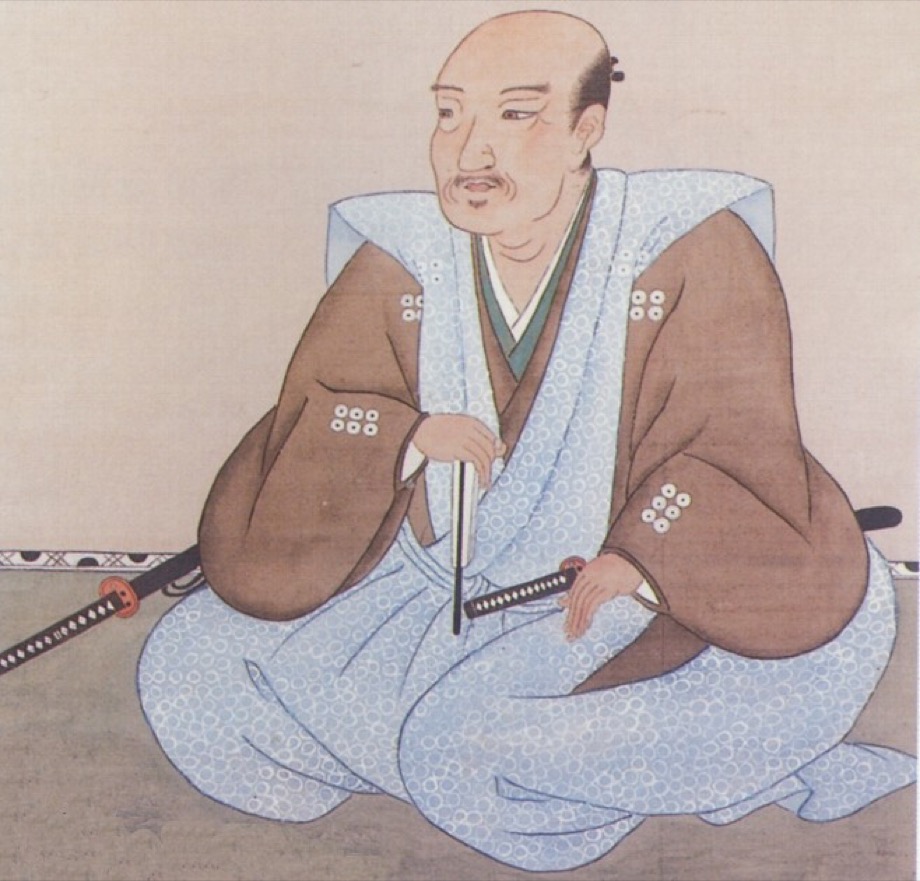
Portrait of Sanada Yukimura
The Man Who Chose the Losing Side
He could have lived. That is the fact from which every legend about Sanada Yukimura grows. In the winter of his story he held offers of land, rank, and safety from the men who had already won Japan — and he set them aside to fight for a cause that everyone, himself surely included, knew was doomed. He rode into the last great battle of the samurai age in blood-red armor, under a helmet crowned with deer antlers, at the head of a garrison of the defeated, and he made the winners fear for their lives before he died. Japan remembered him not as the man who lost but as “the greatest warrior in Japan” — the crimson demon — because he had spent everything he had on a loyalty that could never pay him back.
Born in 1567 into the Sanada clan of Shinano — a small mountain house famous for its cunning and its stubbornness — Nobushige, whom history remembers as Yukimura, came of age as the wars to unify Japan reached their bloody climax. He first entered legend at the second siege of Ueda in 1600, where the tiny Sanada force pinned down a vast Tokugawa army and kept it from reaching the decisive field of Sekigahara in time. That was the tactician's triumph. But his true measure was taken fifteen years later, at Osaka, where the tactics served something the calculating men of his age could not understand: a value he would not trade away.
Yukimura is the ISFP at its most luminous and most tragic — an inward, unbargaining Fi devotion to a lost cause, lived out in the dazzling physical courage of Se: the red charge, the fortress raised by hand, the body spent for a loyalty that could never be repaid.
The Loyalty That Would Not Be Bought
Fi — dominant
Dominant Fi is an interior compass — a private, unnegotiable sense of what one owes and who one is, held so deeply that it does not answer to advantage. Yukimura's whole life turns on a single moment when that compass overruled every rational argument. After Sekigahara the Sanada had backed the losing side; Yukimura was stripped of his lands and exiled to the monastic mountain of Kōya, where he might have lived out a quiet, forgotten old age. When war stirred again in 1614, the winning side courted him. The Tokugawa reportedly dangled a great fief to bring so famous a warrior over. The safe move, the calculating move, was obvious.
He refused it, and rode instead to Osaka to defend the Toyotomi — the fading house of the man who had once been his family's lord. There was no strategic logic in it. The Toyotomi were surrounded, outnumbered, and politically doomed; a clear-eyed observer could see that Osaka would fall. Yukimura joined them anyway. This is the essence of Fi: a choice made not because it will succeed but because it is the one that lets a man keep faith with himself. He was not gambling on victory. He was refusing to become the kind of man who trades his loyalty for a castle.
What makes the choice specifically his — and not mere feudal reflex — is that everyone around him was doing the opposite. The Sengoku was an age of side-switching, of lords reading the wind and defecting to the winners; his own clan had famously split itself across both camps to hedge. Yukimura had every excuse for pragmatism and chose the harder, quieter thing instead. Dominant Fi rarely argues. It simply declines to be moved.
The Crimson Charge
Se — auxiliary
If Fi supplied the cause, auxiliary Se supplied the means — a genius for the physical present, for reading terrain and momentum and the exact weight of a blow. Yukimura did not express his devotion in words or plans on paper. He expressed it with his body and his hands, in the concrete facts of walls, ground, and steel. At the winter siege of Osaka in 1614 he grasped the one weakness in the great fortress's defenses and raised, at that vulnerable corner, a semicircular earthwork redoubt — the Sanada-maru — from which his men poured fire into the attackers and inflicted staggering losses. It was a soldier's answer built out of the tangible landscape, not a strategist's abstraction.
The red armor and the antlered helmet belong to the same function. Se is drawn to the vivid and the seen — and Yukimura turned himself into a spectacle, a blaze of crimson so that friend and enemy alike knew exactly where he was. This was not vanity. To be that visible on a battlefield is to invite every arrow; it was the courage of a man who lived fully in the danger of the moment rather than hedging at its edges.
That courage reached its peak at the final battle of Tennōji in 1615. With the war lost and the fortress crumbling, Yukimura gathered the desperate remnant of the defenders and led a headlong charge straight into the heart of the enemy — punching through line after line until he broke into the personal headquarters of Tokugawa Ieyasu himself. It is said that for the only time in a long life of war, Ieyasu — the man about to rule all Japan — feared for his life and thought of taking his own. That is Se at its ceiling: the whole of a man's force delivered in a single, unhesitating, physical stroke.
The Death He Foresaw
Ni — tertiary
Tertiary Ni gives the ISFP flashes of foresight — a quiet inner certainty about how things will end, which lends the whole life its air of chosen tragedy rather than blundering misfortune. Yukimura was no naïve idealist stumbling into a hopeless fight. His years at Ueda and his reading of the strategic map at Osaka told him plainly that the Toyotomi could not win, and when the cautious lords inside the fortress overruled his calls for bold offensives, he could see the shape of the ending taking form.
He went forward anyway, and there is something distinctly Ni in the way he composed his own final act. The charge at Tennōji was not blind fury; it was a man who understood that death had already been decided and chose to give it meaning — to aim it, like an arrow, at the one target whose terror would echo through history. He went into that last fight resolved to be remembered, and arranged the ending so that he would be. The visionary function, in an ISFP, does not build empires; it tells a man what his story is and lets him meet it on his own terms.
The Efficiency He Would Not Serve
Te — inferior
Inferior Te is the ISFP's blind spot — the cold ledger of advantage, leverage, and impersonal outcome that the type can wield in bursts but will not let govern the heart. It is telling that Yukimura was a superb tactician: he could organize a defense, calculate an angle of fire, and outthink a larger army when he chose to. The competence was real. But he subordinated it entirely to a value, and that ordering is the whole point of his type.
The winning side of his age was Te incarnate. Tokugawa Ieyasu built a two-hundred-and-fifty-year peace precisely by treating loyalty, marriage, and honor as instruments — by asking always what would work and what would last. Measured on that ledger, Yukimura's choice at Osaka was simply irrational: he threw away his life and his family's fortune on a house already finished. Yet the ledger was never the measure he cared about. Where the strategist asks what will succeed, Yukimura asked what he could live — and die — without betraying. His indifference to the efficient outcome is not a failure of intelligence but the signature of a man for whom Te would always be the servant and never the master. He used it brilliantly in the service of a cause it would have told him to abandon.
Why ISFP Over ISTP
Why not ISTP?
The case for ISTP is genuine: Yukimura was a master tactician with a soldier's cool hands, and the Sanada-maru and the calculated charge at Tennōji show the ISTP's gift for reading a situation and acting on it with precision. But the ISTP is defined by pragmatic detachment — the analyst who keeps his options open and does what works. That is exactly the man Yukimura refused to be. Offered land and safety to switch to the winning side, the coolly rational choice, he threw it away to die for a lost house. His defining act was not a calculation but a value, and that self-sacrificing devotion is the mark of Fi, not the disengaged logic of Ti.
The tactical brilliance is real, and it is why ISTP tempts. But temperament is revealed at the fork where competence must choose a master. Yukimura's intelligence served his loyalty; it never governed it. The ISTP would have taken the fief, kept his blade sharp, and lived to fight another, better-odds day — and there would have been no dishonor in it, only good sense. Yukimura's greatness is precisely that he spent his considerable skill on the cause that skill told him to abandon. That is the crimson heart of the ISFP: courage placed in the service of a devotion, not of an advantage.
Connected Figures
Further Reading
- Osaka 1615: The Last Battle of the Samurai — Stephen TurnbullThe definitive short account of the winter and summer sieges — the Sanada-maru, the final charge at Tennōji, and the fall of the Toyotomi.
- The Samurai: A Military History — Stephen TurnbullThe standard survey of the samurai in war; places Yukimura and the Sengoku wars in their full military context.
