 Historical Figure MBTI
#629 · 5-10-26 · Sengoku Japan
Ishida Mitsunari
Administrator of the Toyotomi · Leader of the Western Army · The Loser of Sekigahara
1559 — 1600
10 min read
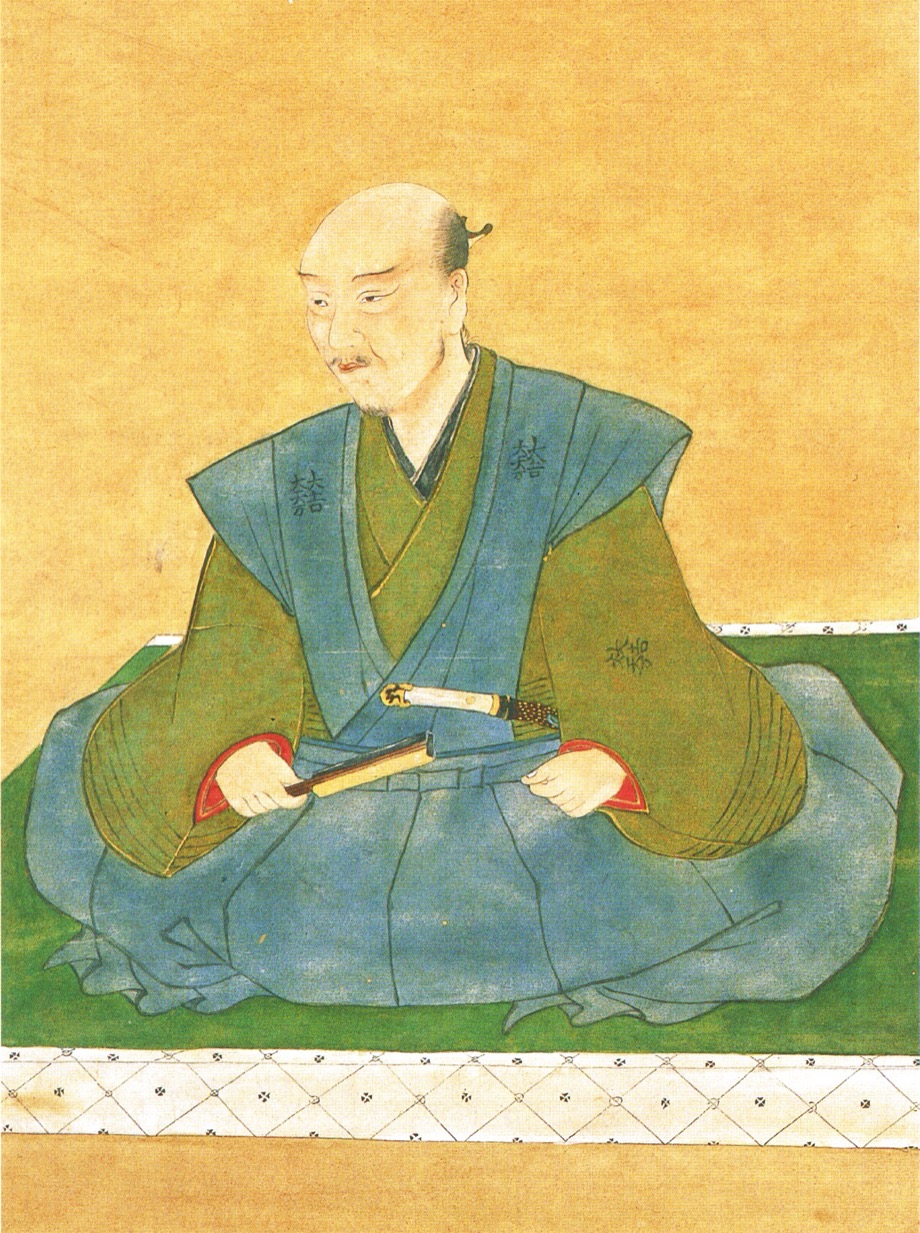
Portrait of Ishida Mitsunari
The Man Who Was Right and Lost
He was, by the reckoning of everyone who studied the paperwork, the most capable administrator in Japan — and he died a traitor's death, paraded through Kyoto and beheaded, undone not by any failure of competence but by a failure of charm. The legend of Ishida Mitsunari begins with tea. A young temple acolyte, so the story goes, served a passing warlord three cups in succession: the first large and lukewarm to quench a hot man's thirst, the second smaller and warmer, the third small and scalding to be savored. The warlord was Toyotomi Hideyoshi, and what he recognized in the boy was not brilliance of vision but something rarer and more useful — a mind that attended, exactly and without prompting, to the particulars of a situation. He took him into service on the spot.
From that attentiveness Mitsunari (1559–1600) built the entire machinery of a unified Japan. He was Hideyoshi's master of logistics, land surveys, and taxation — the man who counted the koku, moved the rice, garrisoned the castles, and made the peace of the Toyotomi actually function. In an age of magnificent killers he was the indispensable clerk, and he knew it, and he could not hide that he knew it. The great fighting daimyo, the men who had bled in Korea while he tallied their supplies and filed his reports on their conduct, found him insufferably correct. When Hideyoshi died and the child heir Hideyori needed a champion, Mitsunari stepped forward — the one man whose loyalty to the dead lord's memory was absolute, and the one man least able to make other men want to follow him.
Mitsunari is the ISTJ at the far edge of its gift and its curse: a dominant Si that mastered every ledger, survey, and precedent of the realm, harnessed to a Te that ran the state like a machine — and a rectitude so stiff that being correct became a substitute for being persuasive.
The Genius of the Ledger
Si — dominant
Dominant Si is memory made practical: a deep, exact store of how things are, how they have been done, and what the record shows. Mitsunari's whole career was Si turned into an instrument of government. The unification of Japan under the Toyotomi rested not on any single battle but on the taiko kenchi — the great cadastral surveys that measured every field in the country by a standardized unit and fixed each domain's yield in koku of rice. It was a titanic act of accounting, and Mitsunari was among its foremost executors. To know the land to the last measured plot, to tie taxation and military obligation to that fixed record, is Si at civilizational scale: reality captured, catalogued, and made to hold still.
Where the warlords saw terrain to conquer, Mitsunari saw a system to be provisioned. During Hideyoshi's invasions of Korea he was the logistician who kept armies fed across the sea — moving rice, arranging garrisons, tracking the endless detail on which a distant campaign lives or dies. He was also the inspector, the man who reported back on how the field commanders conducted themselves. He did it thoroughly and by the book, which is precisely what made him hated: the fighting men resented being audited by a man who had never held their part of the line. But the resentment does not change the fact. In peace, running the civil apparatus of a nation, he was without equal.
This is the Si administrator's paradox, and Mitsunari embodies it whole. His strength was fidelity to what was established — the survey, the precedent, the rule, the exact obligation each man owed. He mastered the state as a body of settled fact. But a body of settled fact is a poor guide to a fluid crisis, and when the world stopped being an administration and became a scramble for allegiance, the very thoroughness that made him indispensable made him rigid.
Command Without Consent
Te — auxiliary
If Si gave Mitsunari his command of fact, auxiliary Te gave him the will to organize the world by it — to issue the order, structure the office, and drive the system toward the correct result. He was not a passive keeper of records but an active builder of administration, one of the bugyo who ran the Toyotomi government as a functioning bureaucracy rather than a loose confederation of warlords. After Hideyoshi's death he tried to hold that machine together against its own centrifugal forces, enforcing the arrangements the dead ruler had set down for his heir. He operated as a man who believed that if the structure was sound and the rules were followed, the outcome would follow too.
But Te that has no reservoir of warmth behind it commands without winning consent, and this was Mitsunari's undoing. When he moved against Tokugawa Ieyasu, he was objectively right: Ieyasu was flouting Hideyoshi's prohibitions, marrying his children into alliances he had sworn not to make, accumulating the power that would let him swallow the realm. Mitsunari assembled the Western Army to stop him — a coalition numerically formidable on paper. On paper. He organized the alliance as though loyalty could be requisitioned like rice, as though men would fight for the correct cause because it was correct. He did not court them, flatter them, or soothe the wounded pride of the daimyo he had spent years auditing and offending.
That is the boundary of the Si–Te administrator. He can build a state and make it run; what he cannot do, lacking the reading of men, is bind proud individuals to himself by anything warmer than duty. The arts that assemble a ledger are not the arts that hold an army of ambitious men.
The Loyalty That Would Not Bend
Fi — tertiary
Tertiary Fi in the ISTJ is a quiet, private core of conviction — not the outward warmth that wins a room, but an inward code that the man holds to be non-negotiable. Mitsunari's code was loyalty to Toyotomi Hideyoshi and to the boy Hideyori, and it was total. Every other great lord of the age was calculating what the fall of the Toyotomi might yield them; Mitsunari alone treated the dead master's wishes as a binding trust he had no right to renegotiate. In a world of shifting allegiance, he did not shift. It is the most admirable thing about him and, tangled with his stiffness, the most fatal.
Because his Fi was a personal code rather than a social instrument, it made him rigid where he needed to be supple. He experienced Ieyasu's ambition as a moral offense, a violation of oaths, and he could not conceive that the men he needed did not share his horror of it. He judged others by his own inner standard of rectitude and was perpetually surprised, and wounded, when they failed to meet it. This is Fi worn on the inside as principle rather than deployed on the outside as empathy — the opposite of the politician's gift, which is to feel what other men want and give it to them. Mitsunari felt what was right and expected others to want it.
And yet the same unbending Fi is what has redeemed him in memory. He went to his death without recanting his cause; captured after Sekigahara, hidden and betrayed, he refused to grovel. Tradition holds that on the way to execution he declined a persimmon offered to him, saying it would harm his health — a man on the edge of the blade still keeping faith with his own discipline, and with the possibility that even now the cause might need him. It is a small, exact, unyielding gesture, and it is entirely him.
The Defections He Never Saw Coming
Ne — inferior
Inferior Ne is the ISTJ's blind spot: the capacity to imagine the branching possibilities, the alternative reads, the things that might turn out other than the plan says they will. Where a visionary lives in those contingencies, the Si dominant is unnerved by them and tends to trust that the arrangement on paper is the arrangement in fact. At Sekigahara, in October 1600, that blind spot cost Mitsunari a kingdom in an afternoon.
His battle plan was, by the record, sound — a strong defensive position, superior numbers, forces posted to fall on Ieyasu's flank. On the ledger of who was pledged to whom, Mitsunari should have won. But the ledger was a lie, and he had not imagined it could be. Ieyasu had spent the run-up doing exactly what Mitsunari could not: reading men, whispering to the disaffected, buying the futures of lords who resented the stiff administrator. When the fighting began, Kobayakawa Hideaki — posted on a hill with a large force nominally Mitsunari's — sat motionless, then turned his men downhill against the Western Army he was sworn to support. Others defected with him. The position Mitsunari had built on the assumption that allies would behave as allies collapsed from within.
This is inferior Ne as historical catastrophe. Mitsunari took the alliance as a fixed fact rather than a field of shifting human possibility, and Ieyasu, who thought in nothing but possibility, dismantled it. The most capable administrator in Japan lost the decisive battle of the age not because his plan was wrong, but because he could not imagine the men in it doing anything other than what they had promised.
Why ISTJ Over INTJ
Why not INTJ?
The temptation is to read Mitsunari's brilliance as strategic vision — to make him the INTJ mastermind outmaneuvered by bad luck. But his genius was administrative fidelity, not adaptive foresight. The INTJ's Ni reads the deep currents of people and time and bends the plan to them; Mitsunari's failure was precisely the absence of that flexibility. He clung to what was correct and precedented and could not read, court, or war-game the men whose loyalty he needed. He did not lose Sekigahara for want of vision — his plan was sound. He lost it because he mistook a paper alliance for a real one, which is an Si–Te man's error, not an Ni strategist's.
The distinction is the whole of him. An INTJ would have anticipated Kobayakawa's treachery as a live possibility and hedged against it; Mitsunari, trusting the structure, did not imagine it until it was killing his army. His mind was retrospective and exact — the survey, the precedent, the obligation as recorded — not prospective and fluid. He was the supreme keeper of the settled order, undone by the one thing settled order cannot account for: that men will break their word when they see a better bargain. That is the ISTJ's tragedy in its purest form — competence without pliancy, rectitude without persuasion, a man who was right and could not bend enough to win.
Connected Figures
Further Reading
- Sekigahara 1600: The Final Struggle for Power — Anthony J. BryantThe standard English account of the campaign and the battle — clear on the defections that decided it and on Mitsunari's role as leader of the Western Army.
- The Samurai: A Military History — Stephen TurnbullThe classic survey of samurai warfare, useful for placing Mitsunari and Sekigahara within the sweep of the Sengoku wars.
- Sengoku Jidai: Nobunaga, Hideyoshi, and Ieyasu — Danny ChaplinA readable narrative of the three unifiers and the world Mitsunari administered and died defending.
