 Historical Figure MBTI
#631 · 5-10-26 · Sengoku Japan
Date Masamune
Daimyō of Sendai · The One-Eyed Dragon · The Last of the Great Warlords
1567 — 1636
8 min read
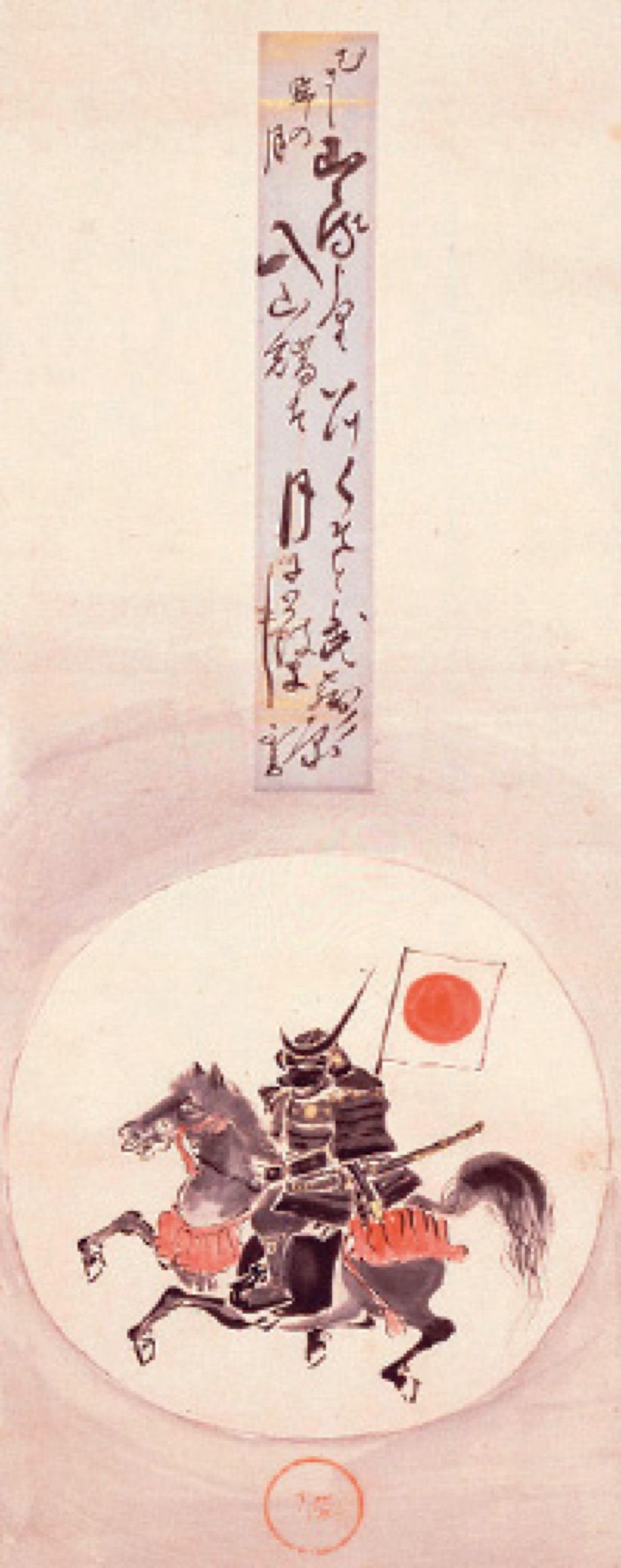
Portrait of Date Masamune
The Dragon Who Came Too Late
He arrived at his own possible execution wearing a shroud. Summoned in 1590 to answer for his defiance before Toyotomi Hideyoshi, the master of a Japan he had joined too slowly, Date Masamune rode into the camp at Odawara dressed for death — robed in white, the color of the grave, as if daring the most powerful man in the country to strike a head so theatrically offered. It was pure showmanship and pure calculation at once. Hideyoshi, delighted or unnerved, spared him. The gesture is the whole man in a single image: a warlord who understood that a bold enough performance could do what an army could not.
Born in 1567 into the Date clan of the northern Tōhoku, Masamune lost his right eye to smallpox as a boy and carried the name that would outlive him — Dokuganryū, the One-Eyed Dragon. (The famous eyepatch is an invention of later drama; the portrait he commissioned in his will shows both eyes.) In his teens and twenties he was a brilliant, merciless conqueror, stitching together the largest domain in the north through campaigns of startling audacity. But he was a generation too late: by the time his sword had cleared the northeast, the unification of Japan was already being finished by other men.
So he did the next best thing: he made himself impossible to ignore and impossible to safely destroy. He submitted, in turn, to Hideyoshi and then to Tokugawa Ieyasu, was suspected of intrigue again and again, and dazzled or talked his way clear every time. He is the ESTP as the last great warlord — the man who could not win the age, so he stole its best scenes.
Masamune is the ESTP in armor: Se living wholly in the vivid present — the golden helmet, the death-shroud, the sudden gamble — steered by a cool Ti that always knew exactly when to strike, when to bow, and when the bolder move was also the safer one.
The Golden Crescent and the White Shroud
Se — dominant
Dominant Se lives in the vividness of the moment, and Masamune had a genius for making the moment unforgettable. His war helmet was crowned with an enormous golden crescent moon that could be seen across a battlefield — the equipment of a man who wanted, above all, to be looked at — and his troops rode under black armor that made them a spectacle wherever they marched. This was not vanity for its own sake but Se weaponized: the understanding that in a world of watching lords and wavering retainers, presence itself was a kind of power.
The death-shroud at Odawara was the same instinct raised to genius. A cautious man, summoned to account for treason, sends apologies and gifts; Masamune staged a scene — arriving late, robed in the white of a condemned man, kneeling as if to invite the blade. It worked because it was audacious, because it flattered Hideyoshi with the drama of granting mercy, and because no one who did that could quite be believed to be plotting in earnest. Underneath the theater was a real appetite for action: as a young daimyō he fought constantly and hard, and later, restless in the long Tokugawa peace, he threw that same Se hunger outward across an ocean. Se does not sit still.
When to Fight, When to Bow
Ti — auxiliary
Behind the flamboyance was a cold internal calculus. Auxiliary Ti is what kept the Dragon alive through decades in which bolder-seeming men lost their heads: a private, logical weighing of exactly how far he could push before the risk turned fatal. Masamune was suspected of conspiracy repeatedly — of using the Hasekura rebellion, of harboring designs against the Tokugawa, of playing his own game beneath his oaths — and each time he calculated the board precisely and stepped back from the edge before it crumbled. He knew the difference between a gamble and a suicide.
The submissions themselves are the proof. Bowing to Hideyoshi, and later to Tokugawa Ieyasu, cost his pride but preserved everything that mattered. Around Sekigahara he read the direction of power correctly and threw his weight to the Tokugawa side — and was rewarded with the great fief of Sendai, which he built into a flourishing city rather than merely holding it. A man of pure Se bravado would have overplayed his hand and been crushed like so many of his generation. Ti here is working logic, not grand theory — the mind of an engineer of his own survival, hidden behind the golden crescent so well that men kept underestimating how carefully the Dragon thought.
The Gourmet and the Host
Fe — tertiary
Tertiary Fe gave Masamune a genuine charm and a keen feel for how to move a room — the social touch that made his gambles land. The death-shroud only worked because he understood, intuitively, what would please and disarm a proud conqueror. Throughout his life he cultivated the men who could kill him, charming Hideyoshi and winning a real rapport with Ieyasu, who came to regard the northern lord with a wary affection. He knew that being liked was armor.
It surfaced too in his famous devotion to hospitality and food. Masamune was one of history's great gourmets, and tradition credits him with a hand in the refined culinary culture of Sendai — Fe in a warlord's key, a delight in the shared pleasures of the table and an instinct for the conviviality that binds men to a lord. He entertained lavishly, patronized the tea ceremony, and made his court a place people wanted to be.
The Galleon and the Might-Have-Been
Ni — inferior
Inferior Ni is the ESTP's shadow — the occasional grab at a single grand vision of the future, usually improvised and rarely fully thought through. Masamune's clearest reach for it was the strangest episode of his life: the Keichō Embassy of 1613. He built a European-style galleon in his own domain and sent his retainer Hasekura Tsunenaga across the Pacific to Mexico, Spain, and Rome, opening negotiations with the Spanish crown and the papacy. What he intended has never been settled — there were whispers of something vast, of foreign ships and foreign faith, perhaps even a lever against the Tokugawa.
But it reads less like a grand design than like a gambler's improvisation dressed as one — a bold, outward stroke seized because the opening seemed to be there, not the patient architecture of a new order. The world was closing at exactly the wrong moment: Japan turned toward the isolation of the Tokugawa centuries, Christianity was banned, and Hasekura came home to a changed land that no longer wanted what it had gone to fetch. The whole audacious project simply dissolved — inferior Ni in miniature, a single dazzling glimpse of a future that never arrived, launched by a man whose true gift was for the immediate stroke. He lived on as one of the Tokugawa peace's grand old lords, dying in 1636 — the last dragon of an age that had already ended.
Why ESTP Over ENTJ
Why not ENTJ?
The case for ENTJ is tempting: Masamune conquered the north young, built Sendai into a thriving state, and reached across an ocean toward Spain and Rome — the profile of a commanding empire-builder. But the ENTJ builds through patient Te–Ni architecture, laying long-range foundations for an order meant to outlast him. Masamune's gift was for the bold immediate stroke and the theatrical self-presentation — the golden crescent, the death-shroud, the sudden galleon — not the slow drafting of a new world. His flirtation with Spain was a gambler's improvisation, not a grand design, and it evaporated the moment the winds changed. That is Se–Ti reading the moment, not Te–Ni engineering the future.
The contrast is sharpest against the two men he bowed to. Ieyasu, the INTJ, spent a lifetime building the machinery of a dynasty that would rule for two and a half centuries. Where Ieyasu thought in generations, Masamune thought in scenes — the perfect gesture, the daring improvisation, the moment seized before anyone else could react. He could not out-plan the empire-builders, so he out-performed them, and made himself the most vivid figure in a room he could never own. That is the ESTP's genius and its limit, and exactly the shape of the Dragon's life.
Connected Figures
Further Reading
- The Samurai: A Military History — Stephen TurnbullThe standard English survey of the samurai world; sets Masamune and his campaigns within the military logic of the Sengoku and early Tokugawa periods.
- Sengoku Jidai — Danny ChaplinA detailed narrative of the wars of unification under Nobunaga, Hideyoshi, and Ieyasu — the larger contest that Masamune joined too late to win.
