 Historical Figure MBTI
#632 · 5-10-26 · Sengoku Japan
Hattori Hanzō
Retainer of Ieyasu · The Devil Hanzō · Master of the Shadow Warriors
1542 — 1596
5 min read
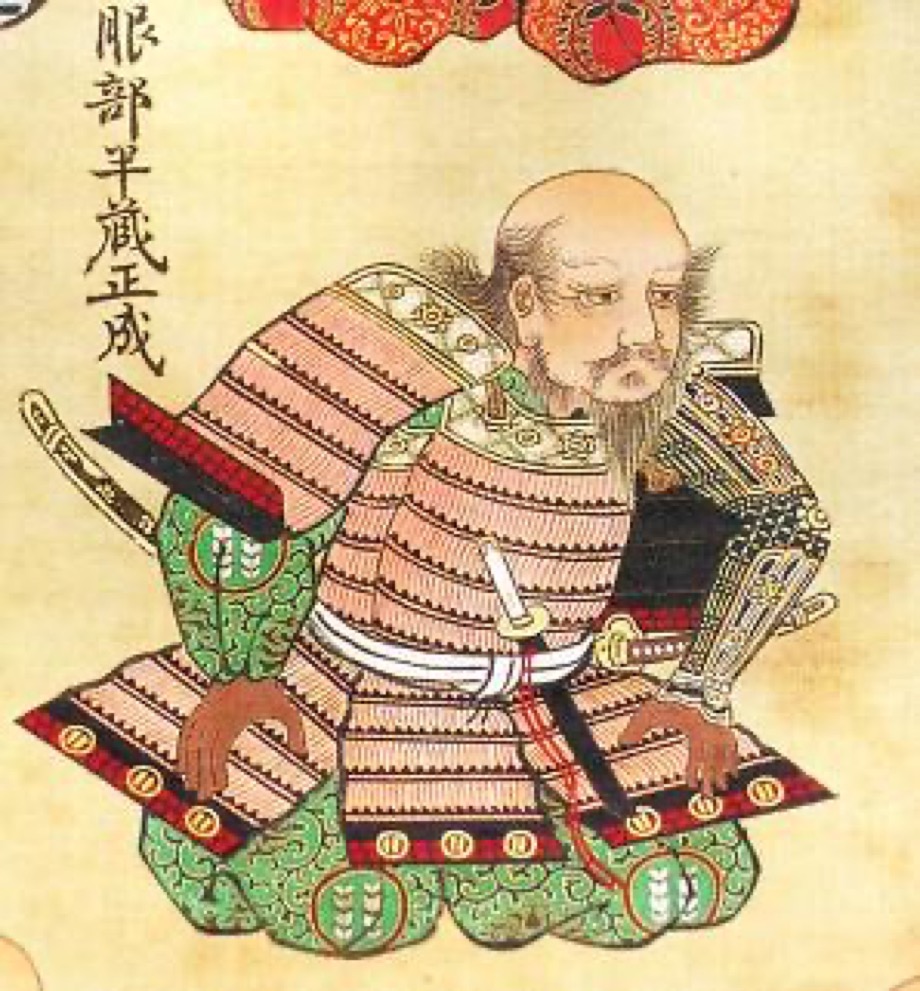
Portrait of Hattori Hanzō
The Spear Behind the Legend
Strip away four centuries of folklore and what remains of Hattori Hanzō is a hard, exact man who could be handed an impossible errand and get it done. Later ages dressed him in black and made him the shadow-grandmaster of the ninja imagination — the name now hangs over films, games, and gift-shop katana more as myth than as biography. The historical Hanzō was something less glamorous and more impressive: a spear-wielding commander his own soldiers called Oni no Hanzō, Demon Hanzō, not for sorcery but for the plain terror of his competence under fire.
Hattori Hanzō Masanari (1542–1596) served Tokugawa Ieyasu from his youth, a retainer whose family had roots in Iga, the mountainous province famous for its shinobi. He fought as a line officer and led a band of Iga men in Tokugawa service, but the deed that fixed his name came in 1582. When Oda Nobunaga was cut down at Honnō-ji, Ieyasu was stranded near Sakai with a handful of companions, deep in hostile country, cut off from home. Hanzō used his Iga connections to thread his lord through the bandit-ridden mountains to safety — the “Crossing of Iga,” one of the pivotal escapes of the age, and the reason there was a Tokugawa shogunate at all.
Hanzō is the ISTP as indispensable operator: Ti's cool, resourceful mastery of a problem welded to Se's physical nerve in a crisis — the specialist you send when the plan has already fallen apart and someone has to improvise a way out alive.
The Fixer's Mind
Ti — dominant
Dominant Ti is the internal engine that takes a situation apart, finds the working principle inside it, and applies exactly the force required — no wasted motion, no ceremony. Hanzō's value to Ieyasu was never brute loyalty alone; it was that he could be trusted with the difficult, dangerous, unscripted job. The Iga crossing is the purest example. There was no doctrine for it: a defeated lord, open roads full of men who would kill him for reward, a countryside Hanzō happened to know how to read. He solved it the way a specialist solves anything — by leveraging the one asset no one else had, his standing among the Iga and Kōga men, converting private connections into safe passage through country that should have been fatal.
That is the signature of the type: competence that is adaptive rather than procedural. Hanzō did not lead by rousing men or by rank so much as by being demonstrably the most capable hand in the room when things went wrong. The corps of Iga soldiers he commanded were, in effect, an instrument he understood down to its mechanism — irregulars, scouts, and infiltrators whose usefulness lay precisely in doing what regular troops could not. A man who thinks in Ti gravitates to exactly that kind of tool: precise, specialized, effective, and indifferent to how it looks.
The Spear and the Split Second
Se — auxiliary
If Ti is the mind, Se is the body it acts through — the immediate, physical grip on the present that lets an ISTP respond to a fast-moving world faster than it can close on him. Hanzō was, by every credible account, a genuine warrior: a noted spearman who earned the name Demon in the field, not a costumed assassin but a soldier whose reputation was made with a weapon in his hands. The nickname is a soldier's tribute to presence under pressure, the man who did not freeze when the situation turned violent.
The Iga crossing is again the proof, because a rescue like that is won or lost in a series of split-second physical judgments — which path, which men to trust, when to move and when to wait, how to keep a small party moving through terrain where a single ambush ends everything. It demands exactly the Se gift for reading the live situation and acting on it now, not the deliberation of a man consulting a plan. Hanzō's whole usefulness lay in that immediacy: the crisis specialist whose value only appears when events have outrun everyone else's preparation and someone has to steer by feel through the next dangerous mile.
Why ISTP Over ISTJ
Why not ISTJ?
A samurai retainer, defined by service and duty, reads at first glance as an ISTJ — the loyal, procedure-bound officer. But Hanzō's gift was the opposite of procedure. His decisive act was getting his lord out alive across hostile country by whatever means worked, improvising through chaos rather than executing a known plan. That flexible, in-the-moment Ti–Se resourcefulness is the ISTP's, not the ISTJ's dutiful adherence to the established way.
Both types are loyal, competent, and understated, which is why the distinction matters. The ISTJ keeps the system running as designed; the ISTP is the man you want when the system has already failed. Hanzō's whole legend — and the sober history beneath it — grew from a single night when nothing went to plan and one hard, adaptive operator improvised a way through. That is the ISTP's home ground.
Connected Figures
Further Reading
- Ninja: Unmasking the Myth — Stephen TurnbullThe essential corrective — separates the historical Iga and Kōga men, Hanzō among them, from the black-clad assassin of later fiction.
- The Samurai: A Military History — Stephen TurnbullPlaces Hanzō and the wars of the Sengoku in their full military context, from the spear on the battlefield to the politics of the unification.
- The Maker of Modern Japan: The Life of Tokugawa Ieyasu — A. L. SadlerThe classic English biography of the lord Hanzō served — narrates the Honnō-ji crisis and the flight across Iga from Ieyasu's side.
