 Historical Figure MBTI
#619 · 5-8-26 · Sengoku Japan
Uesugi Kenshin
Daimyō of Echigo · The Dragon of Echigo · The God of War
1530 — 1578
9 min read
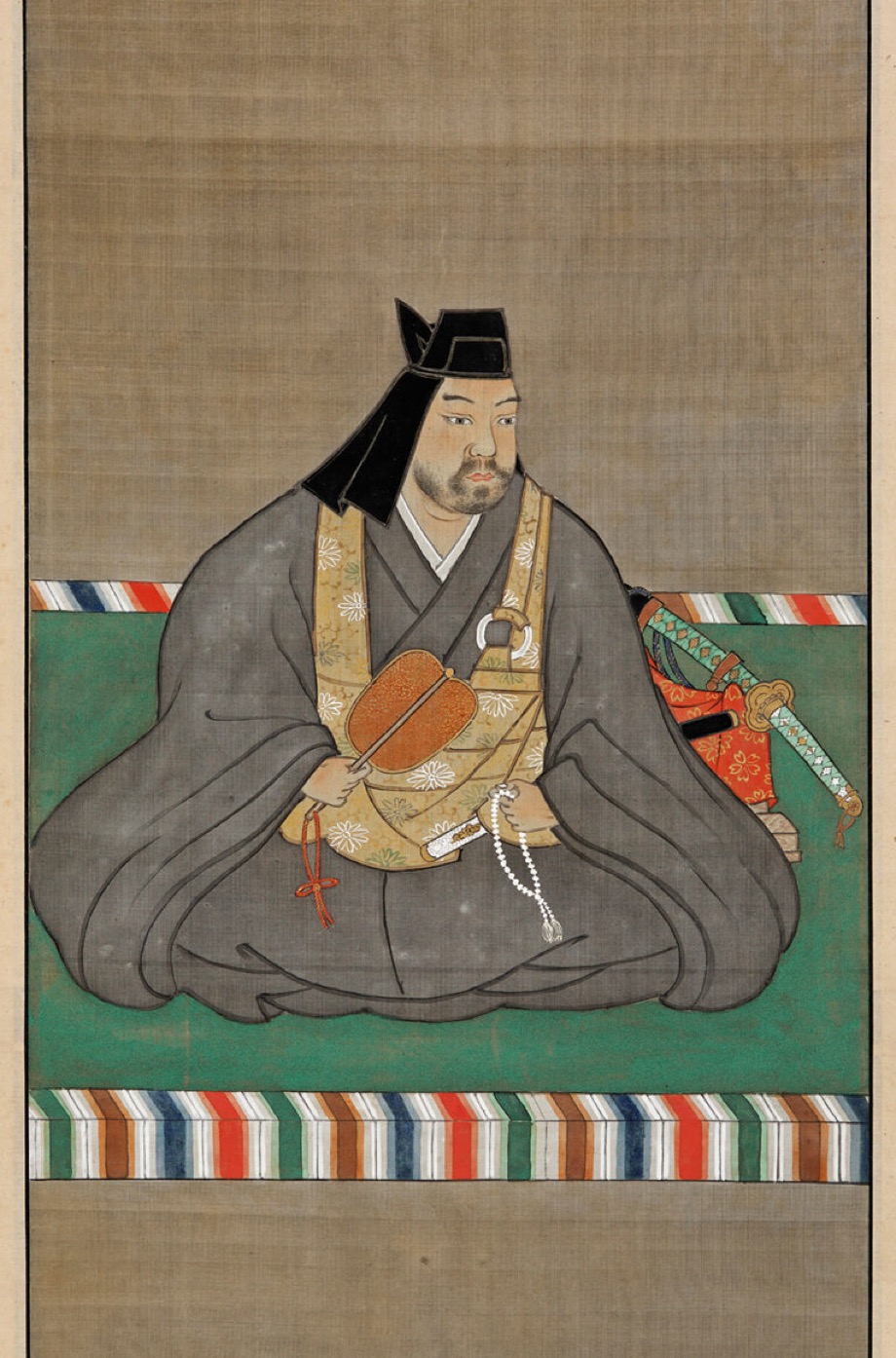
Portrait of Uesugi Kenshin
The Warrior Who Would Not Win by Starvation
In an age when victory was the only argument that mattered, Uesugi Kenshin did something that still reads as almost incomprehensible: he armed his enemy. When rival warlords choked off the salt supply to the landlocked domain of Takeda Shingen — the man Kenshin had fought five times and would gladly kill in the field — Kenshin sent salt over the mountains to the enemy he was sworn to destroy. Wars, he is said to have declared, are to be won with swords, not with salt. It is the single act that captures him whole: a peerless killer who refused to win by any means that violated his private sense of what was right.
Kenshin (1530–1578), the daimyō of Echigo, was called the Dragon of Echigo and the God of War, and both titles were earned in blood. He was never truly beaten in a pitched battle. Yet the striking thing about him is not his record but his conviction that the fighting meant something. A devout Buddhist, he identified himself with Bishamonten, the deity of war and righteousness, took holy vows, kept himself celibate and abstemious his entire life, and framed his campaigns not as conquests but as the defense of order and justice in a country tearing itself apart. He warred, in his own understanding, on behalf of Heaven.
That is what separates him from the merely brilliant soldiers of the Sengoku. The battlefield was where he served an inner vision; it was never the point in itself.
Kenshin is the INFJ as warrior-mystic: Ni's singular, unshakable vision of himself as an instrument of righteousness, wedded to Fe's deep code of honor and human sympathy — a man who fought without ceasing yet would not stoop to a victory his conscience could not bless.
The Avatar of Bishamonten
Ni — dominant
Dominant Ni is the conviction that one can see, beneath the churn of events, a single fixed truth — and that one's life is the working-out of that truth. Kenshin did not merely worship Bishamonten; he came to understand himself as the god's earthly instrument, the sword of a heavenly order. This was not the ordinary piety of a warlord hedging his bets with the temples. He took Buddhist vows, adopted the tonsure, and bound himself to a monastic austerity almost unheard of in a ruler of his power. The vision came first, and the man arranged his entire life around it.
That inner certainty is what let him wage war for decades from a fixed moral premise rather than from appetite. The Sengoku daimyō typically fought to enlarge their holdings; land was the coin of the age. Kenshin, by contrast, repeatedly went to war on behalf of others — answering the appeals of lords driven from their domains, styling himself the restorer of a collapsing order under the old shogunate and the traditional offices he had inherited. He accepted the governorship of the Kantō and the Uesugi name as a charge to uphold, not a prize to exploit. His enemies expanded; Kenshin, by his own lights, corrected.
The celibacy belongs here too. He fathered no heir of his body by design, keeping himself, like a votary, undivided and clean for the vocation he believed was his. A man who reads his own life as a sacred mission does not casually dilute it. That is Ni in its most demanding form: the vision is not a plan he consults but the very shape of the self.
The Salt Sent to the Enemy
Fe — auxiliary
If Ni gave Kenshin his mission, auxiliary Fe gave it a moral texture — a code of honor and a real sympathy for others that governed how the mission could be pursued. The salt episode is the purest expression of it. Shingen was his mortal enemy, the one man in Japan who could match him on a field; a colder strategist would have rejoiced to see Kai's people starve for want of salt and its lord weakened. Kenshin instead sent the salt, insisting that the war between them was a contest of arms between warriors, not a campaign against a helpless populace. He would beat Shingen with the sword or not at all.
This ran throughout his conduct. He was famous for sparing and even aiding defeated enemies, for keeping faith with those who appealed to him, and for a scrupulousness about the forms of honor that his more pragmatic contemporaries found nearly quaint. Where Oda Nobunaga would burn a monastery full of monks to remove a strategic threat, Kenshin ordered his life around the conviction that there were things a righteous man simply would not do to win. His authority over the fractious warriors of Echigo rested heavily on this reputation: men followed him because they believed he was, genuinely, better than the age.
Fe here is not softness — Kenshin killed as readily as any lord of his century. It is the insistence that violence be bounded by honor and directed only at its proper object. The salt was not weakness toward Shingen; it was Kenshin refusing to let the war corrupt the warrior.
The Tactician at Kawanakajima
Ti — tertiary
Tertiary Ti supplied the analytic edge that made Kenshin's convictions lethal. He was among the finest battlefield tacticians of the era, and nowhere is that clearer than in the five encounters at Kawanakajima between 1553 and 1564 — the most storied duel of maneuver in Japanese history, fought against the equally gifted Shingen over a single contested plain. Kenshin read ground, timing, and the enemy's intentions with a cold precision that repeatedly put him a step ahead.
The fourth battle, in 1561, is the legend's summit. Shingen, by tradition, had divided his army to trap Kenshin in a classic pincer at dawn; Kenshin read the maneuver, moved his forces across the river in the mist under cover of night, and struck the Takeda main body at first light before the second wing could close. The most famous image of the age comes from that morning: Kenshin, so the story goes, broke clear through to the Takeda command post and rained sword-blows on Shingen himself, who parried the strokes with his iron war-fan. Whatever the embroidery, the underlying account is of a commander whose grasp of the mechanics of a battle let him turn an intended ambush against its author.
But this is tertiary, not dominant. The analysis served the vision; Kenshin solved the problem of the battle in order to advance a cause he had already fixed. The tactical genius is real, and it is precisely what tempts observers to read him as a pure problem-solver — which is exactly the misreading the next section takes up.
The Charge and the Renunciation
Se — inferior
Inferior Se in the INFJ shows up as a striking capacity for sudden, total physical commitment — and, alongside it, a deep suspicion of the senses and their appetites. Kenshin embodies both poles. On the field he could be almost recklessly bold, personally leading charges and, in the great legend of Kawanakajima, riding alone into the enemy's heart to cut at Shingen. When he committed to the moment, he committed absolutely, with a physical daring that his intuitive, inward temperament otherwise kept in reserve.
Away from battle, though, the inferior function reveals itself in renunciation. Kenshin distrusted the pleasures of the body and largely refused them — celibate, austere in his habits, monkish in his discipline. Where his contemporaries built harems and hoarded treasure, he cultivated an almost ascetic plainness, treating the sensual world as a distraction from the vocation that consumed him. The one appetite he is said not to have mastered was drink, and tradition holds it helped kill him: a heavy drinker, he died suddenly in 1578, by most accounts of a stroke, collapsing in his privy just as he prepared to march.
It is a fittingly INFJ ending — the visionary undone not on the battlefield he never lost but by the frail body he had spent a lifetime subordinating to a higher purpose. The Se he could deploy like lightning in war was the same Se he could never quite make peace with in himself.
Why INFJ Over ISTP
Why not ISTP?
The ISTP reading is genuinely tempting: Kenshin was a peerless tactician who read a battlefield the way an ISTP reads a mechanism, and his cool, undefeated mastery of maneuver looks like the detached virtuosity of a natural problem-solver. But the ISTP fights because the fight itself is absorbing — the pleasure is in the solving, and the framework is Se–Ti, present and pragmatic. Kenshin's tactics served a moral and religious vision, not the craft of combat for its own sake. He warred on behalf of justice and the gods, kept himself celibate and abstinent as a votary, and sent salt to a starving enemy rather than win by a means his conscience rejected. That is Ni–Fe conviction driving the sword, not Se–Ti detachment enjoying it.
The whole difference lies in why the battle happens at all. An ISTP would fight brilliantly and ask no further questions; the fight is sufficient unto itself. Kenshin could not stop asking the further question — whether the war was righteous, whether the victory was clean, whether he was still the instrument Bishamonten required. Strip away the tactical genius and the ISTP has nothing left to explain; strip it away from Kenshin and you still have the celibate votary, the restorer of order, the man who armed his enemy on principle. The tactics were the tool. The vision was the man.
Connected Figures
Further Reading
- Kawanakajima 1553–64: Samurai Power Struggle — Stephen TurnbullThe dedicated study of the five battles between Kenshin and Shingen — the clearest account of the rivalry that defined both men.
- The Samurai: A Military History — Stephen TurnbullPlaces Kenshin within the broader world of Sengoku warfare; strong on the tactics and the warrior culture that shaped him.
- Sengoku Jidai — Danny ChaplinA readable narrative history of the warring-states century, setting Kenshin against Shingen, Nobunaga, and the long drive toward unification.
