 Historical Figure MBTI
#620 · 5-8-26 · Sengoku Japan
Takeda Shingen
Daimyō of Kai · The Tiger of Kai · Wind, Forest, Fire, and Mountain
1521 — 1573
10 min read
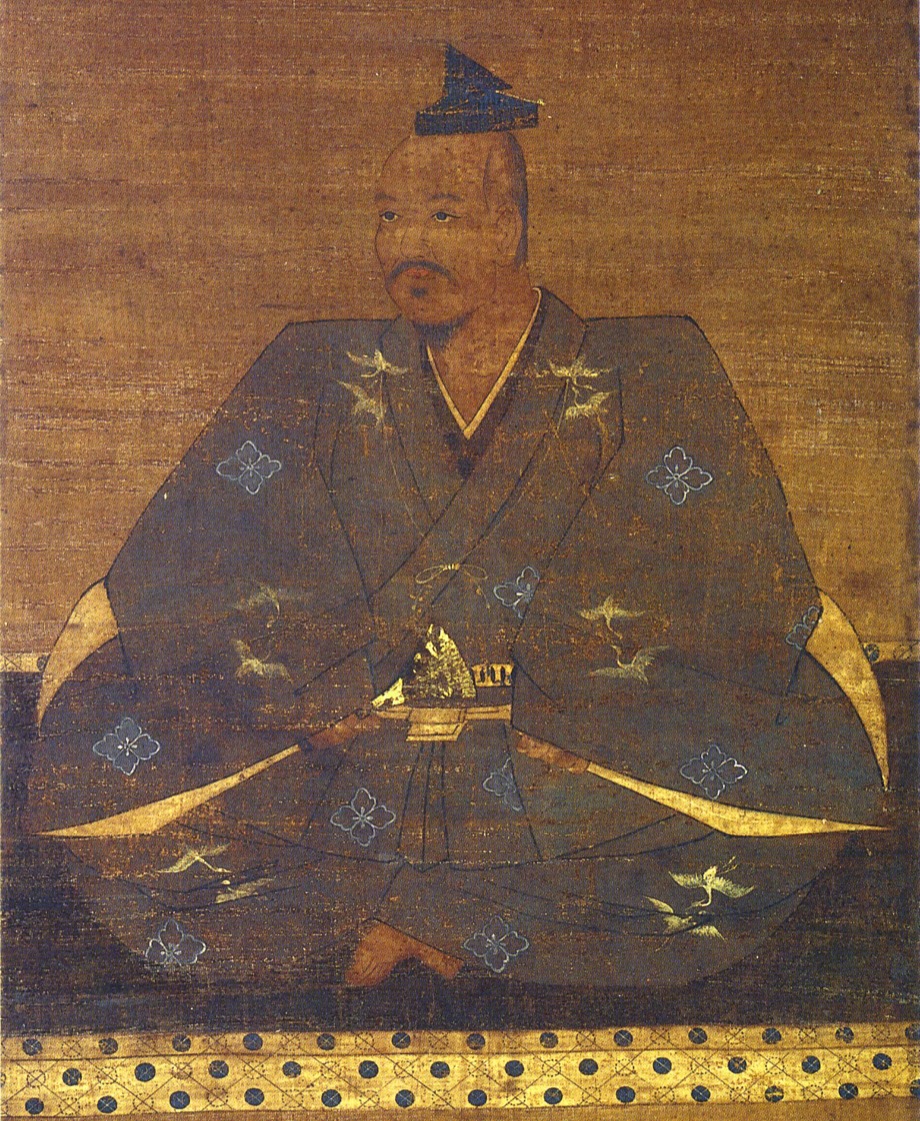
Portrait of Takeda Shingen
The Model Warlord
He took his own domain by deposing his father. In 1541, the young lord of Kai drove the aging Takeda Nobutora into exile and seized the province for himself — a cold, clean, filial coup that put an end to two decades of misrule and installed the son who would make the name Takeda feared across central Japan. It was not the deed of a hothead. It was the first move of a man who had already decided, with the flat certainty that defined him, that he could govern Kai better than the man who held it. He was right.
Takeda Shingen (1521–1573), the “Tiger of Kai,” is remembered as the complete Sengoku warlord — the daimyō by whom all the others are measured. His army was the terror of the age, above all its drilled cavalry, and it rode beneath a banner bearing four words lifted from Sun Tzu: Fūrinkazan — swift as the Wind, silent as a Forest, fierce as Fire, immovable as a Mountain. But the banner was only half the man. Behind the cavalry stood a province run like clockwork: flood-control levees that still bear his name, gold mines sunk to fund the wars, a codified body of law, an administration that turned mountainous, land-locked Kai into one of the best-governed domains in Japan. He fought superbly because he ruled superbly.
That doubled mastery — the general who was also the administrator, the tactician who was also the legislator — is the key to the man. Shingen did not dream of a new order. He took the established arts of war and rule and executed them better than anyone alive.
Shingen is the ESTJ as the model warlord: Te's decisive field command and hard, effective government fused with Si's mastery of proven method — the levee, the drilled charge, the well-run province. Not a man who reinvented war, but one who perfected it as it was.
Command in the Field, Command in the Province
Te — dominant
Dominant Te bends the external world toward a result, and Shingen's Te ran in two channels at once. On campaign it was the general's instrument — fast, decisive, organized. He was famous for the speed and discipline of his movements and for a cavalry arm trained to a pitch no rival could match: the Takeda horsemen were the shock weapon of central Japan, and Shingen deployed them with the cold economy of a man who measures a battle by whether it is won, not by whether it is glorious. Under the Fūrinkazan banner he expanded outward from Kai into Shinano and beyond, methodically, province by province, the way an administrator annexes ledgers.
But the deeper Te signature is that he governed as ably as he fought — and most warlords could not. Kai was poor, mountainous, and prone to ruinous flooding from its rivers. Shingen answered with engineering: the great levee system still called the Shingen embankment, a work of flood control so effective it protected his heartland for centuries after his death. He opened and worked the gold mines of Kai to fund his wars in hard specie. He issued a codified body of domain law, the Kōshū Hatto no Shidai, and ran his province as a machine that produced soldiers, revenue, and order. This is Te at its most complete: not the pursuit of personal glory but the construction of an apparatus that works.
The two channels were the same function. The man who drilled the cavalry also dug the levees; the mind that organized a battle line organized a tax base. Shingen never separated the warrior from the ruler, because to him they were one problem — how to make Kai strong — solved by the same relentless, results-first competence. That is the ESTJ's native genius: the world arranged, drilled, and put to work.
The Master of Proven Method
Si — auxiliary
Auxiliary Si is the reservoir of tested, concrete method that feeds Shingen's Te — the reason his competence was so reliable. He was not an innovator reaching for the untried. He was a perfectionist of the established: the disciplined charge, the well-built levee, the worked mine, the codified law. Each of these was a known technique, and Shingen's gift was to execute the known technique flawlessly, at scale, under pressure. His war banner itself is pure Si — a maxim from Sun Tzu, an inherited text a thousand years old, taken as a working doctrine and lived out in the field. He did not want a new theory of war. He wanted the old one done right.
This is why his rivalry with Uesugi Kenshin ran to five separate battles at Kawanakajima across a dozen years without ever producing a decisive result. Two masters of the classical art of war, each too disciplined and too sound to be broken by the other, ground against one another again and again on the same plain — a rivalry that became legendary precisely because it was a contest of proven method against proven method, neither man willing to gamble on the reckless stroke that might win everything or lose it. Shingen fought Kenshin the way he did everything: carefully, repeatedly, by the book he had mastered.
The levees say it best. A flashier lord builds a monument; Shingen built infrastructure — a patient, concrete, unglamorous solution to a recurring physical problem, engineered so well it outlived the entire Takeda clan. That is Si married to Te: the accumulated practical wisdom of how things actually work, applied with an administrator's discipline until the province itself was reshaped to endure.
The Reach for the Capital
Ne — tertiary
Tertiary Ne gives the Te–Si ruler his capacity to see openings beyond the borders of the proven — to sense, late and in flashes, a larger possibility. For most of his life Shingen kept his gaze fixed on the concrete work of expanding and governing Kai. But in his final years the horizon widened. As Oda Nobunaga rose to dominate the center of Japan, the old daimyō stirred toward the boldest ambition of his life: a march westward toward Kyoto, toward the capital itself, toward the possibility of shaping the whole realm rather than merely his corner of it.
In 1572–73 he moved, and the reach was electrifying. He crushed the young Tokugawa Ieyasu at the battle of Mikatagahara — a lesson in what Takeda cavalry and Takeda discipline could still do to a rising lord — and for a moment the road to the center seemed open. Here was Ne glimpsing a future beyond Kai, a possibility the methodical mountain-lord had never before pursued.
But Ne was tertiary, not dominant, and the reach came late. Shingen fell ill mid-campaign and died in 1573, before he could press the advantage that Mikatagahara had won. The larger vision flickered and went out with him. It is telling that the transforming ambition — remake the realm, not just rule a province — belonged to his rival Nobunaga as a life's organizing purpose, while for Shingen it arrived only at the end, a late-blooming possibility his Te–Si nature had spent a lifetime not needing.
The Coup and the Enemy He Honored
Fi — inferior
Inferior Fi is the ESTJ's buried interior life — the private register of loyalty, honor, and personal value that the instrumental mind usually keeps subordinate to the result. Shingen's came out most starkly at the two ends of his career. It began in the deposition of his father: an act of cold judgment, certainly, but one that carried a moral charge, for in the Japan of his day exiling a parent was a grave violation of filial duty. Shingen did it anyway, having weighed Kai's good against the claim of blood and found the province heavier. The Te machine did not stop for sentiment.
Yet the same man is remembered for a gesture of startling personal honor toward the enemy he could never beat. The legend of the “salt to the enemy” — Uesugi Kenshin sending salt to the salt-starved, land-locked Takeda when other rivals sought to strangle Kai by embargo, and the two warlords' mutual, almost tender respect across a lifetime of battle — belongs to this register. Whatever its exact truth, it endured because it fit the men: two enemies who honored each other precisely because each recognized in the other the same disciplined mastery. Shingen is said to have mourned Kenshin's worth, and to have warned his heirs to rely on him after his own death.
It is the inferior function finding its voice: a hard, results-first ruler who deposed his own father revealing, at the edges, a code of personal honor he genuinely held. The values were real; they simply rarely governed. In Shingen the ledger came first — but the ledger was kept by a man who knew exactly what he owed to worth, even in an enemy.
Why ESTJ Over ENTJ
Why not ENTJ?
The temptation is to read a warlord this commanding as an ENTJ — the strategic conqueror playing for the whole board. But the ENTJ pairs Te with dominant-adjacent Ni: a visionary who sees a transformed future and drives toward it. That was not Shingen; it was his rival Nobunaga, the man out to smash the old order and remake the realm. Shingen's genius was the opposite — the supreme practitioner of the art of war and rule as it already was: the drilled cavalry, the levees, the gold mines, the codified law, the well-run province. His mind ran on Te–Si mastery of proven method, not Te–Ni transformation. The visionary reach came only at the very end, late and unfulfilled — the mark of tertiary Ne, not dominant vision.
The distinction is the whole meaning of his life set against Nobunaga's. Both were brilliant Te commanders; the difference is what the Te was fused to. Nobunaga wanted a different world and built the new tools — the massed guns, the broken conventions — to force it into being. Shingen wanted a stronger Kai and perfected the old tools to build it. That is why the ESTJ fits and the ENTJ does not: Shingen was not trying to remake the game, only to win it by playing the established game better than any man alive. The banner said it exactly — immovable as a mountain, not restless as a visionary.
Connected Figures
Further Reading
- Kawanakajima 1553–64: Samurai Power Struggle — Stephen TurnbullThe definitive short study of the five battles against Uesugi Kenshin — the rivalry that defined Shingen's career as a soldier.
- The Samurai: A Military History — Stephen TurnbullThe standard survey of samurai warfare, placing Shingen's cavalry and tactics within the wider evolution of the Sengoku battlefield.
- Sengoku Jidai: Nobunaga, Hideyoshi, and Ieyasu — Danny ChaplinA readable narrative of the age of unification — strong on how Shingen's world was overtaken by Nobunaga's new warfare and Ieyasu's final settlement.
