 Historical Figure MBTI
#895 · 6-30-26 · The American Civil War
Walt Whitman
Poet · Wound-Dresser · Witness to the War
1819 — 1892
9 min read
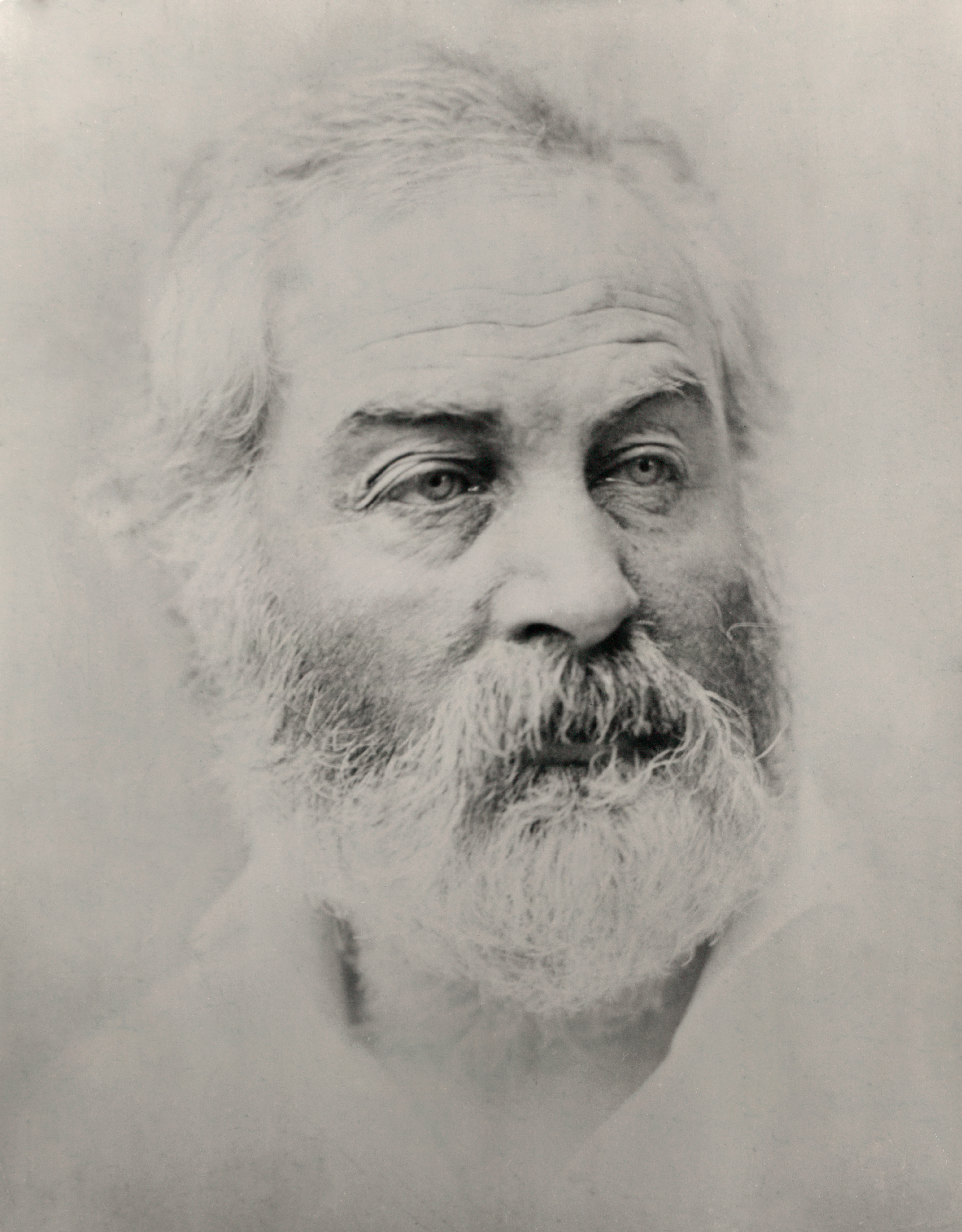
Portrait of Walt Whitman
The Wound-Dresser
By December 1862, when Walt Whitman boarded a train south to find his wounded brother George among the casualty lists from Fredericksburg, he was already the author of Leaves of Grass — a book that had scandalized and thrilled in roughly equal measure, and that had proclaimed, in its long uncoiling lines, a self large enough to "contain multitudes." What the war gave that self was not a new idea but a new occasion: a place to practice, on actual bodies, the boundless sympathy his poetry had only theorized. George turned out to be lightly hurt. Whitman stayed in Washington for the better part of three years anyway, and it is that decision — unpaid, unofficial, unasked for — that supplies the clearest key to who he was.
He called himself a "missionary" of the hospitals, though he belonged to no mission board and answered to no institution. He walked the wards of Armory Square and Campbell Hospital carrying oranges, tobacco, notepaper, small sums of money begged from friends back in Brooklyn and New York, and he sat — for hours, with men he had never met and would in most cases never see again — writing letters home for boys who could not hold a pen, reading to them, holding their hands as they died. He counted the visits in the tens of thousands by the war's end. No one commissioned this. No one paid him. It came from somewhere entirely inside him, and it is the single fact around which the rest of his psychology as INFP arranges itself.
Whitman's compassion was not a program he administered but a self he could not withhold — dominant Fi meeting each dying stranger as an absolute, one at a time, without doctrine.
A Self Large Enough to Hold a Stranger
Fi is a value felt so completely from within that it needs no external sanction to act on, and nothing in Whitman's war years required more of that quality than the hospitals did. He held no medical training, no chaplain's commission, no army rank. What he had was a conviction — never argued for, simply lived out — that every suffering man in front of him mattered absolutely, Union or Confederate, officer or private, literate or not. He did not triage his sympathy by cause. He sat with Confederate prisoners as readily as with Union boys, a distinction that scandalized some and that he never bothered to defend, because for Fi the moral claim of the person in the bed was prior to any argument about which side he had fought on.
That individualized, undelegated quality is the tell. An institution organizes care by policy — who gets visited, how long, in what order. Whitman organized his by feeling: he went where he was pulled, stayed with whoever needed him longest, and kept private, idiosyncratic accounts of who he'd promised to write to and what each man liked to eat. He gave away money he didn't have. He wore himself down to the point of chronic illness and, later, doctors believed, the stroke that felled him in 1873 — a cost he never framed as sacrifice, because sacrifice implies a ledger, and Fi doesn't keep one.
The same interior compass had already made Leaves of Grass what it was: a book that answered to no poetic convention, no publisher's comfort, no critic's taste, only to Whitman's own sense of what was true to a self and a body. The hospitals did not create that conviction. They gave it a use.
The Boy in the Bed Becomes the Whole Nation
Ne is the function that will not leave a particular thing alone — that keeps reaching past it toward everything it connects to, every pattern it echoes, every larger shape it belongs to. Whitman's wartime notebooks, later folded into Specimen Days and Drum-Taps, show that reach constantly at work. He would record a single soldier's name, wound, and home state with the precision of an inventory, then in the next breath widen the frame until that one cot in Armory Square stood for the whole bleeding continent. "I stop somewhere waiting for you," he had already written before the war — a line that treats every reader, every stranger, as a potential connection not yet made. The hospitals turned that habit into a discipline: thousands of individual encounters, each cataloged, each somehow also a synecdoche for the entire catastrophe.
It is Ne, too, that explains how a private grief became a public poem almost overnight. When Lincoln was shot in April 1865, Whitman's mourning was intensely personal — he had watched the president ride past the White House for years, had felt a wordless kinship with him — but within weeks that private feeling had expanded, associatively, into "O Captain! My Captain!" and then into the far stranger, more searching "When Lilacs Last in the Dooryard Bloom'd," where a lilac, a fallen star, and a hermit thrush braid together into a vast symbolic structure for a death that was simultaneously one man's and a nation's. Fi supplied the grief. Ne is what refused to let the grief stay singular, and instead sent it out looking for every image large enough to hold it.
This is the same expansive cataloging impulse that built Leaves of Grass out of long, list-like lines meant to enclose as much of American life as language could carry. The war didn't invent that reach in Whitman. It gave it subject matter grave enough to match its scale.
A Memory Kept in Wards and Names
Where Ne reaches outward for pattern, Si holds fast to the remembered, sensory particular — and Whitman's wartime notebooks are, ward by ward, an exercise in exactly that kind of retention. He recorded which building a man lay in, which cot, the specific look of a wound, what the man had said, what he'd asked to eat, whether he'd asked Whitman to write his mother. Specimen Days reads in long stretches like an inventory of remembered rooms: the particular smell of the wards, the sound of ambulances arriving at night, the exact posture of a soldier dying by lamplight. These are not impressionistic gestures. They are a kept record, revisited and cross-checked, the kind of fidelity to concrete detail that a dominant Si type would produce as first instinct and that Whitman, as tertiary, produced as devoted labor.
That fidelity is what makes his war writing trustworthy in a way pure lyricism never could be. Historians have been able to verify names, hospitals, and dates against Whitman's notebooks precisely because he kept them with such care. The same attentiveness shows in how he revised Leaves of Grass across decades — not by abandoning earlier versions but by returning to them again and again, layering, correcting, remembering what he had written years before and weighing it against what he now believed. Si here is less a wellspring than an anchor: it is what kept the boundless sympathy of Fi and the associative flights of Ne tied to real cots, real names, real Tuesdays in 1863.
No System, No Salary, No Plan
Te organizes toward efficient outcomes — budgets, schedules, institutions built to outlast any one person's attention. It is precisely what Whitman never built. He never sought a formal role in the hospital system, never petitioned for a salary, never proposed a more efficient scheme for distributing the aid he saw was needed, though thousands of soldiers might have benefited from exactly that kind of organizing mind. He simply showed up, day after day, funded by small donations he solicited through personal letters and by his own dwindling savings, uninterested in scale for its own sake.
The pattern held across his whole life. He drifted between jobs — printer, teacher, journalist, minor government clerk — losing more than one of them to carelessness or to controversy over his poetry, and he was chronically, almost structurally broke, dependent late in life on the fundraising efforts of friends like William D. O'Connor, who published the pamphlet The Good Gray Poet in Whitman's defense partly because Whitman himself was constitutionally unable to manage his own reputation or finances as a campaign. He never incorporated his hospital work into anything resembling an aid society, never left behind a manual for how to do what he'd done. What he left behind instead was the writing — Drum-Taps, Specimen Days — because making meaning of the experience, not administering it, was where his energy actually went.
Why INFP Over INFJ
Why not INFJ?
An INFJ's compassion tends to organize itself around a structured moral vision of what people need — a Fe-driven sense of the shape care ought to take, often expressed through some coherent plan or cause. Whitman's compassion had no such architecture. He never proposed a system for hospital reform, never framed his visits as part of any doctrine about how suffering should be addressed; he simply arrived, sat with one man, then walked to the next cot and did it again, thousands of times, guided by nothing but the felt claim of the person in front of him. His poetry testifies to feeling before it testifies to any imposed order — Leaves of Grass is a catalog, not a treatise — and that priority of raw individual feeling over structured vision is the signature of Fi, not Fe.
What finally distinguishes Whitman is the total absence of program in a man whose sympathy might easily have curdled into one. He had every occasion, in three years of watching the war's cost accumulate bed by bed, to conclude that his private grief demanded some organized answer — a society, a reform, a plan for the ten thousand men still to come. He never did. He wrote instead, and sat, and wrote again, an INFP's fidelity to the singular held all the way through to the end.
Connected Figures
Further Reading
- Specimen Days — Walt WhitmanWhitman's own prose memoir, including the hospital notebooks that anchor this entry.
- Drum-Taps — Walt WhitmanThe 1865 poetry collection distilled directly from his years dressing wounds in Washington.
- Walt Whitman's America: A Cultural Biography — David S. ReynoldsThe standard cultural biography, strong on the war years and Leaves of Grass's evolution.
- The Better Angel: Walt Whitman in the Civil War — Roy Morris Jr.A focused account of the wartime hospital work that reshaped Whitman's poetry and health.
