 Historical Figure MBTI
#802 · 6-12-26 · The American Civil War
Ward Hill Lamon
The Bodyguard Who Wasn't There
1828–1893
3 min read
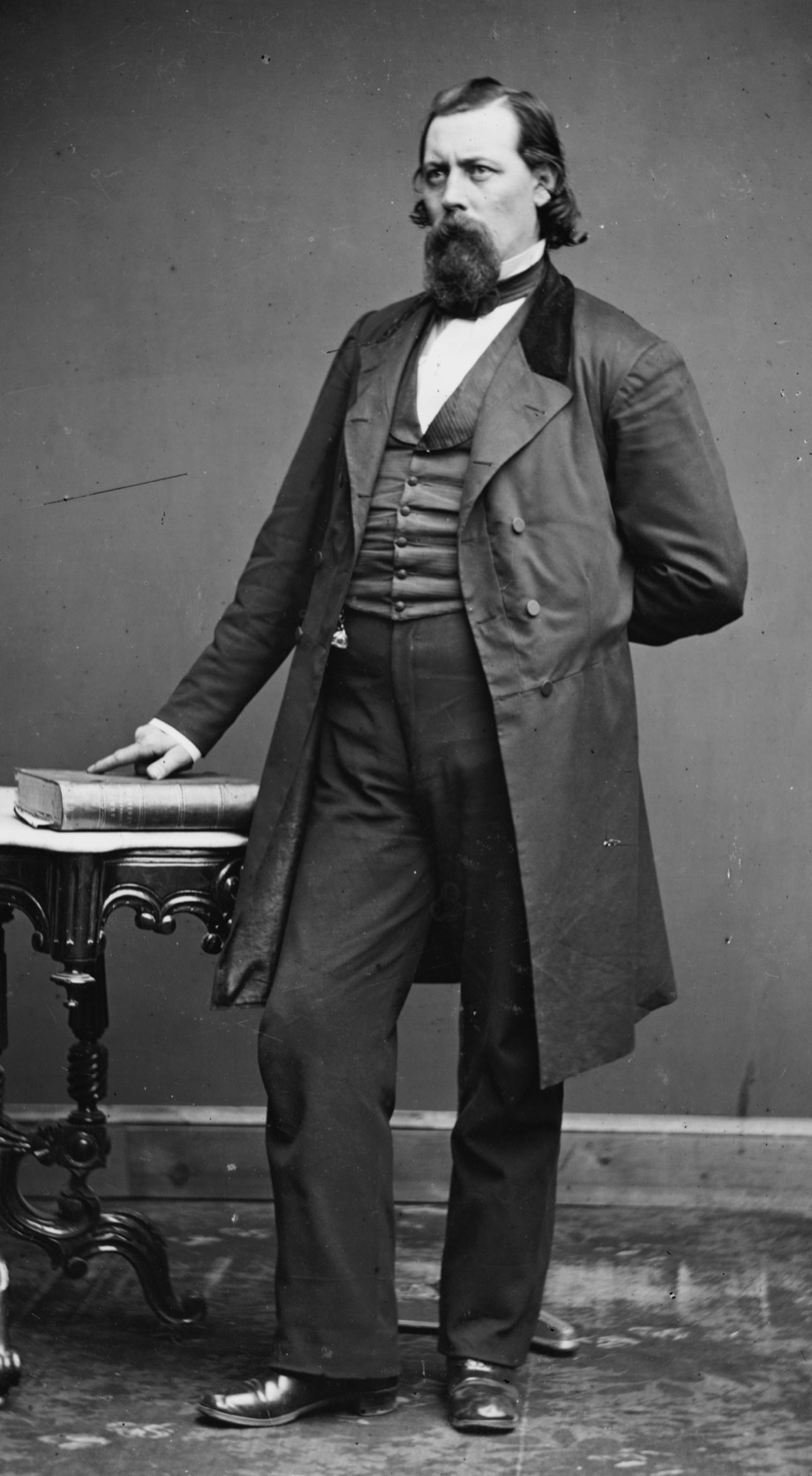
Portrait of Ward Hill Lamon
A Pistol, a Knife, and a Song
Ward Hill Lamon was built like an argument nobody wanted to have — six feet tall, barrel-chested, with a singing voice that filled a room and a temper that filled the rest of it. Born in Virginia in 1828 and raised on the Illinois frontier, he read law on the same judicial circuit as an awkward young attorney named Abraham Lincoln, and the two men rode together from courthouse to courthouse, sharing beds in cramped taverns and swapping stories by firelight. Lamon was never Lincoln's intellectual equal, and he never pretended to be. What he offered instead was presence — physical, immediate, unshakeable.
When Lincoln won the presidency, Lamon appointed himself the one job description no one had written: bodyguard. He carried two pistols, a knife, and a set of brass knuckles into a White House that officially employed no such protection, and he made himself U.S. Marshal for the District of Columbia largely so he'd have a legal reason to be armed and underfoot. He warned Lincoln, again and again, that Washington swarmed with men who wanted him dead. Lincoln, who found Lamon's devotion touching and his alarm exhausting, mostly laughed it off and asked him to sing something sad instead.
Lamon didn't calculate the danger to Lincoln — he simply stood in front of it, every day, until the one day he wasn't there.
That is the shape of an ESTP: a man who trusts what's in front of him over what's merely argued, who acts first and explains later, and who mistakes his own physical vigilance for a plan. Lamon never built a security apparatus, never coordinated with the War Department, never systematized his fears into policy. He just showed up, armed, loyal, and loud — and hoped that would be enough.
The Bodyguard's Blind Spot
Lamon's Se made him the man you wanted in a room with a gun — alert to a shifting crowd, a stranger's hand in a coat pocket, the mood of a hallway. His Ti gave him just enough private logic to justify carrying weapons Lincoln found faintly ridiculous, and to argue his case bluntly rather than diplomatically. His Fe showed up sideways, in the sentimental ballads he sang to lift Lincoln's spirits and the rough camaraderie he offered a president starved of easy company. But his Ni was almost nonexistent — he could sense danger in a face or a crowd, yet he could not hold a long, abstract thread of foresight, could not translate scattered warnings into an actual protective system that would function whether or not he personally was standing in the room. He read threats moment to moment and trusted his body to answer them. That is a formidable instinct and a fragile plan, and the gap between the two would eventually cost the man Lamon loved most everything Lamon had spent years trying to prevent.
Connected Figures
Further Reading
- Recollections of Abraham Lincoln — Ward Hill LamonLamon's own controversial memoir of his years beside Lincoln
- Lincoln's Melancholy — Joshua Wolf ShenkOn Lincoln's inner life and the men who tried to shield it
- Team of Rivals — Doris Kearns GoodwinContext on Lincoln's wartime circle and White House security lapses
