 Historical Figure MBTI
#795 · 6-12-26 · The American Civil War
Edwin M. Stanton
The War Secretary Who Ran the Machine
1814–1869
6 min read
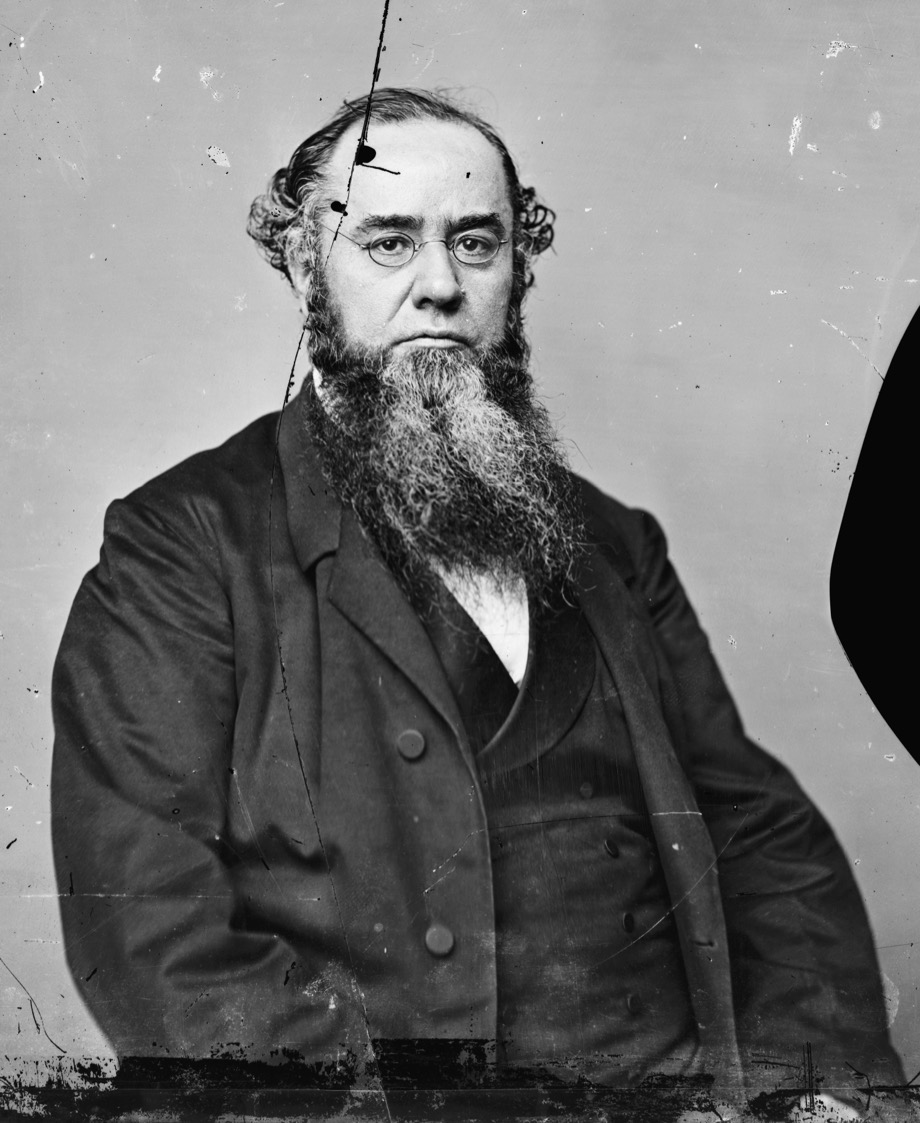
Portrait of Edwin M. Stanton
The Man Who Made the War Move
In January 1862, the United States War Department was a disgrace — contracts handed out on favors, mules bought at triple price, regiments waiting for rifles that never arrived, and a Secretary, Simon Cameron, so compromised by corruption that Lincoln had shipped him off to Russia rather than let him stay in the cabinet. Edwin Stanton walked into that wreckage as a lawyer with no military experience and a reputation for being nearly impossible to work with, and within months he had turned the department into the most efficient machine in the federal government. Telegraph lines answered to him directly. Railroads moved troops on his schedule. Contractors who padded an invoice found themselves under investigation by nightfall.
None of it came from charm. Stanton had once called Lincoln a “long-armed ape” and dismissed him as unfit for the presidency he now served — then, once he judged the man competent, gave him a loyalty so absolute that Cabinet members joked Stanton would rather be shouted at by Lincoln than praised by anyone else. That reversal is the whole man in miniature: ESTJ, indifferent to whether a person was liked, ruthlessly attentive to whether a system worked.
He did not ask whether an order felt right. He asked whether it would move the next regiment to the front on time — and fired anyone who could not answer.
The Department as a Machine
Stanton’s first act as Secretary of War was to audit everything — every contract, every supply chain, every officer’s claim on department resources — and to publish the results where Congress and the press could see them. It was a Te move in its purest form: expose the inefficiency, quantify it, and fix it in public so no one could quietly restore the old arrangement. He centralized control of the telegraph network in his own office, giving him a real-time picture of troop movements and supply lines that no general, not even the one commanding the army, could match.
He was equally hard on generals who wasted time. McClellan’s caution infuriated him precisely because it was inefficient — men and money sitting idle while the war dragged on — and Stanton pushed, prodded, and eventually helped ease him out, not from personal animus but because the results weren’t coming. He fired dawdling quartermasters, canceled favor-driven contracts, and rebuilt procurement around competitive bidding almost overnight. Office-seekers who came to him with a personal appeal instead of a completed form were turned away without a second look; Stanton had no patience for anything that didn’t advance the war effort measurably.
What made it Te rather than mere ambition was the absence of ego in the results. Stanton didn’t need the credit — he needed the trains running, the ammunition arriving, and the numbers to add up. When Lincoln proved competent, Stanton subordinated himself completely, not because he liked being subordinate, but because the chain of command served the objective. Function, not feeling, decided every relationship in his professional life.
A Lawyer’s Faith in the Record
Stanton had spent two decades as one of the country’s most successful trial lawyers before he ever held office, and it showed in everything he did at the War Department. He documented obsessively — every order in writing, every decision logged, every exception noted for the file — because he distrusted memory and distrusted verbal assurances even more. Precedent and procedure weren’t bureaucratic habit to him; they were the only defense against the corruption and favoritism he had just spent months rooting out of Cameron’s department.
That same instinct made him suspicious of anyone who tried to go around the chain of command. A general who wired Congress instead of the War Department, or a contractor who tried to charm his way past the paperwork, met a wall. Stanton’s brusqueness toward office-seekers wasn’t simple rudeness — it was a former attorney’s reflexive defense of process against the informal, personal channels that had let Cameron’s cronies loot the government. Even his loyalty to Lincoln, once earned, took a procedural cast: he followed the president’s authority precisely because it was the legitimate one, and expected everyone under him to follow his in the same terms.
The Cruelty He Never Explained
What people in wartime Washington remembered most about Stanton was not his competence but his coldness — a bluntness with grieving widows, exhausted generals, and desperate petitioners that read, to many of them, as simple cruelty. He rarely softened a refusal and almost never explained the feeling behind a decision, because he barely trusted that feeling to begin with. When his private grief did surface — and it did, most sharply after the sudden death of his first wife years earlier, an event that reportedly unraveled him for a time — it came out disordered and total, nothing like the controlled man at his desk.
That gap between the machine and the man is the signature of an inferior Fi: values that exist, and run deep, but that Stanton could not easily access or voice in the moment, so they leaked out sideways as harshness or, occasionally, overwhelming private emotion. Colleagues who worked closely with him sometimes glimpsed real tenderness — for a soldier’s widow he quietly helped, for Lincoln himself, whom he wept over unguardedly once the trust was finally earned — but it never became his default register. Efficiency was fluent to him. Feeling was a second language, spoken haltingly and only under pressure.
Why ESTJ Over ISTJ
Why not ISTJ?
ISTJ would explain the discipline and the procedural rigor, but not the man who single-handedly restructured an entire department’s operations from the top down within months of arriving. Stanton didn’t quietly maintain an existing system with care and thoroughness — he seized control of it, audited it publicly, and rebuilt it around results he demanded to see immediately. That drive to command outcomes rather than steward a process is dominant Te, not introverted Si trying to hold a structure steady; Stanton’s devotion to precedent served his push for results, it didn’t come first.
The distinction matters because Stanton is so often remembered only as a bully — abrasive, cold, feared. But the abrasiveness was instrumental, not the point. An ISTJ tends to protect what already works; an ESTJ tends to seize what is broken and force it to work. Stanton did the second, at a scale and speed that turned a corrupt patronage office into the logistical backbone of the largest war the country had ever fought.
Connected Figures
Further Reading
- Stanton: Lincoln's War Secretary — Walter StahrThe definitive modern biography of Stanton's life and career.
- Team of Rivals — Doris Kearns GoodwinPlaces Stanton within Lincoln's cabinet and its dynamics during the war.
- Lincoln's Autocrat: The Life of Edwin Stanton — William MarvelA pointed, critical account of Stanton's methods and personality.
