 Historical Figure MBTI
#796 · 6-12-26 · The American Civil War
Salmon P. Chase
The Treasury Secretary Who Wanted the Job Himself
1808–1873
6 min read
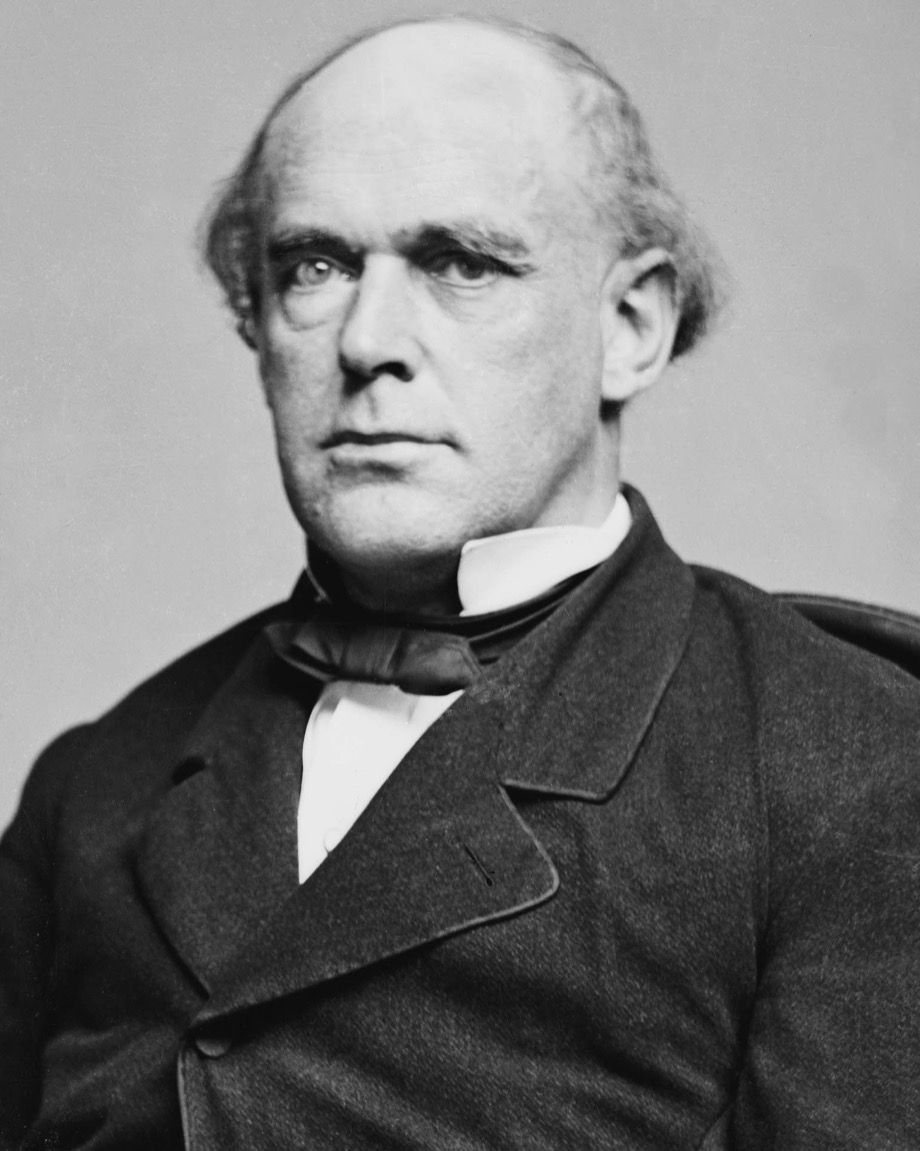
Portrait of Salmon P. Chase
The Man Who Was Always Running for President
Long before Fort Sumter, Salmon P. Chase had already decided what his life was for. In the 1830s and 40s, as a young lawyer in Cincinnati, he took up fugitive slave cases so relentlessly that Ohio abolitionists nicknamed him “attorney general for fugitive slaves” — a title he wore not as a joke but as a preview. He was building, case by case, speech by speech, senate term by senate term, toward a role he considered his by right: the man who would lead the nation out of slavery. That the country eventually agreed to make Abraham Lincoln that man instead never quite registered with Chase as a final verdict. It registered as a delay.
This is the shape of an INTJ conviction — a fixed, long-range image of destiny held with total private certainty, regardless of what the room in front of him actually decided. Chase did not scheme his way into significance; he built the credentials for it decades in advance, then simply assumed the presidency would follow as a matter of course. When it went to a prairie lawyer he privately considered his intellectual inferior, Chase did not recalibrate the vision. He recalibrated the timeline, and went to work inside Lincoln’s cabinet as if it were a waiting room.
Chase never doubted the story he was the hero of — only ever the year it would end.
What makes him worth studying isn’t the ambition itself; nineteenth-century Washington was full of ambitious men. It is the combination: a private mythology so airtight it survived direct, daily subordination to a rival, paired with an executive competence so real that the man he was undermining kept him on anyway, for years, because the country needed what only Chase could build.
The Destiny He Never Stopped Rehearsing
Chase’s Ni showed up first as patience most contemporaries mistook for pure stubbornness. Where other antislavery politicians shifted tactics, parties, and rhetoric as the political winds changed — Free Soiler to Republican, moral suasion to legal argument to open political warfare — Chase treated each shift as one more rung on a ladder he had already mapped to the top. Ohio senator, then Ohio governor, then a serious 1860 candidacy he lost to Lincoln: to him these were not separate careers but a single unfolding plan, and its ending had never been in doubt.
That certainty followed him into the cabinet. From his first weeks as Treasury Secretary, Chase ran an unofficial second campaign for the presidency alongside his official duties, cultivating newspaper editors, feeding correspondence to political allies, and positioning himself for 1864 while Lincoln was still fighting to hold the Union together. Colleagues found it faintly absurd, then simply exhausting. Chase never treated it as disloyalty. In his internal accounting, he was not conspiring against a legitimate leader — he was waiting out an interruption in his own timeline.
Building the Machine That Paid for the War
Whatever reservations Lincoln held about Chase’s loyalty, he never doubted his competence, and the reason is on the record in the federal government’s own architecture. The United States entered the Civil War without a national currency, without a unified banking system, and without any mechanism to finance a war of the scale that was coming. Within roughly two years, Chase had built all three from close to nothing: the National Banking Act, a network of federally chartered banks to hold the war’s debt, and the first paper currency issued directly by the United States government — the greenbacks, so named for the ink on their reverse.
None of this was theoretical work handed off to subordinates. Chase personally drove the bond drives that kept Union armies paid and supplied, negotiated the legal and constitutional objections to a national currency, and imposed order on a Treasury Department that had none. It is, by any measure, one of the most consequential two years of institution-building in American administrative history — accomplished by a man who, by his own private reckoning, believed he was doing this job as a stepping stone rather than a destination.
A Conscience That Never Once Doubted Itself
Beneath the political operator was a man of genuinely rigid private morality, and it is here that Chase’s Fi is easiest to see. His antislavery convictions were not a political posture picked up for advantage — he had held and argued them since long before they were fashionable, at real professional cost, in a Cincinnati where defending fugitive slaves could get a lawyer’s career quietly ended. He buried three wives across his lifetime and by all accounts grieved each with a private, devout intensity that rarely reached the public record, filtered instead through the strict Protestant faith that shaped his sense of right and wrong.
But Fi in service to an Ni certainty can curdle into something less admirable, and Chase never fully separated his own moral righteousness from his own political ambition — he seems to have genuinely believed, without irony, that the country needed him in the presidency because he was simply the more principled man. That fusion of private virtue and personal destiny is what let him campaign against his own president in good conscience: not as betrayal, but as duty.
Why INTJ Over ENTJ
Why not ENTJ?
An ENTJ Chase would have run his campaign for the presidency the way he ran the Treasury — loudly, externally, in the open, marshaling allies through direct confrontation rather than quiet correspondence. The actual Chase did nearly the opposite: his ambition operated almost entirely as an internal certainty he protected rather than broadcast, surfacing in private letters and careful third-party maneuvering rather than in any direct challenge to Lincoln’s authority. That gap between an unshakeable private vision and a reluctance to contest openly for it is dominant Ni working quietly behind an auxiliary Te, not an extraverted Te-driver running the show.
It also explains the peculiar patience of the man. An ENTJ thwarted for the top job would have forced the issue or walked away; Chase simply kept building, convinced the outcome he had already foreseen would eventually correct itself. He was right, eventually — just not in the way, or in the year, he had always assumed.
Connected Figures
Further Reading
- Chase: Salmon P. Chase and Civil War America — John NivenThe standard modern biography, especially strong on his Treasury tenure.
- Team of Rivals: The Political Genius of Abraham Lincoln — Doris Kearns GoodwinSituates Chase within Lincoln's cabinet and the 1864 rivalry.
- Salmon P. Chase: A Life in Politics — Frederick J. BlueA focused political biography tracing his antislavery career from Ohio onward.
