 Historical Figure MBTI
#799 · 6-12-26 · The American Civil War
William Herndon
The Law Partner Who Wrote the Myth
1818–1891
7 min read
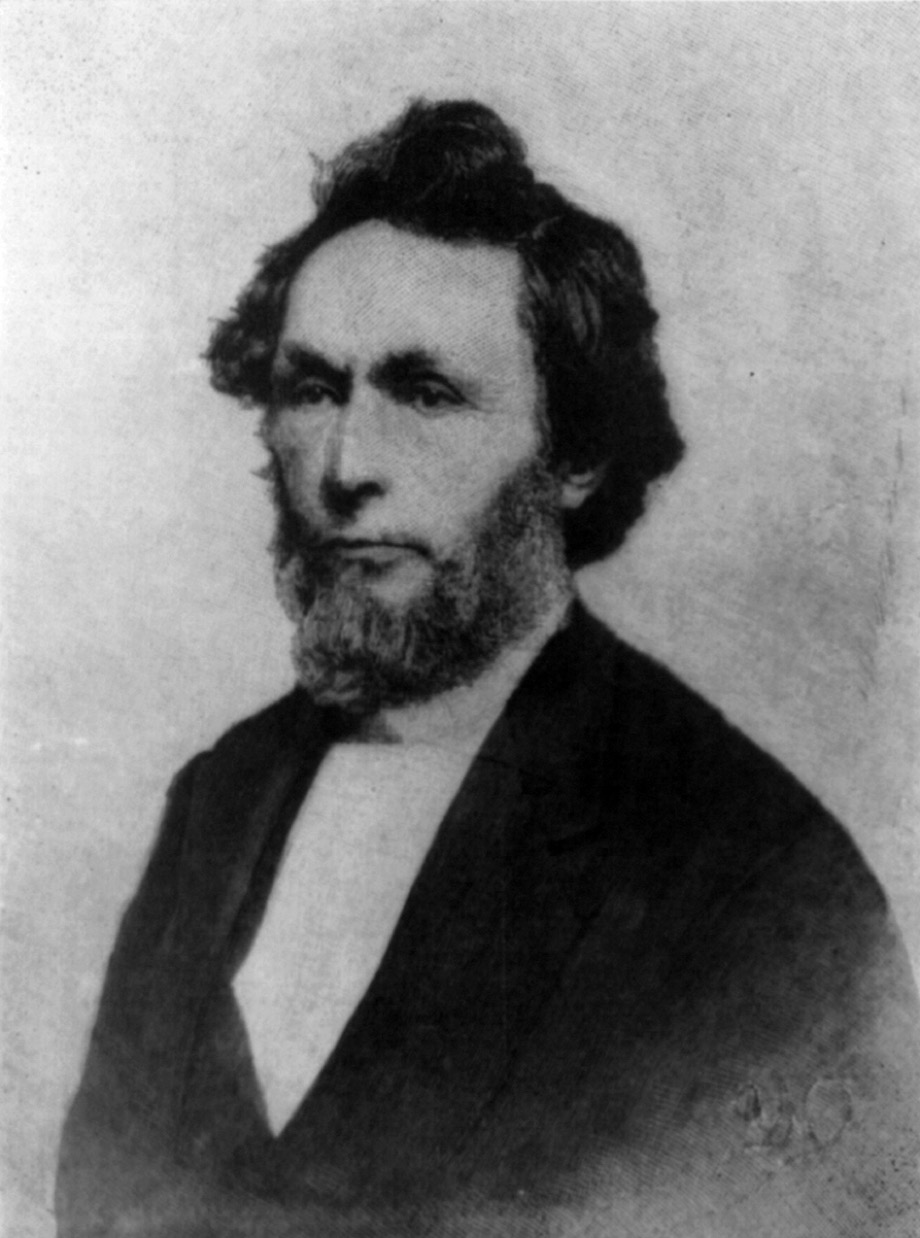
Portrait of William Herndon
The Junior Partner Who Refused to Let Him Go
Every law office needs a filing system, and Springfield's Lincoln & Herndon never really had one — receipts and briefs went into a drawer marked, in Herndon's hand, "When you can't find it anywhere else, look here." That drawer is as good an emblem as any for the younger partner: a man who ran on enthusiasm rather than order, who kept the practice solvent through sixteen years of Lincoln's political absences by sheer improvisational energy, and who read everything — Theodore Parker, Emerson, the abolitionist press — with the restless appetite of someone always chasing the next idea rather than consolidating the last one.
Herndon was twenty-six when Lincoln, twelve years his senior and already the area's leading lawyer, made him a full partner in 1844 — an act of trust Herndon spent the rest of his life trying to justify, first as a colleague and then, after Ford's Theatre, as a self-appointed biographer determined to wrestle the real man out from under the marble monument the country was already building. He is an ENFP: an idea-hungry, emotionally exposed personality who needed Lincoln's cooler judgment as badly as Lincoln needed his energy, and who never fully learned to need anything else.
Herndon didn't practice law so much as orbit it — the partnership, the politics, and eventually the biography were all just different names for his one real subject, which was Lincoln.
The Man Who Read Everything Twice, Then Argued
Herndon kept a shelf of transcendentalists and abolitionist tracts in the back of the law office and treated it less like a library than a conversation partner — he devoured Theodore Parker's sermons and Emerson's essays the way other lawyers devoured case law, and he brought the results into every discussion he had with his more circumspect partner. Where Lincoln weighed a position until it was politically load-bearing, Herndon simply believed things, loudly and early, and pushed — on slavery, on the moral stakes of the Union, on the abolitionist case Lincoln wouldn't yet make in public.
That same appetite for possibility made him the office's idea generator and its least reliable clerk. He would chase a legal theory, a philosophical argument, or a political scheme with total conviction for a week and then abandon it for the next one, leaving Lincoln to do the slow, patient work of turning enthusiasm into something a judge or a voter could use. It is the classic dominant-Ne bargain: brilliant at multiplying angles on a problem, much less interested in picking one and finishing it.
Politically, this made him useful in a way Lincoln quietly relied on — Herndon's radicalism let him test arguments in public that Lincoln could not yet risk, and his correspondence with antislavery editors and activists around the country kept the Springfield office wired into currents Lincoln, cautious by temperament, might otherwise have missed entirely.
Getting Lincoln Right, Whatever It Cost Him
Underneath the enthusiasm sat a conviction Herndon never treated as negotiable: that he understood the real Lincoln — not the icon, not the campaign biography's frontier saint, but the moody, ambitious, sometimes cold man he had shared an office and a friendship with for sixteen years — and that getting him right mattered more than getting him flattering. That is auxiliary Fi in its purest form, a private inner standard held with more loyalty than the man ever showed his own bank account.
It shaped how he practiced law, too. Herndon's radical abolitionism was never a pose calculated for advantage; he held it because he believed it, sometimes to the discomfort of a partner who needed Illinois voters more than Herndon needed anyone's approval. He argued with Lincoln, disagreed with him in print, and stayed devoted to him anyway, because the two things — conviction and loyalty — were never in tension for Herndon the way they might be for someone more conflict-averse.
Even friends who found him exhausting conceded the underlying loyalty was real. Herndon kept the partnership's sign hanging outside their Springfield office — Lincoln & Herndon — untouched through every one of Lincoln's absences on the legal circuit and in Washington, a small, stubborn insistence that the bond mattered more than the credit.
No Drawer for the Rest of His Life
The same restlessness that made Herndon a live wire in argument made him a disaster at the unglamorous maintenance of an ordinary life. He drank, sometimes badly enough to embarrass the firm; he speculated and borrowed and ran through money faster than the partnership's modest fees replenished it. Routine, budgeting, moderation — the whole Si toolkit of steady habit and accumulated caution — never took hold in him the way conviction and curiosity did.
Lincoln, by most accounts, tolerated it with more patience than Herndon's creditors managed, understanding that the same man who forgot to reconcile the office accounts was also the one keeping the practice's energy and its political nerve alive. It was a trade Lincoln seemed to think worth making.
The pattern is textbook inferior Si: not an absence of discipline exactly, but a chronic inability to trust it as a source of stability, so that Herndon kept reaching instead for the next inspired scheme to solve problems patience would have solved more cheaply. It cost him comfort and reputation among neighbors who valued steadiness — but it never touched the one thing he refused to let slip, which was the partnership itself.
Why ENFP Over INFP
Why not INFP?
Herndon shared an INFP's idealism and moral intensity, but he was no quiet introvert working things out on paper. He argued his positions out loud, in the office, in letters to editors, in front of clients — testing ideas through contact with other people rather than refining them alone first. His energy ran outward: recruiting allies for abolitionist causes, chasing new philosophies through conversation, filling a courtroom or a bar with talk. That is Ne meeting the world directly, not Fi-Ne turned inward until a position is fully formed.
The extraversion is the tell. An INFP's Fi usually leads, with Ne trailing behind to explore consequences of a conviction already settled in private; Herndon's convictions arrived in the middle of an argument, sharpened by the friction of disagreement rather than solitary reflection. He needed an audience — Lincoln most of all — the way a dominant Ne needs new material, and he found in the law partnership exactly the arena an ENFP thrives in: high-stakes talk, constant reinvention, and one steady, skeptical partner to push against.
Connected Figures
Further Reading
- Herndon's Lincoln — William Herndon and Jesse WeikHerndon's own biography — the first serious attempt at the man behind the monument, invaluable and unreliable in roughly equal parts.
- Herndon on Lincoln: Letters — ed. Douglas L. WilsonHerndon's correspondence, unfiltered by the finished biography's narrative shaping.
- Honor's Voice: The Transformation of Abraham Lincoln — Douglas L. WilsonDraws heavily on Herndon's interviews while carefully sorting fact from his speculation.
