 Historical Figure MBTI
#1157 · 8-25-26 · The Fall of the Han
Xu Shu
The Advisor Who Left to Save His Mother · And Never Spoke Again
fl. c. 200 – 220 CE
3 min read
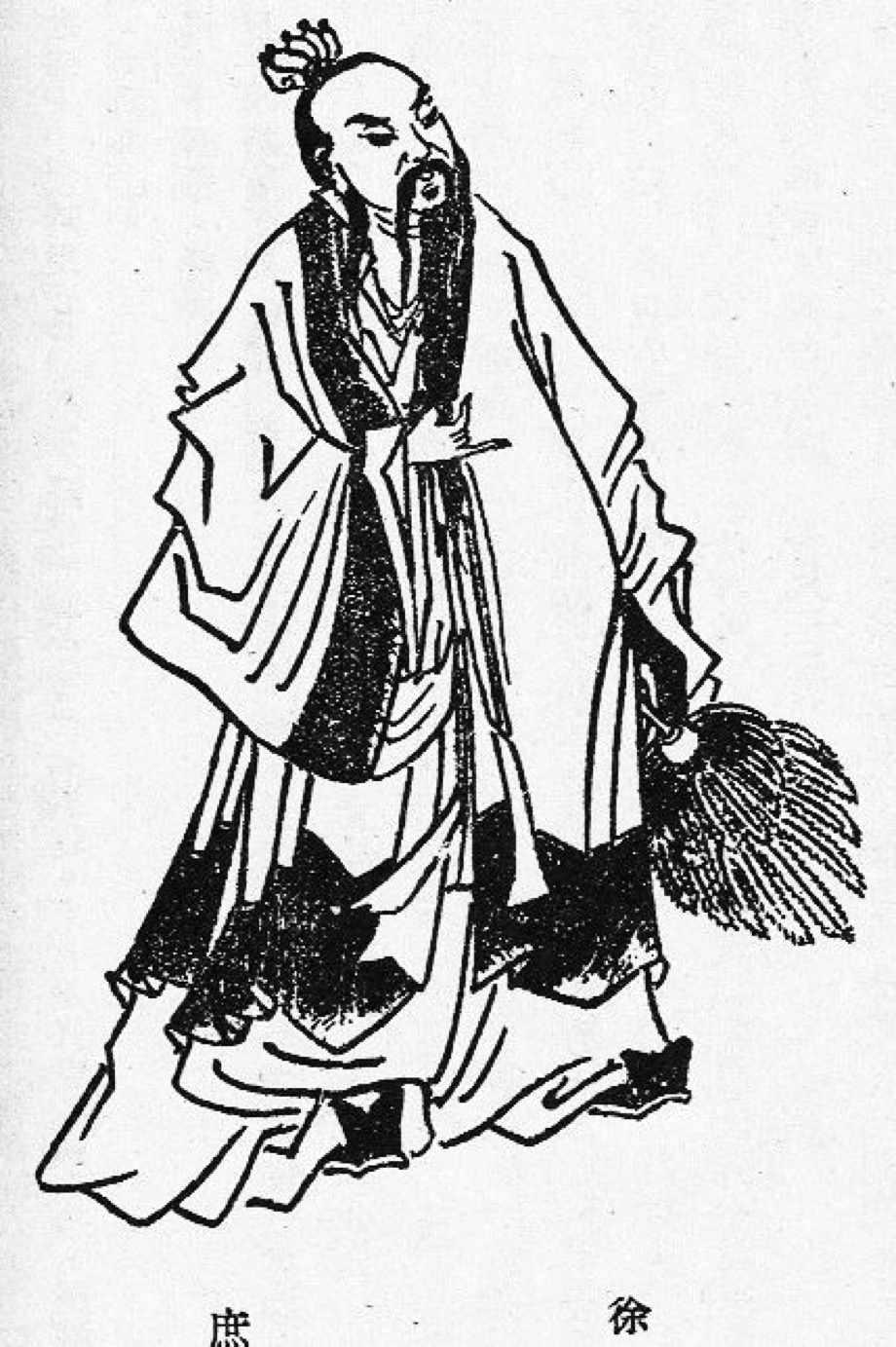
Portrait of Xu Shu
One Recommendation, Then Silence
Xu Shu's career at the center of events lasted only a season. He came to Liu Bei as a strategist during the years Liu Bei spent sheltering in Jing province under Liu Biao, before Liu Bei had a permanent base, before he had an army worth the name, and — crucially — before he had found the advisor who would define the rest of his career. It was Xu Shu who supplied that piece. He told Liu Bei, in terms the tradition remembers as unusually self-effacing, that there was a strategist he considered his own superior, a recluse living outside the city worth visiting in person rather than summoning. That recommendation led directly to Liu Bei's three visits to the thatched cottage, and to everything that followed from them. Xu Shu had, in effect, written himself out of the story before the story's most consequential chapter had even started.
He did not get to choose the manner of his own exit. When Cao Cao's armies swept into Jing province and Liu Bei's household fled south in the chaotic retreat that followed, Xu Shu's mother was taken — by some accounts held as a straightforward hostage, by others lured through a forged letter written in her hand. Either way, the leverage worked exactly as intended. Xu Shu left Liu Bei's camp and reported to Cao Cao's, not out of any change of allegiance but because there was no other way to reach her. Tradition holds — more securely as legend than as strict contemporary record, though it has endured for that reason — that he made himself a promise on the way: he would occupy a seat at Cao Cao's court for the rest of his working life and never once fill it.
He resolved a loyalty he could not honor twice by making himself useful to neither side — present at Cao Cao's court in body, and permanently absent from it in every way that mattered.
Psychological Verdict
Xu Shu's dilemma had no clean solution, and what makes him worth remembering is the shape of the solution he chose anyway. He could not go on serving Liu Bei — his mother's life foreclosed that. But he also would not serve Cao Cao, whatever his mother's captors might have hoped in taking her. So he split the difference in the only way available to a man with no power to refuse the summons outright: he let his body go where it was ordered and made sure nothing else followed it. No plan, no counsel, no distinguishing act — a career-long silence, offered up as the only form of loyalty still within his control.
It is worth noticing what this was not. It was not defection — he never turned on Liu Bei, never supplied Cao Cao's side with anything of value, never positioned himself for advancement under his new lord. But it was not resistance either, not in any active sense — no sabotage, no secret correspondence, no plot to escape back south. He simply declined to be useful, indefinitely, and let that refusal stand in for every gesture of loyalty circumstance had made impossible to make directly. It is a form of integrity that leaves almost nothing behind — no dramatic confrontation, no recorded act of defiance — because withdrawal, by design, produces silence rather than a record.
The irony historians have long noted is that the one thing Xu Shu did do — pointing Liu Bei toward a strategist he rated above himself, in the last weeks before he was compelled to leave — outweighed, in its consequences, anything a lifetime of active service to either lord could plausibly have produced. His legacy was decided in a single conversation before the story most people associate with him even began.
Connected Figures
Further Reading
- A Biographical Dictionary of the Later Han to the Three Kingdoms — Rafe de CrespignyEntry on Xu Shu
- Three Kingdoms — Moss Roberts (trans.)The classic novel that shaped the enduring legend of his vow of silence
