 Historical Figure MBTI
#1089 · 8-14-26 · The Warring States
Yang Zhu
The Philosopher Who Wouldn't Pluck a Hair
c. 440 – 360 BCE
4 min read
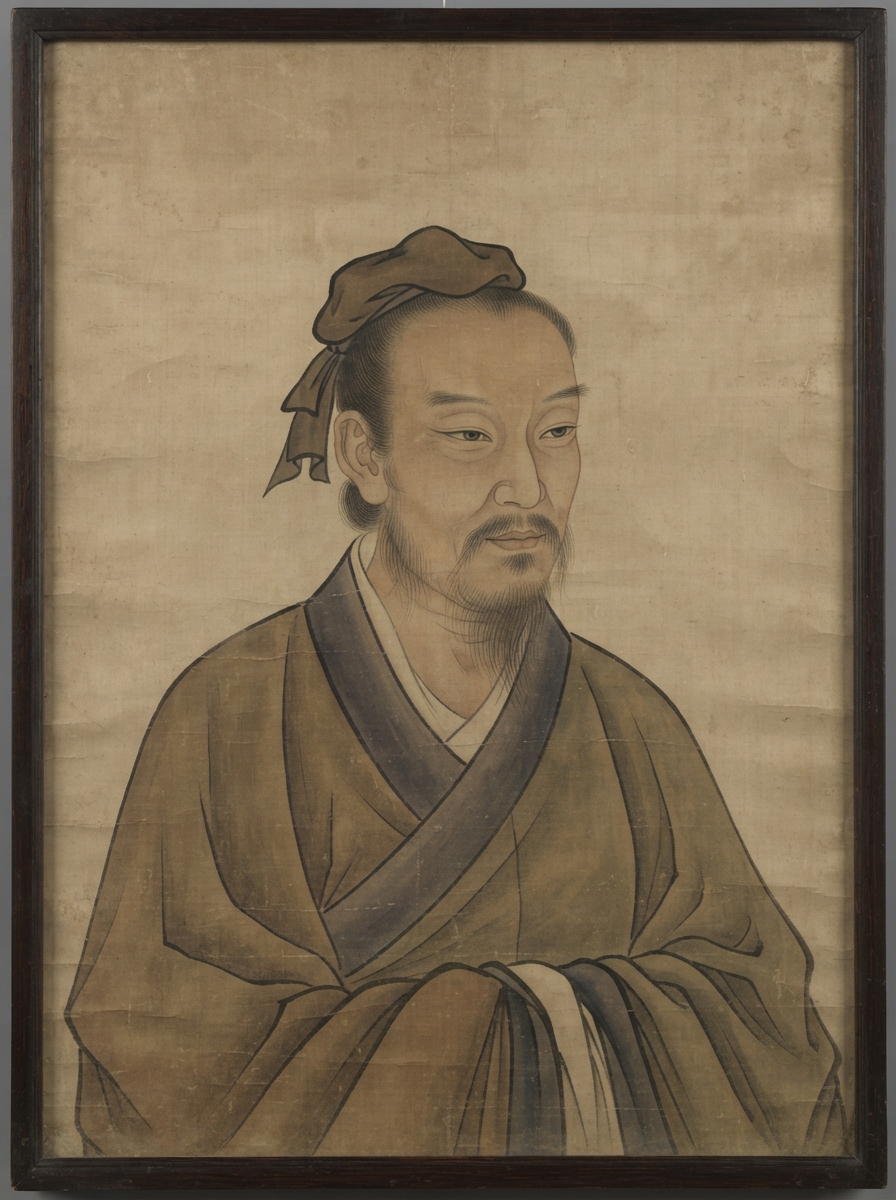
AI-assisted Portrait of Yang Zhu
A Philosopher Known Only Through His Enemies
Yang Zhu left no book. What survives of him survives as residue in the arguments of men who despised him — chiefly Mencius, who could not let a generation pass without warning that the empire had fallen to Mozi on one side and Yang Zhu on the other, one dissolving the family into universal love, the other dissolving duty into the self. Mencius reduced him to a single, quotable outrage: that Yang Zhu would not pluck out a single hair from his body to benefit the entire world, even if the world's salvation hung on it.
Read as satire, it damns him as a solipsist. Read on its own terms — and on the terms of the later "Yang Zhu" chapter attributed to the Liezi, which is likely more elaboration than transcription but is the closest thing to his voice we have — it says something narrower and stranger: that the body is not a coin to be spent on abstractions, that no cause, however grand, buys the right to consume a life it did not make. He is not recommending cruelty. He is refusing the ledger in which a hair could ever be a fair trade for the world.
Not one hair — not because the world is worthless, but because no argument, however vast, is entitled to spend a body it did not build. That refusal is ISTP reasoning stripped to its axiom.
Psychological Verdict: ISTP
Everything Mencius found alarming about Yang Zhu reads, from the inside, as dominant Ti working exactly as it should: a private logical structure — the body is mine, its integrity is not negotiable, no external claim outranks it — held so cleanly that no social pressure, however sanctified by Confucian language, could talk him out of the premise. He was not weighing self-interest against the common good and choosing himself out of greed. He was refusing to accept that the scale was legitimate in the first place, which is a colder and more stubborn operation than selfishness, and one that only makes sense as a function of internal, self-referential logic rather than externally negotiated values.
The doctrine is also, unmistakably, embodied rather than abstract — the hair, the body, the physical fact of a life, set against "the world" as a concept. That is Se's instinct for the concrete pulling rank over any Ni vision of a redeemed future or Fe accounting of what the community is owed. Where Mozi built a universal system and asked everyone to live inside it, Yang Zhu built nothing: he simply would not be recruited. The historical record preserves him only as a foil, a single-hair anecdote weaponized by a moralist — which is itself the fate of an ISTP who never bothered to write the system down, because for him the point was never to persuade the world. It was only ever to keep the world's hands off his body.
Connected Figures
Further Reading
- Mencius — trans. D.C. LauThe hostile source of the single-hair anecdote and Yang Zhu's classification alongside Mozi as a threat to the Way.
- Liezi, ch. "Yang Zhu" — trans. A.C. GrahamThe fullest surviving elaboration of the philosophy attributed to him, of disputed but instructive authenticity.
- Disputers of the Tao — A.C. GrahamSituates Yang Zhu within the broader landscape of Warring States philosophical schools and their disputes.
