 Historical Figure MBTI
#1090 · 8-14-26 · The Warring States
Shang Yang
Legalist Reformer · Architect of Qin's Rise
c. 390 – 338 BCE
6 min read
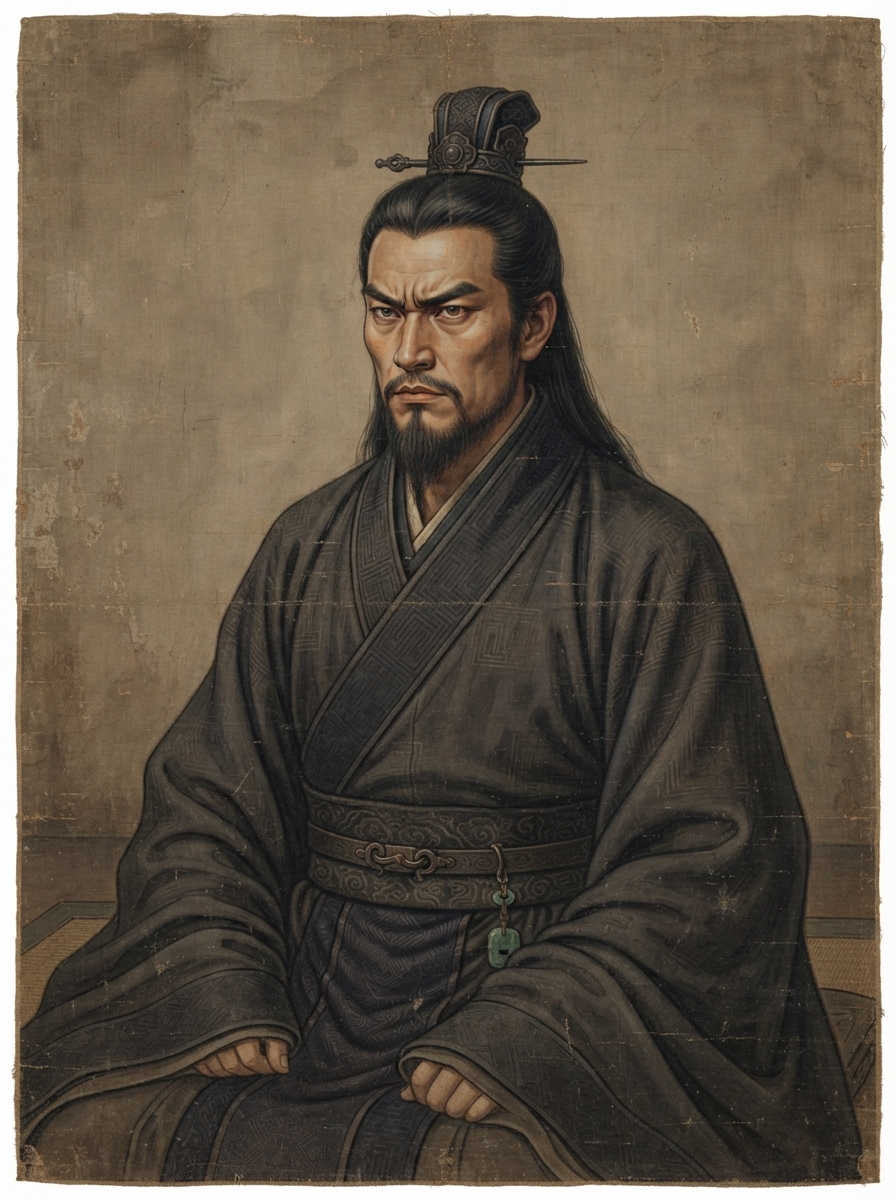
AI-assisted Portrait of Shang Yang
The Man Who Would Not Bend the Law, Not Even for a Prince
Shang Yang arrived in Qin a nobody — a minor scion of a cadet branch of the Wei ruling house, carrying no army and no fortune, only a theory of government he had refined through failed audiences with lesser lords. What he offered Duke Xiao in 359 BCE was not a vision of glory but a machine: a state that would run on rule, not on virtue, favor, or blood. Over the next twenty years he built it exactly as designed, clause by clause, and enforced every clause without exception. When the crown prince himself broke the new law, Shang Yang did not bend to make an example of someone smaller. He punished the heir's tutor instead — cutting off the man's nose — because the law had to fall on someone, and it could not be seen to spare the one person everyone expected it to spare.
That single act is the whole of him in miniature. He is an ISTJ, a temperament organized around precedent, procedure, and the conviction that a rule unevenly applied is not a rule at all. He did not dream up new systems every few years the way a restless visionary might; he took one code, precisely defined, and administered it with total consistency for two decades, through famine, through court intrigue, through his own patron's death. The reforms that remade Qin into the most efficient war-making state in China were not the product of improvisation. They were the product of a man who believed, with something close to fanaticism, that severity itself was a virtue.
Shang Yang's genius was never invention — it was an ISTJ's absolute, Si-rooted fidelity to one law, applied without exception, for as long as it took.
One Code, No Exceptions
Introverted Sensing hoards precedent and demands that the present answer to it faithfully. In Shang Yang this became a doctrine of law: once a rule was promulgated, it bound everyone, forever, without regard for rank. He organized Qin's households into groups of five and ten, bound by mutual responsibility — if one member committed a crime and the others failed to report it, all were punished alike. He abolished the old hereditary privilege that let noble birth substitute for merit, replacing it with a rank system earned strictly through registered agricultural output and battlefield kills. Every measure, every weight, every unit of grain in Qin was standardized to a single fixed reference, because a Si-dominant mind cannot tolerate a law that means one thing in one district and another thing in the next.
The proof came when the crown prince himself broke the statute. Shang Yang could not physically punish the future king of Qin, but he refused to let the law bend around that fact. He had the prince's tutor's nose cut off — a mutilation delivered not to the guilty party's body but to the principle that no one, not even royalty, stood outside the code. It was consistency taken to its most literal, most brutal conclusion: the law existed independent of persons, and would be enforced as if it did.
The State as a Machine
Extraverted Thinking is the drive to make a system run — to build the visible apparatus of measurement, ranking, and enforcement that turns a principle into daily administration. Shang Yang did not merely believe in impartial law; he built the bureaucracy that could actually deliver it at scale. New law codes were posted publicly. Census and household registration made every family legible to the state. The rank system converted grain output and severed enemy heads into a single legible currency of social advancement, replacing the older, vaguer economy of aristocratic favor with something auditable.
Within a generation, this machinery had turned Qin — previously a peripheral, semi-frontier state looked down on by the older powers of the Central Plains — into the most efficient war-making polity in China, the direct foundation on which Qin Shi Huang would later build unification. That outcome was not the product of charisma or diplomacy. It was the product of relentless, unglamorous administrative execution, sustained for two decades without deviation.
A Private Conviction in Severity
Beneath the cold administration sat something more personal: a tertiary Introverted Feeling conviction, held with near-fanatical certainty, that severity itself was righteous — not a regrettable necessity but the moral center of good government. Shang Yang was not merely willing to enforce harsh law; he wrote, in the text later compiled as the Book of Lord Shang, that leniency toward small crimes bred large ones, and that a ruler who loved his people too gently would in the end harm them more than one who punished them strictly. That is not the language of a reluctant technocrat. It is the language of a man who had made severity into a private ethic.
It cost him everything. When his patron Duke Xiao died, the humiliated prince he had once punished became king, and Shang Yang — denied lodging by an innkeeper who, by law, could not shelter a traveler without proper identification, his own law turned back on him — was captured and executed, torn apart by chariots. He had built a system with no exceptions, and in the end it did not make one for its own architect.
Why ISTJ Over ENTJ
Why not ENTJ?
An ENTJ reformer of this stature would be expected to keep generating new grand strategy — new campaigns, new institutional visions, restless extraverted intuition always testing the next configuration of power. Shang Yang did the opposite. He arrived with one precisely defined legal system and then spent twenty unbroken years enforcing it exactly as written, adding administrative detail rather than reinventing the design. His genius was implementation and enforcement, not the generation of new vision — the mark of Si-Te, not Ne-Te.
Where an ENTJ commander would have kept improvising, Shang Yang kept applying. The measure of his life is not how many schemes he devised but how completely he refused to deviate from the single one he had already decided was correct — a fidelity that built the Qin war machine, and a fidelity that, in the end, he could not escape either.
Connected Figures
Further Reading
- The Book of Lord Shang (Shangjunshu) — trans. J. J. L. DuyvendakThe Legalist treatise attributed to Shang Yang's school — the fullest statement of his doctrine of impartial, severe law.
- Records of the Grand Historian (Shiji), 'Biography of Lord Shang' — Sima QianThe primary ancient account of Shang Yang's reforms, rise, and violent end under the new king of Qin.
- The Origins of Statecraft in China — Herrlee G. CreelSituates Shang Yang's reforms within the broader development of centralized bureaucratic government in Warring States China.
