 Historical Figure MBTI
#1091 · 8-14-26 · The Warring States
Duke Xiao of Qin
The Ruler Who Bet on a Reformer
381 – 338 BCE
6 min read
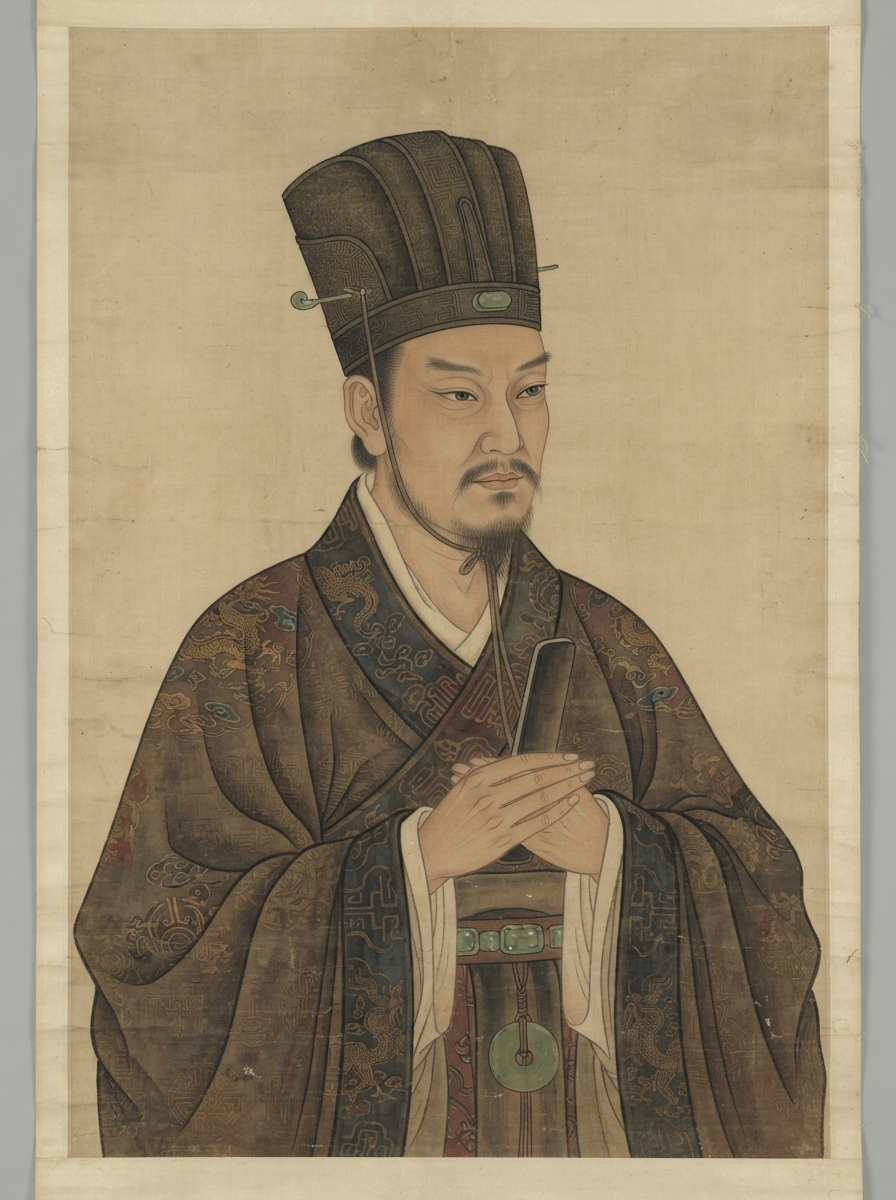
AI-assisted Portrait of Duke Xiao of Qin
A Frontier Ruler Who Bet the State on a Stranger
When Ying Quliang took the throne of Qin in 361 BCE, he inherited a backwater. The great courts of the Central Plain — Wei, Qi, Chu — regarded Qin as a half-barbarian frontier state, fit for supplying horses and absorbing raids, not for shaping the fate of China. Duke Xiao, as he became known, did not respond with grievance or nostalgia for old glories. He responded with a proclamation, sent to every state in the land, offering rank and land to any man — regardless of birth — who could make Qin strong. It was an extraordinary admission for a sovereign to make in public: that his own nobility, his own institutions, had failed, and that salvation might come from outside them entirely.
The proclamation drew Shang Yang, an obscure administrator from Wei with a ruthless theory of statecraft. What followed was not a cautious trial of ideas but a total transfer of authority — new law codes, land redistribution, a meritocratic rank system that stripped hereditary nobles of their privileges, all imposed over a decade of bitter aristocratic resistance. Duke Xiao backed every measure to its conclusion, including the one that touched his own household: when the crown prince broke the new laws, the prince's tutor was mutilated in his place, and Duke Xiao let it stand. This is the profile of an ENTJ operating at full extension — a leader who diagnoses a systemic failure, commits to structural transformation, and refuses to soften the commitment when it reaches his own front door.
Duke Xiao was ENTJ Te-Ni through and through — a ruler who saw the long arc of Qin's survival and rebuilt the machinery of the state to reach it, whatever it cost his own house.
Rebuilding the Machine from the Ground Up
Dominant Te does not tinker at the margins; it audits the whole system and rebuilds what fails the audit. Duke Xiao's recruitment edict was already an act of institutional diagnosis — an admission that Qin's existing structures of governance and its existing pool of noble administrators could not produce the outcomes the state needed. Once Shang Yang arrived, Duke Xiao did not commission a study or a limited pilot. He handed over the machinery of the state itself: new law codes binding noble and commoner alike, a rank system awarding land and status by military and agricultural merit rather than birth, standardized weights, measures, and administrative units replacing the old patchwork of clan authority.
This was Te in its most unsentimental form — judging institutions by function, not by pedigree or tradition. Qin's old nobility resisted for years, and Duke Xiao spent his own political capital, decade after decade, keeping the reforms intact rather than trading them away for aristocratic peace. By his death in 338 BCE, Qin possessed the most centralized, meritocratic, and militarily efficient administrative apparatus of any state in China — the direct institutional foundation on which his descendant Qin Shi Huang would later conquer every rival kingdom.
Betting Everything on an Unproven Stranger
Tertiary Se shows up here not as impulsiveness but as decisiveness under pressure — the refusal to hedge once a course is chosen. When Shang Yang arrived at court, he was a nobody: an administrator from a minor branch of the Wei aristocracy, with no track record and no faction behind him. Duke Xiao did not test him with a minor post or ease him in against the resistance he was certain to face. According to the Shiji, Duke Xiao debated Shang Yang directly at court against the objections of his senior ministers, then moved immediately to make him chancellor with sweeping authority to legislate.
That immediacy — commit now, in public, with full authority, rather than accumulate evidence quietly over years — is the mark of Se pressed into service of a Te-Ni conviction. Duke Xiao staked his reign's legitimacy on a man he had known only briefly, in the full view of a court that despised the wager, and did not walk it back when the nobility's resistance turned bitter and organized.
When the Law Reached His Own Son
Inferior Fi rarely announces itself in an ENTJ's public rhetoric, but it surfaces at the moment personal conviction is tested against personal cost — and Duke Xiao's defining test came when his own household broke Shang Yang's new laws. When the crown prince violated the code, Shang Yang could not punish the heir directly, so the prince's tutor was mutilated in his place as the law required. Duke Xiao let the punishment stand.
A ruler governed only by Te calculation might have carved out an exception for his own line the moment the law became inconvenient to it; a great many did, throughout Chinese history, and their reforms did not survive them. Duke Xiao's refusal to do so reads as something closer to a private, near-inarticulate conviction — a felt certainty that Qin's survival mattered more than his own family's comfort or standing — surfacing exactly once, at exactly the moment it was needed, and then receding again behind the machinery of state.
Why ENTJ Over INTJ
Why not INTJ?
An INTJ with the same diagnosis of Qin's weakness might well have arrived at the same reforms — but would have pursued them quietly, through incremental appointments and behind-the-scenes maneuvering, minimizing public exposure until the outcome was assured. Duke Xiao did the opposite at every turn: he issued an open, empire-wide proclamation announcing his state's inadequacy before he had a solution, then publicly elevated an unknown foreigner to supreme authority and stood in the court to defend the choice against his own nobility. That is Se in service of Ni-Te, not Ni-Te operating alone — visible, forceful commitment rather than withheld calculation.
The distinction matters because it explains the shape of Duke Xiao's reign. An introverted strategist might have achieved comparable reforms more slowly and more safely. Duke Xiao instead made his commitment a spectacle — the recruitment edict, the public debate, the refusal to shield his own family from the law — and it was precisely that visible, unhedged extremity of commitment that gave Shang Yang's reforms the political cover to survive a generation of aristocratic resistance.
Connected Figures
Further Reading
- Shiji (Records of the Grand Historian) — Sima QianThe primary classical account of Duke Xiao's reign and his elevation of Shang Yang.
- The Book of Lord Shang — trans. J. J. L. DuyvendakThe Legalist text attributed to Shang Yang, product of the reforms Duke Xiao authorized.
- The Cambridge History of Ancient China — Michael Loewe & Edward L. Shaughnessy (eds.)Scholarly context on Qin's institutional transformation during the Warring States period.
- China: A New History — John King Fairbank & Merle GoldmanPlaces Qin's rise within the broader arc of the Warring States and eventual unification.
