 Historical Figure MBTI
#1088 · 8-14-26 · The Warring States
Mozi
Founder of Mohism · Universal Love, Defensive War
c. 470 – 391 BCE
5 min read
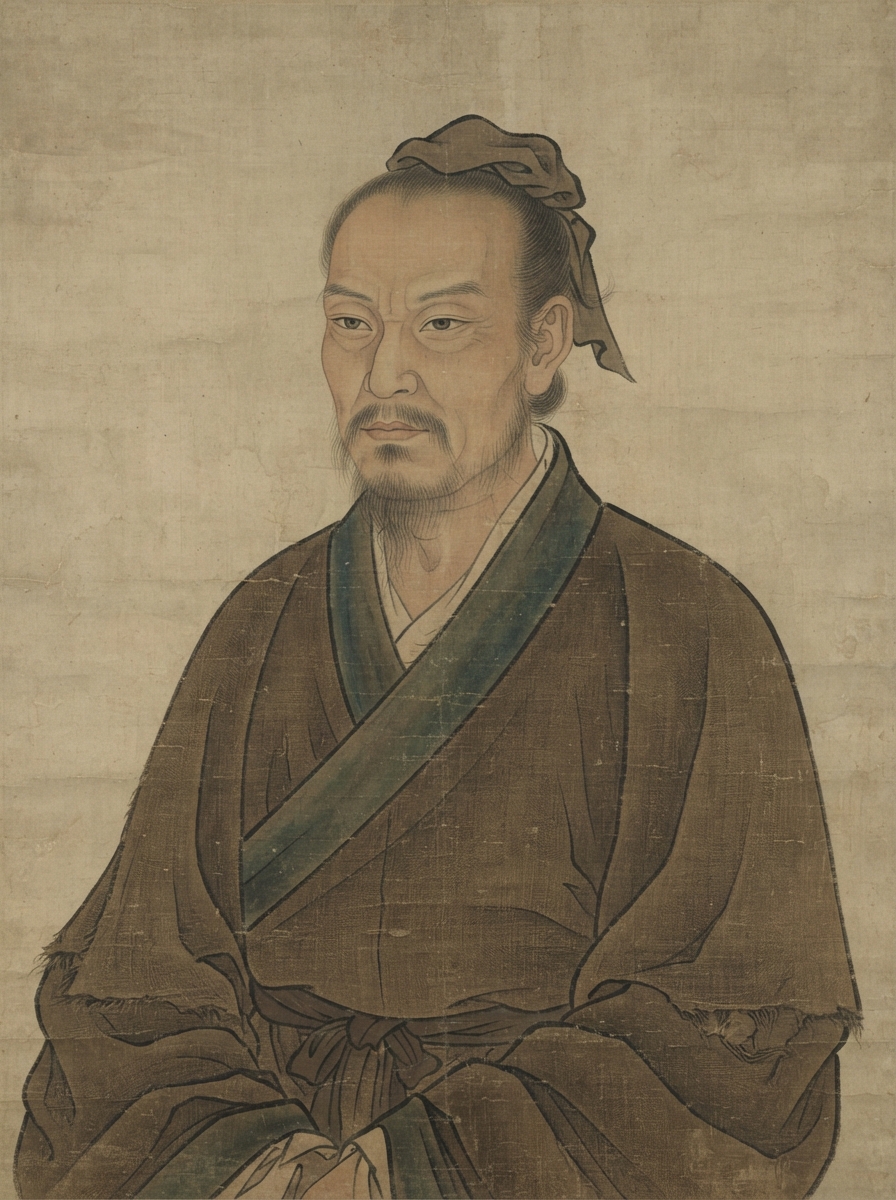
AI-assisted Portrait of Mozi
The Man Who Walked Ten Days to Stop a War
Mozi heard that the state of Chu was building siege engines to swallow the small state of Song, and he did not send a letter. He walked — ten days and ten nights, tearing strips from his robe to bind his blistered feet, until he reached the court of King Hui and asked, plainly, why a ruler with land to spare would covet a neighbor's poverty. It is the kind of gesture a ENFJ makes instinctively: conviction translated at once into motion, principle carried on two feet because a letter can be ignored and a man standing in your throne room cannot.
He had, by most accounts, once studied under the Confucians and broken with them — not over their goals but over their waste, the elaborate funerals and court music he thought stole grain from the starving to flatter the dead and the idle. In their place he preached jian'ai, "universal love": care for a stranger's father as your own, a rival state's harvest as your own state's. It sounds like sentiment. Mozi made it into an institution — a disciplined order of engineers, sworn to a code, who marched to threatened cities and built their walls.
Mozi was an ENFJ whose dominant Fe turned universal love from a slogan into a standing army of defenders.
A Love That Refuses to Play Favorites
Mozi's whole ethics rests on a single Fe conviction: that partiality itself is the root of violence. Not greed, not any one bad ruler, but the ordinary human habit of loving one's own family, one's own city, one's own state more than any other — a habit everyone praises as virtue and which Mozi diagnosed as the engine of every war he had watched consume the Warring States. His answer was not a treatise but a demand for felt, impartial care: love your neighbor's parents as your own, because a world that draws no line between "mine" and "theirs" has no reason left to invade.
He preached this door to door, in the idiom of the common people rather than the ritual Confucian court — plain, repetitive, built for persuasion rather than elegance. And he did not merely preach it; he organized it. The Mohists he gathered lived under a leader called the Juzi, bound by an internal code stricter than most states' law, ready to be dispatched wherever a small city stood in a bigger one's shadow. Fe, for Mozi, was never a private sentiment. It was a mandate to build the structure that made the sentiment binding on other people.
Tracing War Back to Its Root
Underneath the preaching sat a cold, long-range diagnosis, and that is where Ni does its work. Mozi did not condemn war as such — he approved of purely defensive war without hesitation — which marks him as a strategist, not a pacifist. What he condemned was offensive war specifically, because he had traced its cause to a single structural source: rulers who reasoned from the part (my house, my state) rather than the whole, and who therefore treated another state's ruin as an acceptable price for their own gain.
That diagnosis is why his solution scaled the way it did. A dominant Fe alone produces a preacher; paired with Ni it produces a doctrine engineered to close the actual mechanism of harm — hence the twin planks of universal love and "condemnation of offensive warfare" arriving together, as one argument, rather than as separate complaints about cruelty and greed.
Proving It on the Ground
Se is what separates Mozi from every philosopher who merely argued that war was wrong. Having reached Chu, he did not rest on rhetoric. He and the king's strategist Gongshu Ban re-fought the coming siege on the spot, laying out mock fortifications with his belt as a wall and blocks of wood as engines, running through every attack Gongshu Ban could devise and countering each in turn — and when Gongshu Ban ran out of stratagems, Mozi calmly noted that his own disciples were already stationed on Song's walls with the defenses built, so killing him would change nothing.
King Hui called off the invasion. It is a strategist's proof, delivered as physical demonstration rather than argument — the same instinct that had Mozi organizing engineers rather than debating clubs, training his followers in fortification and siegecraft rather than trusting persuasion to hold once he left the room.
Why ENFJ Over ENFP
Why not ENFP?
ENFP fits the passion but not the machine Mozi built around it. He did not loosely inspire followers toward an open-ended ideal; he founded a standing order with a sworn leader, an internal legal code, and a fixed unified doctrine that his disciples kept enforcing for generations after his death, splitting into rival Mohist schools that argued over its precise wording rather than abandoning it. That is Fe-Ni structure, not Ne exploration — a single conclusion driven into an institution, not a field of possibilities kept open.
The clearest evidence is what Mohism became after Mozi died: not a scattered inspiration but a functioning brotherhood of engineers still marching to besieged cities, still bound by his code, centuries on. That kind of durability is what a dominant judging function, not a dominant perceiving one, leaves behind.
Connected Figures
Further Reading
- The Mozi: A Complete Translation — trans. Ian JohnstonThe full Mohist corpus in English, including the core chapters on universal love and defensive warfare.
- Disputers of the Tao — A.C. GrahamThe standard survey of classical Chinese philosophy, with a detailed account of Mohist logic and ethics.
- Shiji (Records of the Grand Historian) — Sima QianContains one of the earliest, if brief, biographical notices of Mozi.
