 Historical Figure MBTI
#1114 · 8-19-26 · The Age of the Buddha
Yasodhara
The Wife Left Behind, Who Became a Nun
c. 563 – c. 483 BCE
5 min read
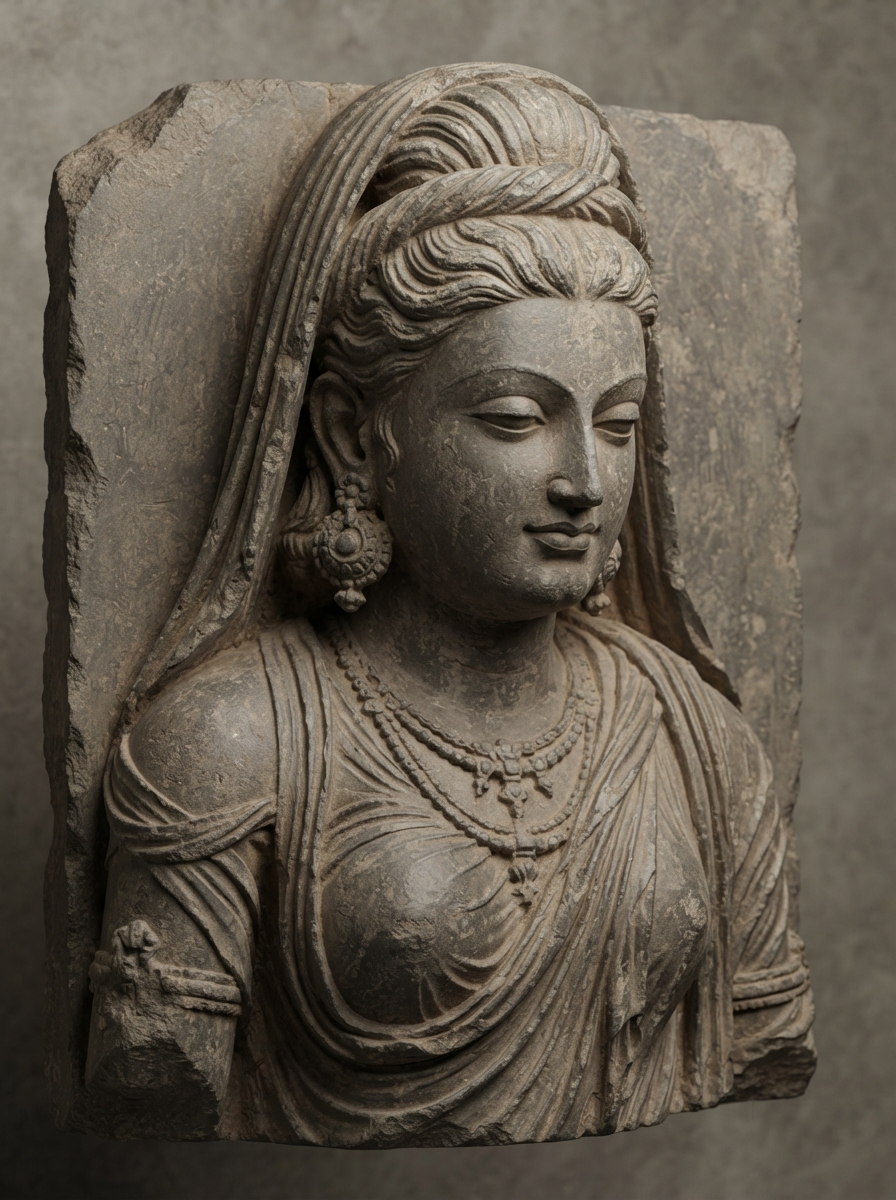
AI-assisted Portrait of Yasodhara
The Story Usually Told From the Other Side
Every telling of the great renunciation puts the prince at its center: the chariot rides beyond the palace walls, the sight of sickness and old age and death, the night he slipped from his sleeping household to seek an end to suffering. Yasodhara appears in that story mainly as what was left — a wife asleep beside their newborn son, Rahula, when her husband rose without waking her and walked out of the only life she knew. The earliest Buddhist texts barely name her. But the tradition that grew up around her, in the commentarial literature written centuries later, remembers a woman who did not simply vanish from the narrative once her scene was over. She kept faith with a man who had left her for a vow she had not made, and when he finally returned, transformed, she did not ask to be restored to her old life — she asked for a new one.
That is the shape of an INFP: a private, deeply held loyalty that answers to nothing external — not to the court's expectations of an abandoned wife, not even to the return of the man she had waited for — and a quiet capacity, once the door opened, to walk through it toward a path entirely her own.
Yasodhara's devotion was never obedience. It was Fi, dominant and unwavering — loyalty as a private covenant, not a performance for anyone watching.
A Grief That Answered to No One
Tradition holds that when Siddhartha left the palace at Kapilavastu, Yasodhara did not perform the grief that court and custom expected of her. She did not remarry, did not petition for her husband's return, did not treat his absence as a wound to be managed by others' comfort. She simply kept to a private, self-imposed austerity — some accounts say she gave up fine clothes and soft beds and rich food to match, in her own way, the deprivations her husband had chosen for himself, though no one had asked this of her and no one but herself would ever know whether she kept it.
This is Fi in its purest register: a moral commitment that needs no audience and seeks no vindication. She raised their son Rahula alone through those years, holding a loyalty that was never about winning Siddhartha back — it survived on its own terms, indifferent to whether it was ever seen or rewarded. When he finally did return to Kapilavastu, years later, as the Buddha, the tradition does not have her reproach him. The devotion had never been a transaction waiting to be repaid.
The Door She Walked Through When It Opened
What distinguishes Yasodhara's story from a simple tale of patient waiting is what tradition says happened next. When the Buddha, at his aunt Mahapajapati Gotami's urging, agreed to admit women into the monastic Sangha, Yasodhara did not treat this as merely a chance to be near her former husband again, in whatever diminished form the robes allowed. She took it as an opening onto an entirely different life — one where the question was no longer what she owed the man who had left her, but what she herself might become.
That leap — from a role fixed by circumstance to a path chosen for its own possibilities — is Ne working alongside Fi rather than against it: an alertness to the one door that mattered, and the readiness to walk through it toward something unproven. She became a nun, and tradition holds she attained enlightenment as an arahant in her own right, not as an appendage to her husband's awakening but as a second, independent arrival at the same place.
The Long Discipline of an Unwitnessed Life
Beneath the leap into monastic life lay years of steady, private practice that made it possible. The austerities Yasodhara is said to have kept during Siddhartha's absence were not a single gesture but a sustained routine, held day after day with no one to confirm she was keeping it — the kind of quiet consistency that tertiary Si sustains long after the initial impulse that inspired it has faded. It was this groundwork, tradition suggests, that let her step so readily into the rigor of monastic discipline once the chance arrived: she had already been living, in her own household, something close to a renunciate's life.
Why INFP Over ISFJ
Why not ISFJ?
It would be easy to read Yasodhara's years of solitary austerity as ISFJ steadiness — dutiful continuity, a role held out of obligation until circumstances changed. But tradition's arc for her does not end in continuity; it ends in transformation. She does not simply persevere in the role of abandoned wife until it is quietly folded into a new one. Given the opening, she pursues an independent spiritual attainment entirely her own, on terms she set for herself rather than terms handed to her by duty. That is Fi answering its own compass, not Si preserving a fixed obligation.
The distinction matters because it is the difference between a story about waiting and a story about becoming. Yasodhara's tradition remembers her first for what she held onto alone, and then for what she reached toward once she was finally free to choose it.
Connected Figures
Further Reading
- The Apadana (Pali Canon commentarial verses) — TraditionalThe earliest extended verse tradition attributing an awakening narrative to Yasodhara.
- Buddha — Karen ArmstrongA biography of Siddhartha Gautama that situates his renunciation, and its cost to his household, within its historical and religious context.
- Women in Buddhism: Images of the Feminine in Mahayana Tradition — Diana Y. PaulExamines how women like Yasodhara are remembered and reshaped across the Buddhist textual tradition.
