 Historical Figure MBTI
#1127 · 8-21-26 · The Fall of the Han
Zhang Rang
Chief Eunuch · Palace Faction · The Last Man He Cornered
d. 189 CE
3 min read
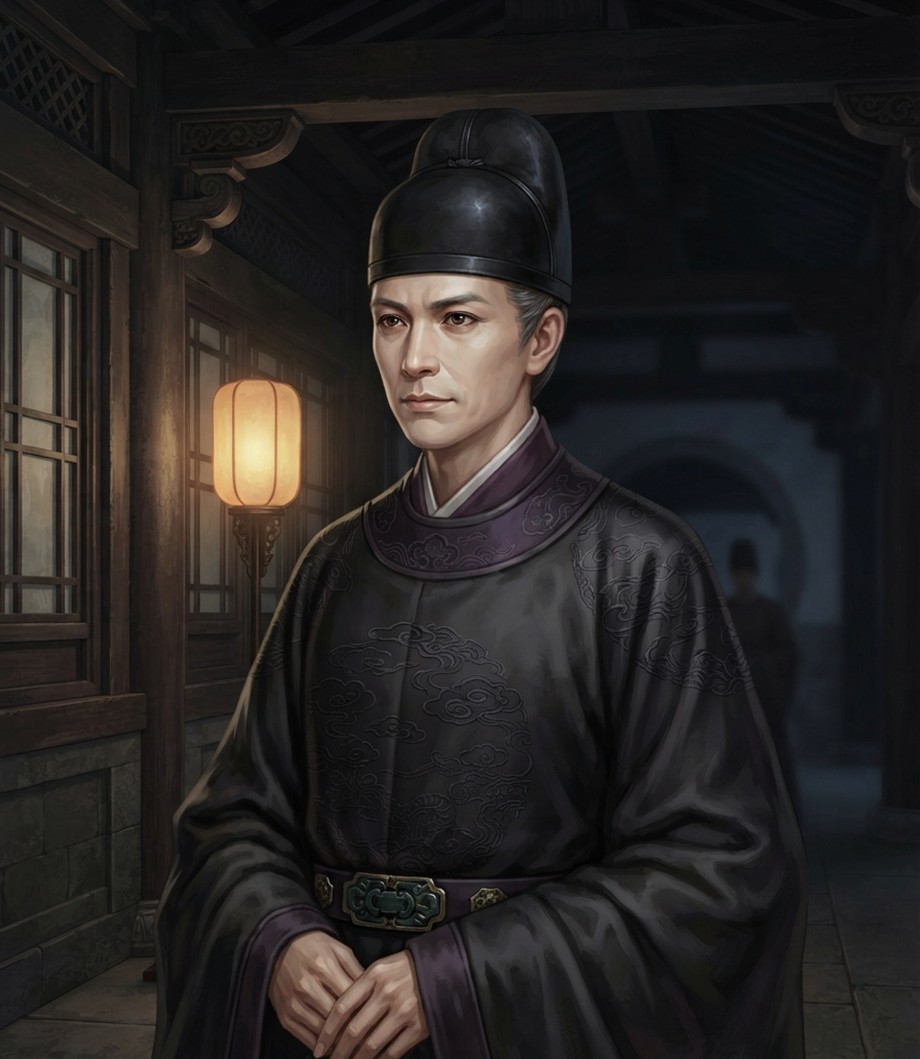
AI-assisted Portrait of Zhang Rang
The Man Who Stood at the Door
Zhang Rang never sat on a throne, commanded an army, or wrote a policy that outlived him. What he held was narrower and, for a while, far more valuable: the door. As chief among the palace eunuchs known to history as the Ten Attendants, he controlled who reached Emperor Ling of Han and who did not — a position that turned bribes, favors, and quiet extortion into one of the largest private fortunes in the empire. Courtiers reportedly told the emperor himself that the eunuch faction's combined wealth rivaled the state treasury; Emperor Ling, notoriously indifferent to governance, seems to have found this more amusing than alarming.
That arrangement worked exactly as long as the man on the throne tolerated it. When Emperor Ling died in 189 CE, the regent He Jin, pushed by the ambitious general Yuan Shao, moved to purge the eunuch faction outright. Zhang Rang did not wait to be purged. He and his allies lured He Jin into the palace on a pretext and killed him first — a strike that bought him nothing but time, since it also triggered the very massacre it was meant to prevent. Yuan Shao's soldiers stormed the palace and cut down eunuchs indiscriminately. Zhang Rang fled into the night with the young emperor and his brother in tow, and when the road ran out at the bank of the Yellow River, he drowned himself rather than be taken.
A man who read every room he stood in and never once looked past it — decades of leverage spent staying alive, and a death chosen the same way everything else had been: on instinct, in the instant it was needed.
Psychological Verdict
Zhang Rang's whole career was built on reading the immediate situation better than anyone standing next to him. He did not accumulate power through vision, ideology, or a plan that reached beyond the next season — he accumulated it through proximity, through knowing exactly which favor to grant, which bribe to accept, and which threat in the room needed handling right now. Decades at the center of Han court politics left no record of him building toward anything larger than his own continued access and enrichment. That is not a failure of ambition so much as its total absence in any form beyond the tangible and present.
The end of his life is the clearest evidence of how his mind worked. When He Jin moved against the eunuch faction, Zhang Rang did not deliberate, negotiate, or attempt to out-maneuver him politically — he struck first, immediately, with his own hands on the plan. When that gambit detonated into a massacre, he did not try to talk his way out or find a faction to shelter him — he ran, carrying the emperor with him because proximity to the throne was still the only asset he understood. And when the river finally closed off every option, he did not hesitate over the choice between capture and death; he chose death, on the spot, the way he had chosen everything else — instantly, physically, and alone.
There is a grim consistency to it. Survival and self-interest were the only constants across forty years of court intrigue and one final night of collapse, and both were pursued with the same unreflective speed. Zhang Rang was never a schemer in the long-game sense; he was a man permanently alert to the threat directly in front of him, who happened to hold that posture for decades before it finally killed him.
Connected Figures
Further Reading
- Fire over Luoyang: A History of the Later Han Dynasty — Rafe de CrespignyCovers the fall of the eunuch faction and the collapse of Han court authority.
- A Biographical Dictionary of the Later Han to the Three Kingdoms — Rafe de CrespignyEntry on Zhang Rang and the Ten Attendants.
