 Historical Figure MBTI
#270 · 3-25-26 · Catherinian Russia
Alexander Dmitriev-Mamonov
Favorite · Courtier · The One Who Broke Catherine's Heart
1758 — 1803
4 min read
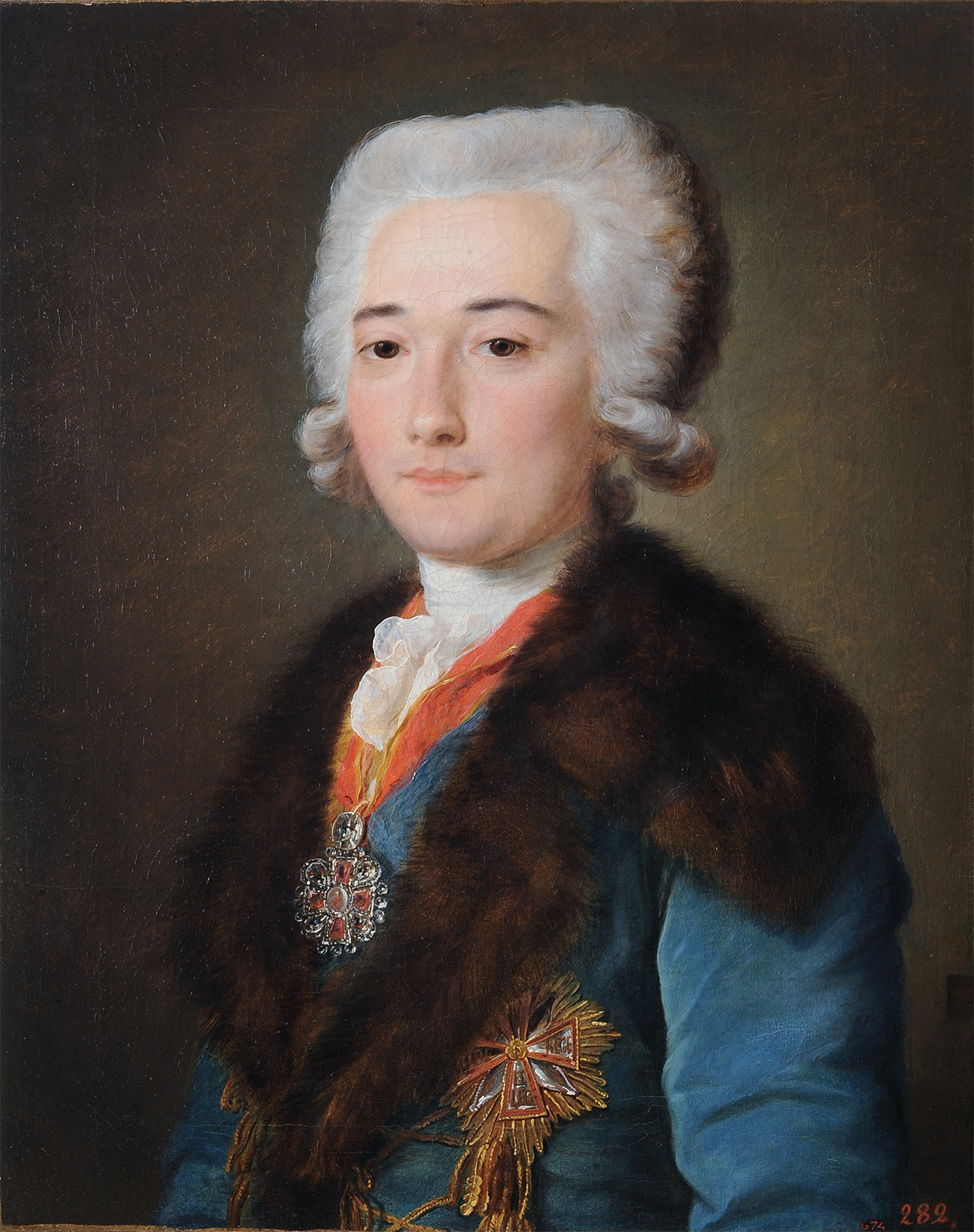
Portrait of Alexander Dmitriev-Mamonov
The Clever Man Who Did Not Know What He Wanted
Count Alexander Dmitriev-Mamonov arrived at the Russian court in 1786 as a protégé of Grigory Potemkin, who handpicked him with the calculated casualness of a man delivering a gift he expected gratitude for. Mamonov was twenty-eight and — crucially — he could talk. Catherine the Great, approaching sixty, found in him something she genuinely prized: a quick, well-furnished mind. She nicknamed him “Redcoat” and promoted him with the speed she reserved for favorites she meant to keep.
He was also, almost from the start, unhappy. Mamonov sulked, pleaded illness to avoid the empress's company, and complained of boredom to a woman who had given him everything. The explanation arrived in the form of Darya Shcherbatova, a sixteen-year-old maid of honor with whom he had quietly fallen in love. Rather than manage the affair with discretion, he confessed directly and asked Catherine's leave to marry the girl. Catherine granted everything — a fortune, a wedding, a dismissal — and Mamonov discovered he had wanted the power and the brilliance far more than he had wanted the escape. This is the signature of the INTP: a restless analytical intelligence that can dismantle any situation it is trapped inside, but cannot tell you what it actually wants instead.
Mamonov was the rare man who talked his way out of paradise and only afterward worked out that he had been in it—a clever mind that could find the flaw in any arrangement and never the thing it preferred.
The Mind Catherine Came For
Ti — dominant
What drew Catherine to Mamonov was conversation — a man whose mind moved as fast as her own, who could follow an argument, turn it over, and hand it back improved. Dominant introverted thinking is exactly this: a private, rigorous machinery for taking ideas apart and finding the place where they do not hold together. The empress recognized a kindred apparatus and was delighted by it.
But Ti is an analytical instrument, not a navigational one. It tells you what is wrong with a thing — the flaw, the gap between claim and truth — not what you want or whether the alternative would be better. Mamonov turned this instrument on his own situation and it worked exactly as Ti always works: it found the defects. The favorite's life was a cage; the affection was transactional; the attention was a leash. Every observation was correct. None amounted to a plan. Critique is not the same as choice — and so he dismantled the best situation of his life on the strength of an argument that diagnosed a problem without testing the cure.
The Greener Grass
Ne — auxiliary
If Ti supplied the critique, auxiliary Ne supplied the restlessness. Extraverted intuition perpetually generates alternatives — looks at the present arrangement and reflexively imagines the doors not taken. In a young man trapped in a gilded role he had not chosen, it produced chronic dissatisfaction: a sense that whatever he had, the real thing was elsewhere.
The affair with Darya Shcherbatova can be read this way: not merely as romance, but as the most vivid available alternative to a life that had begun to feel like a sentence. She was the door out, the possibility Ne could not stop conjuring. That she was sixteen and he was the empress's lover made it reckless past the point of sense — Ne, which weighs possibilities far more readily than consequences, did not stop him. The cruel irony is that Ne does not stop conjuring after the choice is made. Once married and installed in provincial obscurity, the same faculty went to work on his new life — and now the grass that looked greener was the position he had abandoned.
The Comfort He Only Felt in Hindsight
Si — tertiary
Tertiary Si is a slow attachment to the established texture of one's actual life, easily overruled by Ne's appetite for novelty and Ti's talent for finding fault. Its value becomes legible chiefly in its absence.
While Mamonov held the favorite's position, his Si registered only the constraints — the fixed schedule, the obligatory attendance — and Ti and Ne amplified those into an unbearable case for escape. What Si could not make him feel was the security, the standing, the daily proximity to power and to a mind he genuinely admired. Comfort is exactly what an underdeveloped Si fails to weigh until it is gone. The regret, when it came, was Si finally speaking — in the provincial quiet of his marriage, with nothing left to analyze. Tertiary Si is the function that makes you homesick for a home you left on purpose.
The Confession That Wounded
Fe — inferior
Inferior Fe is the INTP's blind spot: an undertrained sense of the emotional weather around other people, prone to misjudging how words will land. Mamonov's exit from Catherine's favor is a near-perfect illustration. Rather than manage the affair with practiced discretion, he confessed outright to Catherine the Great and asked her blessing to marry a sixteen-year-old maid of honor. On the logic of honesty, perhaps this was clean. On the register of feeling, it was a knife. He seems not to have grasped how deeply the confession would wound a woman who had lavished a kingdom's attention on him — that failure to read the emotional magnitude is inferior Fe at its most exposed.
Catherine's response was a master class in controlled feeling: she granted the marriage, endowed the couple, performed the role of generous sovereign, and removed him from her sight forever. He had read the logic of his situation flawlessly and the human heart of it not at all.
Why INTP Over ENTP
Why not ENTP?
The temptation is to read Mamonov as an ENTP — the same restless intuition, the same conversational brilliance, the same allergy to confinement. But an Ne-dominant favorite would have worked the room: charmed his way through the cage, played the court as an arena. Mamonov did the opposite — withdrew, sulked, pleaded illness to avoid company, and retreated into a private dissatisfaction he analyzed but could not socialize. That inward turn, and the catastrophic misreading of Catherine's feelings, mark a Ti-dominant introvert. An ENTP would have sensed the emotional charge of that confession and either softened it or avoided it. Mamonov walked into the most emotionally loaded interview of his life and detonated it with a frankness that suggests he simply did not see the blast radius.
Connected Figures
Further Reading
- Catherine the Great: Portrait of a Woman — Robert K. MassieThe most thorough English biography of Catherine; covers the favorites system and Mamonov's episode in detail.
- The Memoirs of Catherine the Great — Catherine II (ed. Monika Greenleaf & trans. Mark Cruse)Catherine's own account of her inner life — essential context for understanding how she experienced her favorites.
- Catherine the Great and Potemkin: The Imperial Love Affair — Simon Sebag MontefioreFocuses on the Potemkin axis but charts the whole favorites apparatus, including Mamonov's entry and exit.
