 Historical Figure MBTI
#272 · 3-25-26 · Catherinian Russia
Platon Zubov
Last Favorite · Prince · The Young Upstart
1767 — 1822
7 min read
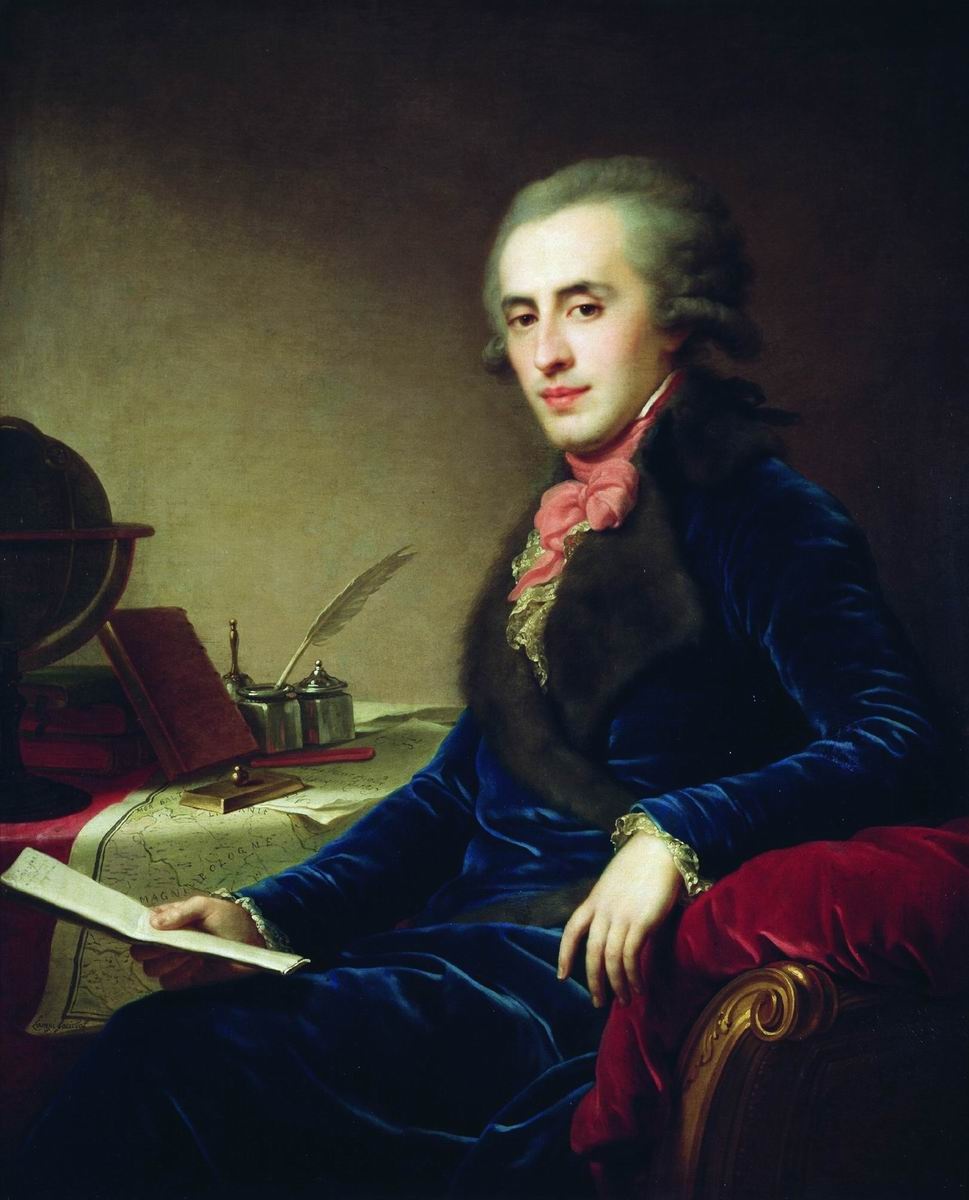
Portrait of Platon Zubov
The Small Man in the Large Room
In the summer of 1789, a 22-year-old guards officer named Platon Zubov was presented to the 60-year-old Catherine the Great and, within weeks, installed in the apartments beneath her own—the rooms reserved for the reigning favorite. He was handsome in a soft way, well-mannered, agreeable, and almost entirely without distinction. What he possessed was a talent for being present and flattering in exactly the proportions an aging empress required. From that single asset he would construct one of the largest accumulations of office, land, and human property ever handed to a man who had done nothing to earn it.
The favorites who preceded him had been something in their own right. Grigory Orlov had helped put Catherine on the throne; Grigory Potemkin was a builder of cities, a strategic mind whose ambition matched the empire's. After Potemkin died in 1791, Zubov absorbed the offices the great man left behind—governor-general of the southern provinces, director of the artillery, a portfolio of titles he was incapable of administering—and the court watched, resentful, as power drained into hands that could neither use it nor relinquish it.
Zubov is best read as an ESFP whose gifts were entirely those of the surface: dominant Se that made him present and acquisitive; auxiliary Fi that registered the world as a ledger of grievances and entitlements; tertiary Te that grabbed at administrative power it could not wield; and inferior Ni so feeble he never once saw a consequence coming. He is a study in what proximity to power does to a small man: it does not enlarge him. It only enlarges what he can take.
Zubov is the ESFP stripped of charm and warmth and left with only appetite—a man who mistook the rooms beneath an empress's for an achievement, and the empire's offices for his personal property.
The Appetite for the Tangible
Se — dominant
In a gifted ESFP, dominant extraverted sensing produces a magnetic physical presence—the performer who fills a room, the sensualist alive to pleasure. In Zubov it produced something thinner: a man whose entire relationship to the world was acquisitive. What he wanted, he wanted in its material form—estates, serfs, jewels, ranks. By the end of Catherine's reign he had been granted tens of thousands of serfs and tracts of newly conquered land, and he hoarded the trappings of office the way a collector hoards objects, without ever quite using them.
Se reads the room that exists; it does not model the room that is coming. Catherine found in Zubov an agreeable companion with no grand vision to pull him away as Potemkin's had; his shallowness made him a reliable comfort. But he gorged on the present and never prepared for the day her protection would vanish. When she died in 1796 and Paul I—who loathed his mother's favorites—took the throne, Zubov was stripped of his offices with almost comic speed. He had built nothing that could outlast the woman whose favor had been his only foundation.
The Ledger of Grievance and Entitlement
Fi — auxiliary
Auxiliary Fi, in its mature form, produces sincerity and devotion beneath the social surface. In Zubov it was stunted: he registered the world as a matter of what he was owed and whom he resented, experienced his limitless acquisition not as greed but as simple due, and demanded deference as a personal right while returning none of the loyalty that might have earned it. Courtiers who had served the empire for decades waited on the whims of a young man whose only qualification was the empress's affection.
The same wounded core eventually turned murderous. When Paul stripped and humiliated him, Zubov took it as a personal outrage, and the grudge festered. Fi at this level does not forgive injury; it converts it into a moral certainty that the injurer deserves whatever comes. By 1801 that certainty had a target.
Power Without the Capacity to Use It
Te — tertiary
Tertiary extraverted thinking gives the ESFP a real but limited capacity for command—real enough that it tempts, limited enough that it overreaches. Zubov's career is a demonstration of this: he hoarded Potemkin's portfolio because Te recognizes that offices are how power becomes concrete. What he could not do was run them. The catastrophe was the Persian campaign of 1796, launched without logistical seriousness, conceived on a grand scale that included fantasies of marching on Constantinople—and dissolved into expensive failure the moment Catherine died and funding stopped. Te reached for the form of strategic command but lacked the rigor to make the ambition executable.
In a stronger personality, Te is harnessed to a vision. Zubov had no vision; he had only appetite. The result was a man dressed in all the apparatus of power—the stars, the ranks, the staff—who, the instant his patroness was gone, proved to have been holding nothing but the apparatus.
The Man Who Never Saw It Coming
Ni — inferior
Inferior introverted intuition is the ESFP's blind spot: the capacity to see beneath the present to the trajectory it implies. Where it is weak, a person lives in the now and is perpetually ambushed by foreseeable consequences. Zubov never imagined that Catherine's death would leave him exposed. He never grasped that Paul's hatred would translate instantly into ruin. He lived inside imperial favor as though it were permanent.
The deepest failure came on the night of 11–12 March 1801. Restored to court after Paul's grip on him loosened, he became a ringleader of the conspiracy to depose the increasingly tyrannical emperor. He was among the men who burst into the bedchamber at Mikhailovsky Castle; Paul was murdered in the struggle. The plotters had told themselves they were arranging a forced abdication. Inferior Ni cannot model where a violent act, once begun, will end. Zubov helped kill an emperor while imagining he was merely retiring one. He survived—Alexander I owed his throne to the conspirators—but he never flourished again, retired to the Baltic provinces, and died in 1822, immensely rich and entirely diminished.
Why ESFP Over ISFP
Why not ISFP?
The ISFP shares the Se–Fi spine but inverts its order: dominant introverted feeling builds a private value-world, with auxiliary Se engaging the outer world selectively and on the self's terms. The ISFP withdraws. Zubov was the reverse of withdrawn. His center of gravity was always outward—toward presence, possession, and accumulation—not inward toward a private moral world. His Fi was the secondary, grievance-keeping function of a man oriented to the surface, not the sincere core of a guarded inner life. He needed to be in the room, seen, favored, rewarded; the ISFP's instinct is to leave it.
The decisive evidence is his ambition. An ISFP rarely hungers for the external apparatus of power—the portfolio of offices, the ranks, the titles—because dominant Fi locates worth inside. Zubov hungered for exactly those things and nothing beneath them. He gathered Potemkin's commands not to do anything with them but to possess them, the way Se possesses objects. That outward, acquisitive appetite is dominant Se married to auxiliary Fi—the ESFP, not the ISFP.
Connected Figures
Further Reading
- Catherine the Great and Potemkin: The Imperial Love Affair — Simon Sebag MontefioreThe best account of Zubov's rise as Catherine's last favorite and his rivalry with Potemkin's memory.
- Catherine the Great: Portrait of a Woman — Robert K. MassieCovers the aging empress's dependence on the young, ambitious Zubov in her final years.
- Paul I of Russia, 1754-1801 — Roderick E. McGrewDetails Zubov's role, alongside his brother Nikolai, in the conspiracy that killed Paul I.
- Russia in the Age of Catherine the Great — Isabel de MadariagaThe standard scholarly account of the court politics that let a young upstart like Zubov seize power.
