 Historical Figure MBTI
#259 · 3-25-26 · Catherinian Russia
Alexander I
Tsar · Napoleon's Nemesis · Enigma of Europe
1777 — 1825
8 min read
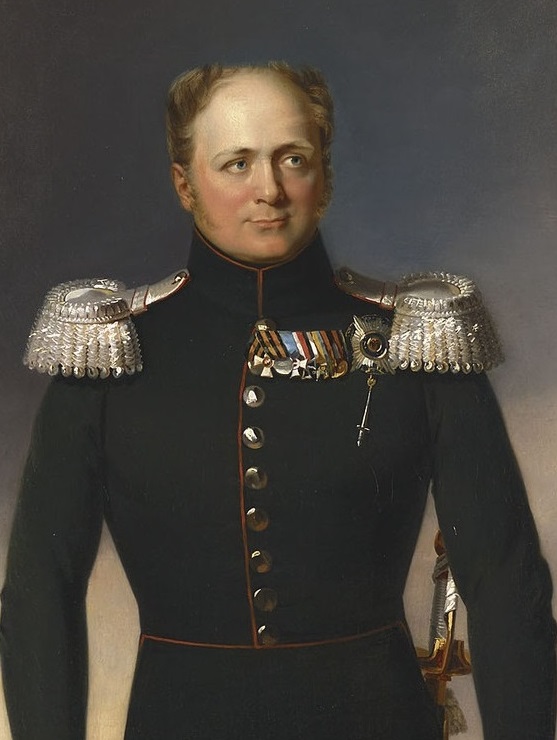
Portrait of Alexander I
The Sphinx of the North
He was called the Sphinx, and the name has held because no one who met him could ever be sure they had. Napoleon called him a Byzantine Greek—subtle, dissembling, impossible to corner. Alexander I presented to Europe a surface of liberal grace and tender melancholy, and behind it a will so opaque that his own ministers never knew which Alexander they were addressing: the disciple of the Enlightenment who wept over constitutions, or the haunted reactionary who ended his reign building military prisons and reading Revelation.
The contradiction was bred into him. Catherine the Great raised him at court and tutored him in the doctrines of Rousseau; his father, Paul I, drilled him in parade-ground absolutism. Alexander learned to survive by becoming, in each world, the person it wished to see. When the conspiracy against his father ended in Paul's strangled corpse, he inherited an empire and a guilt he never set down. He was twenty-three.
The figure who emerges is the INFJ: dominant Ni driving a private vision of providence, auxiliary Fe producing extraordinary charm, tertiary Ti surfacing as cold calculation when the vision was threatened, and inferior Se leaving him forever restless in the concrete. The rarest of rulers—an autocrat who did not want, at the deepest level, to be seen.
Alexander was the INFJ on a throne—a visionary who governed from an inner conviction no one else could read, who could persuade an entire continent of his sincerity and remain, even to himself, a stranger.
The Man Who Lived in a Vision
Ni — dominant
In his early years the vision was political: Alexander gathered the “Unofficial Committee” of liberal friends, dreamed of a Russian constitution, and in Mikhail Speransky found a mind capable of rendering the vision into administrative architecture. It was the Ni habit of inhabiting an ideal future so vividly that the present feels provisional. Speransky, having served the vision, was dismissed the moment it shifted.
The year 1812 transformed the vision from political to providential. Alexander refused every overture to negotiate, surrendered Moscow to the flames, and waited—justified not by military logic but by faith that God had chosen him as Napoleon's destroyer. Riding into Paris in 1814, he experienced it not as victory but as confirmation. From that conviction grew the Holy Alliance—Metternich called it “loud nothing,” but for Alexander it was the vision made flesh. As his mysticism deepened he ceded power to Arakcheyev and built the military colonies—whole villages converted into permanent regiments. The liberal of 1801 and the mystic of 1820 were the same man, faithfully following the same faculty wherever it led.
The Charm That Conquered Europe
Fe — auxiliary
Auxiliary Fe gave Alexander's private vision its public instrument: a charm so complete it functioned as a weapon of state. He could enter a room and make every person feel chosen. The Prussian queen Louise half fell in love with him; Madame de Staël found him irresistible; the aristocracy braced for a Scythian conqueror in 1814 met instead a gracious, melancholy sovereign who spoke flawless French and seemed embarrassed by his own power.
At Tilsit in 1807, the faculty achieved its masterpiece. Defeated at Friedland, Alexander met Napoleon on a raft in the Niemen and converted a beaten enemy into a flattered partner—leaving as an apparent equal and buying the breathing space Russia needed. But Fe in service of a hidden Ni vision produces a hazard: charm and conviction drift apart until no one can tell which is operative. He lavished warmth on the liberal Czartoryski and the reactionary Arakcheyev alike, wept with apparent feeling and acted, a season later, against the cause he had wept for. Europe loved him and could never hold him. The charm was real, and it was also a wall.
The Cold Logic Beneath the Tenderness
Ti — tertiary
Beneath the visionary and the charmer ran a vein of pure, impersonal calculation. Schooled at the courts of Catherine's supple manipulation and Paul's brittle paranoia, Alexander learned to compute the angles of a human situation with a precision that never showed on his face.
The accession reveals the faculty starkly. Drawn into the conspiracy against his father, Alexander reasoned his way to consent through a logic that excised the obvious conclusion—that a deposed autocrat could not be left alive. He insisted on Paul's safety, then asked no questions about how the thing was to be done: a calculation that protected his conscience while permitting the result he needed. The same cold logic governed Speransky's exile and Czartoryski's dismissal—each decision defensible in isolation, each leaving the vision intact. The scorched-earth patience of 1812 showed Ti's useful face: a clear-eyed grasp that Russia's depth and winter would destroy what its armies could not. But when the vision turned mystical, Ti simply built, with grim efficiency, the apparatus the new vision required.
The Restless Body and the Vanishing Act
Se — inferior
Inferior Se leaves the INFJ restless in any fixed place, prone under strain to flee the present. Alexander could not stay still; he traveled the empire obsessively as though the concrete present were something to be passed through rather than inhabited. His appetite for parade-ground spectacle hardened into a near-pathological fixation on military drill—the senses tolerated only when rigidly ordered.
As the reign curdled into reaction, the function turned inward. Alexander grew hypochondriac, sleepless, oppressed by his own existence; he sought relief in mysticism and the prophetess Baroness von Krüdener. By the 1820s he spoke openly of laying down the crown and disappearing—the inferior-Se fantasy of escaping the visible self entirely. Then, in November 1825, at the remote town of Taganrog, he died suddenly of a fever, far from his capital, away from witnesses. Within years the legend took root that the coffin was empty, that the Tsar had staged his death and become Feodor Kuzmich, a wandering Siberian hermit who would not say who he was. Whether or not he did, the legend is psychologically perfect: the exact wish of the inferior-Se INFJ made into folklore—to slip the body of state and become at last the unseen, anonymous self he had always half wished to be.
Why INFJ Over ENFJ
Why not ENFJ?
The temptation is to read Alexander's legendary charm as the signature of an ENFJ's dominant extraverted feeling. But the ENFJ leads with the room—it is most itself when galvanizing and harmonizing, and it draws genuine life from that contact. Alexander did the reverse. His charm was an instrument operated from a great inner distance, deployed and withdrawn at will, leaving even his closest companions convinced they had never reached him. He governed from a private vision the room was never shown, and he ended not in the ENFJ's element—among people, persuading—but in solitude and the longing to disappear. That is the arc of a dominant intuitive who used feeling as a tool.
An ENFJ under strain reaches for people. Alexander did the opposite—he withdrew into an interior life of prophecy no one else could enter, and his final fantasy was not to lead a transformed humanity but to escape it. His career, from the constitutional dreaming of 1801 through the providential war of 1812 to the mystic withdrawal of his last years, is the record of a single private intuition unfolding in secret, with charm as its servant and never its source. That is INFJ, not ENFJ—the visionary who wore feeling like a coat, and took it off when no one was watching.
Connected Figures
Further Reading
- Alexander I: Tsar of War and Peace — Alan PalmerThe most readable single-volume biography in English — balanced on the military, diplomatic, and psychological dimensions.
- Alexander I — Marie-Pierre ReyA French scholar's authoritative modern life, attentive to Alexander's inner contradictions and the European context of his reign.
- The Congress of Vienna: Power and Politics after Napoleon — Brian VickPlaces Alexander's role in the post-Napoleonic settlement and the creation of the Holy Alliance in fresh scholarly context.
- Napoleon and Alexander I: A Study in Franco-Russian Relations 1801–1812 — Tatiana Wolff (ed.)Primary sources and commentary on the Tilsit relationship — essential for understanding how both men read and misread each other.
- Russia in the Age of Alexander I — W. Bruce LincolnSituates the domestic reform agenda — Speransky, the Unofficial Committee, the military colonies — within the broader arc of early nineteenth-century Russia.
