 Historical Figure MBTI
#258 · 3-25-26 · Catherinian Russia
Maria Feodorovna
Empress · Mother of Tsars · Matriarch of the Romanovs
1759 — 1828
7 min read
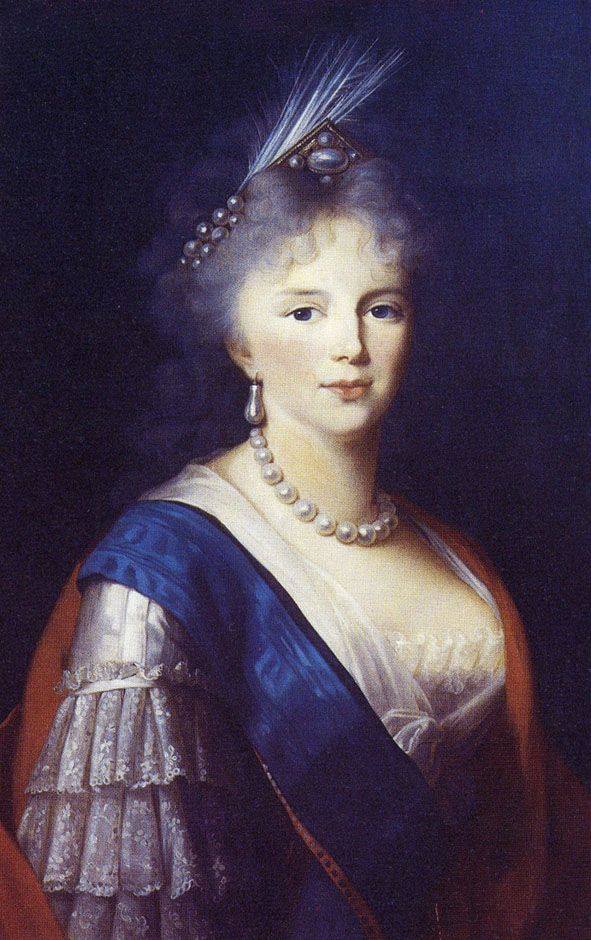
Portrait of Maria Feodorovna
The Administrator Empress
She was born Sophie Dorothea of Württemberg in 1759, a minor German princess with one expected office: marry well, produce heirs, manage a household, and never let the machinery of obligation fall idle. Brought to Russia in 1776 as the future wife of Paul I, she converted, took the name Maria Feodorovna, and proceeded—with a thoroughness that would define every decade of her life—to do exactly what was required, and then a great deal more. She bore ten children, nine surviving infancy. Two sons became emperors: Alexander I and Nicholas I. From her womb descended the entire nineteenth-century Romanov line.
But fertility was the least of her achievements. When Catherine the Great seized Maria's first two sons at birth, Maria did not collapse into grief. She redirected. Denied management of her own children, she took on management of everyone else's. From 1796 she ran the Department of the Empress Maria—a sprawling network of foundling homes, girls' schools, and hospitals that she built, staffed, budgeted, and grew across three decades. By 1828 she presided over a welfare apparatus that touched tens of thousands of lives and outlived her by a century. The mind behind it was the ESTJ: dominant extraverted thinking that organizes the external world into systems that actually function, supported by introverted sensing's reverence for precedent and protocol, shadowed by an inferior introverted feeling that surfaced as rigid propriety and an unbending sense of what she was owed. Maria Feodorovna did not theorize about how an empire should care for its orphans. She built the building, hired the matron, and checked the ledgers.
Maria Feodorovna was the ESTJ in its imperial form—a woman who answered every grief and every slight the same way she answered every duty: by building an institution, ordering its rules, and making it run.
The Department That Bore Her Name
Te — dominant
Dominant Te does not philosophize about welfare; it founds a hospital and audits its accounts. What began as Catherine's loose patronage of a single foundling home became, under Maria's hand, a genuine bureaucracy: curricula standardized, staff appointed by rank, admissions regulated, expenditures tracked. She corresponded ceaselessly with directors and matrons, demanding reports and intervening down to the diet of the pupils. This is Te's signature—good intentions are worthless unless embodied in an accountable structure.
The deepest evidence is her response to her central wound. Stripped of authority over her own sons by Catherine, Maria did not become a tragic or a scheming figure. She located the largest available field of useful action and went to work on it. The orphans and schoolgirls of Russia received the maternal energy forbidden an outlet at home. It was not sentiment—it was Te's instinct that the way to master a situation is to build something durable inside it. She mastered the empire's charity because charity was a domain no one would take from her.
The Keeper of Protocol
Si — auxiliary
Auxiliary Si supplied the content of the order: deep reverence for precedent, hierarchy, and the established way. Maria was, by every account, a ferocious stickler for protocol. She knew the precise degree of deference owed to each member of the imperial family and demanded it exactly. After Paul's death she insisted—and won the point—on a place of precedence ahead of her own son's wife, the reigning empress. The order of things mattered not as vanity but as moral structure: a world in which everyone observed their proper forms was a world functioning correctly.
Her conservatism ran the same grain. Maria was orthodox in religion, traditional in her view of women's education (her schools trained girls to be virtuous wives and orderly housekeepers, not to question the social order), and instinctively loyal to dynasty as a sacred institution. Si does not improvise its values; it receives them and defends them. There was no radicalism in her—no flirtation with the Enlightenment skepticism her mother-in-law had played at. Maria believed in what she had been taught, and built institutions to perpetuate it. Her life ran on schedule and repetition: emperors rose and fell around her; she went on running her department, year after year, exactly as she always had.
The Founder, Not Merely the Steward
Ne — tertiary
Pure SJ administration tends toward maintenance. What lifted Maria above mere stewardship was a tertiary Ne that, in healthy moments, let her see possibility: an institution could be larger, a model that worked in one city replicated in another. Her department did not simply preserve Catherine's foundling homes; it multiplied them, diversified them, and extended into new provinces and new categories of need. Tertiary Ne supplies the SJ administrator with just enough generative imagination to expand rather than merely guard the structure.
But tertiary functions serve the dominant, not lead. Maria's Ne never ran ahead of her Te and Si into open reform. The vision was administrative, not ideological—more homes, more pupils, better care, a system that reached further than the year before. Her counsel to Alexander I and Nicholas I was shrewd and practical but managerial in register, not strategic. She could organize a charity or arrange a dynastic marriage; she was less equipped to imagine an empire convulsed by war. Ne in the tertiary seat enlarges what already exists; it rarely invents what does not.
The Rigidity of Wounded Honor
Fi — inferior
Inferior Fi in an ESTJ surfaces not as a rich inner life but as a set of fixed, non-negotiable personal values the otherwise flexible administrator will defend past all reason—touchiness about honor, an unbending sense of what one is owed, an inability to process private hurt except by converting it into principle. Maria carried, for life, the wound of Catherine's seizure of her firstborn sons. She never publicly raged about it—Te and Si do not permit unseemly display—but her later insistence on maternal authority and ceremonial precedence carried the charge of an old grievance finally, rigidly, asserted.
Her rivalry with Ekaterina Nelidova shows inferior Fi at its most exposed. The Paul–Nelidova relationship may have been more companionate than scandalous, but to Maria it was an intolerable affront to the proper order of marriage. Her feeling on the matter was absolute and clumsy in the manner of inferior functions, consuming energy and producing factional intrigue at court. A woman so competent at managing systems was rendered awkward and brittle by an injury to her self-regard. She would redesign a school's entire curriculum if the data demanded it. She would not, for anyone, surrender an inch of what she felt was rightfully hers.
Why ESTJ Over ISTJ
Why not ISTJ?
The ISTJ shares Maria's reverence for precedent and protocol—the Si is unmistakable in both types. But the ISTJ leads with inner duty and engages the external world cautiously, preferring to administer behind the scenes. Maria did the opposite: she ran a public department, directed staff, founded institutions, asserted her precedence at court, and projected her organizing will outward across an empire. Her grief at Catherine's seizure of her sons did not turn her inward; it turned her outward, toward the largest field of organized action she could command. That instinct—to answer a private wound by building a public institution and running it from the front—is extraverted thinking in its purest form, and it marks her unmistakably as an ESTJ.
Connected Figures
Further Reading
- The Romanovs: 1613–1918 — Simon Sebag MontefioreThe most comprehensive single-volume narrative of the dynasty; Maria Feodorovna appears as a central figure across the Paul I and Alexander I chapters.
- Alexander I: The Tsar Who Defeated Napoleon — Marie-Pierre ReyBiography of Maria's eldest son that gives substantial attention to her formative influence and her complicated relationship with Catherine the Great.
- Paul I: A Biography — Roderick E. McGrewThe definitive English-language life of Maria's husband; illuminates the court dynamics, the Nelidova rivalry, and Maria's role as stabilizing consort.
- Catherine the Great: Portrait of a Woman — Robert K. MassieCovers the seizure of Maria's sons and the tense relationship between the two empresses in close detail.
