 Historical Figure MBTI
Catherinian Russia
~1729 – 1855
Catherine the Great's gilded court — favorites, conspirators, rebels, and the dynasty she built and imperiled.
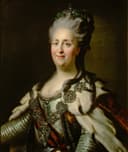
Catherine the Great came to power through a coup against her own husband, and then spent thirty-four years proving she deserved it. She corresponded with Voltaire and Diderot, expanded Russia's borders in every direction, commissioned the Hermitage, and maintained a succession of favorites — men she elevated, loved on her own terms, and eventually replaced. She was the most powerful woman in Europe, and she ran her court like a philosopher-queen who understood that power and intelligence were the same thing.
Around her: Potemkin, the great love she never fully released, who built cities in the south and gave her the Black Sea. The Orlov brothers who killed her husband and made her Empress. Princess Dashkova, who ran the Russian Academy of Sciences and was, in her own way, as formidable as Catherine herself. Pugachev, the Cossack rebel who nearly tore the empire apart from below. And the sons and grandsons who inherited her empire and didn't know what to do with it.
63 figures · sorted by birth year
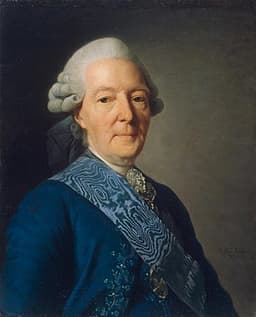
Ivan Betskoy
notableINFJ · b. 1704
Catherine II's chief educational advisor who founded the Smolny Institute and the Moscow Foundling Home — the man who built Russia's Enlightenment from scratch.
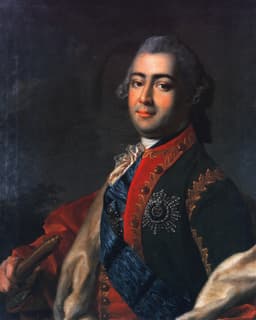
Alexei Razumovsky
notableISFP · b. 1709
Ukrainian Cossack chorister who secretly wed Empress Elizabeth — the gentle ISFP 'night emperor' who declined to wield power.
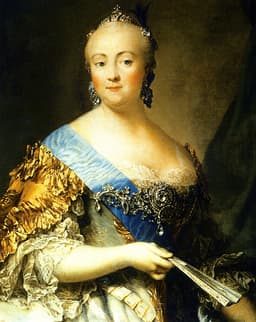
Empress Elizabeth
notableESFP · b. 1709
Vivacious daughter of Peter the Great who seized Russia's throne on charm and nerve — the ESFP empress of the present moment.
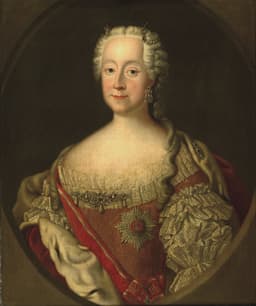
Johanna Elisabeth
notableESFJ · b. 1712
The ambitious German princess who schemed to place her daughter on Russia's throne, was expelled for spying, and never reconciled with the Catherine she created.
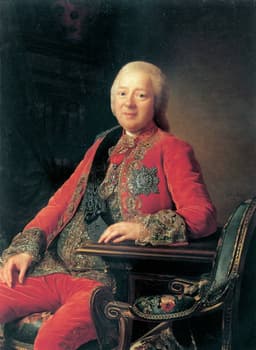
Nikita Panin
notableINTP · b. 1718
Catherine the Great's deliberate foreign minister and Paul I's tutor — the INTP architect of the Northern System.

Ekaterina Mikhailovna
INFJ · b. 1724
Countess Rumyantseva née Golitsyna — the Field Marshal's wife who navigated Catherine's court with quiet dignity while her husband accumulated glory in the field.
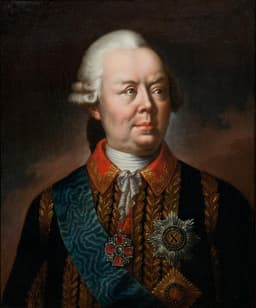
Pyotr Rumyantsev
notableINTJ · b. 1725
The Field Marshal who broke the Ottoman army at Kagul with a force nine times outnumbered — the architectural mind behind Russia's southern victories.
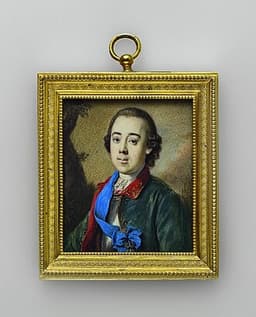
Sergei Saltykov
notableESTP · b. 1726
Catherine the Great's first lover — the most handsome man at court, who seduced a grand duchess, disappeared into diplomatic exile, and left history wondering what he knew.
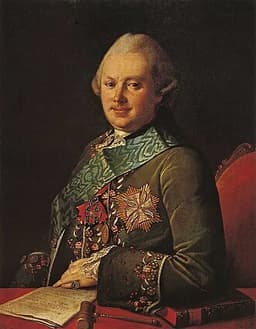
Alexander Vyazemsky
notableISTJ · b. 1727
Catherine II's Attorney General for 21 years — the rarest figure in her court, a man of absolute incorruptibility who administered without ambition or self-dealing.
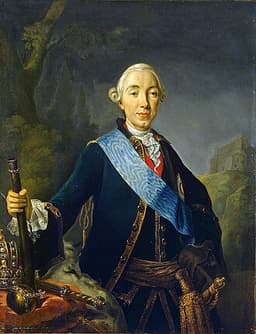
Peter III
notableISFJ · b. 1728
Catherine the Great's husband — the Holstein-born tsar who lasted only six months before being deposed in the coup that Catherine herself organized.
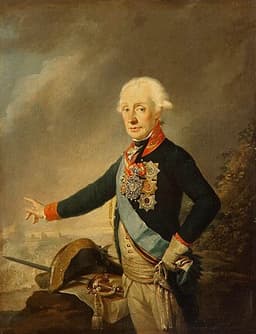
Alexander Suvorov
notableENTJ · b. 1729
Russia's greatest military commander, who never lost a battle in sixty years and crossed the Alps in winter to prove that the impossible was merely a planning problem.
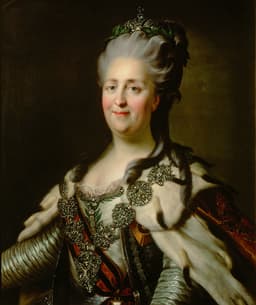
Catherine the Great
iconicENTJ · b. 1729
The German princess who seized the Russian throne in 1762 and ruled thirty-three years as an Enlightenment autocrat — the ENTJ at imperial scale.
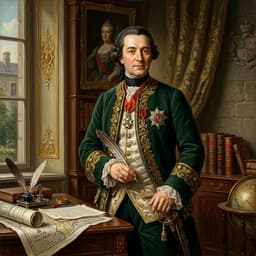
Count Jacob Sievers
notableINTJ · b. 1731
The Baltic German governor who redesigned Russian provincial administration under Catherine II — a systematic reformer who built the architecture of Russian local government.
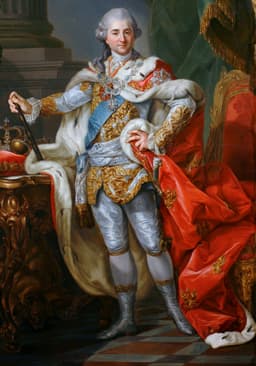
Stanisław Poniatowski
notableINFP · b. 1732
The cultured last king of Poland — an INFP who could imagine a reborn nation but lacked the will to save it from partition.
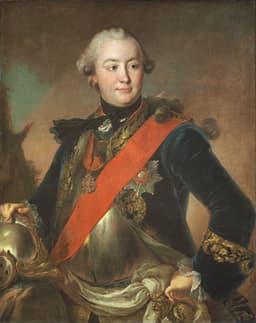
Grigory Orlov
notableESTP · b. 1734
Dashing artillery hero and Catherine the Great's first favorite — the ESTP who won an empire by presence and could not foresee his eclipse.
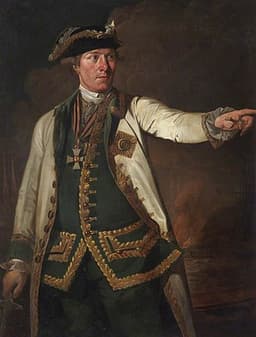
Samuel Greig
notableENTJ · b. 1735
The Scottish admiral who brought British naval discipline to Russia — the builder of Catherine II's Baltic Fleet and the mind behind the annihilation of the Ottoman fleet at Chesma.
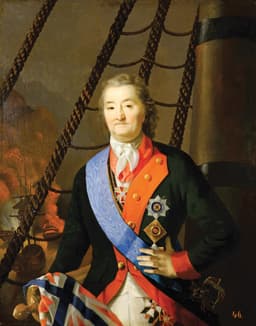
Alexei Orlov
notableISTP · b. 1737
The cold ISTP operator who killed a deposed emperor, burned an Ottoman fleet at Chesme, and trapped a pretender for Catherine.
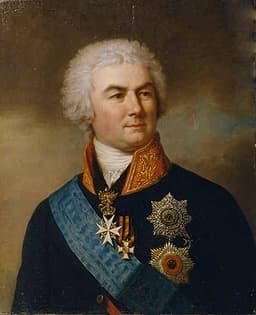
Pyotr Zavadovsky
notableINFJ · b. 1739
Catherine the Great's gentlest favourite — a man who wept when their relationship ended and later became Russia's first Minister of Education.
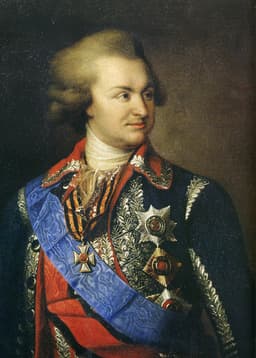
Grigory Potemkin
renownENFP · b. 1739
Catherine the Great's manic, brilliant co-ruler who annexed Crimea and built the Black Sea Fleet — the ENFP at imperial scale.
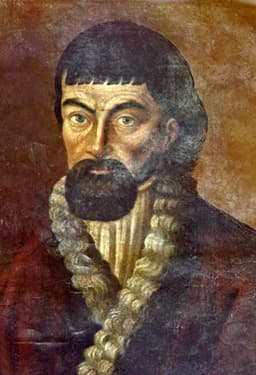
Yemelyan Pugachev
notableENTP · b. 1742
The Don Cossack who declared himself the dead Peter III and led imperial Russia's largest revolt — an ENTP improviser.
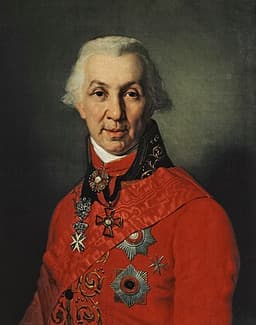
Gavrila Derzhavin
notableESTJ · b. 1743
The greatest Russian poet before Pushkin — an ESTJ statesman-bard who praised Catherine in magnificent odes and served the empire under three tsars.
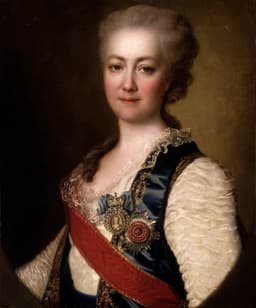
Ekaterina Dashkova
notableINTJ · b. 1743
First woman to head a national academy of sciences and force behind the Russian dictionary — Catherine's abrasive INTJ ally.

Alexander Vasilchikov
ISFJ · b. 1744
The modest, dutiful ISFJ favorite Catherine the Great found kind but boring — a study in being miscast.

Elena Nikitichna
ESTJ · b. 1745
Princess Trubetskaya who married Attorney General Alexander Vyazemsky and outlived him by nearly forty years — the steady household beneath the pillar of Catherine's state.
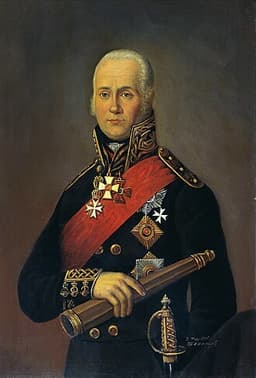
Fyodor Ushakov
notableISTJ · b. 1745
Russia's greatest admiral and an Orthodox saint — in 43 naval engagements he never lost a ship and never abandoned a sailor.
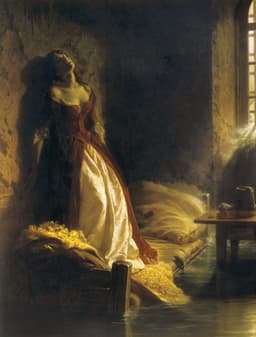
Tarakanova
notableENFJ · b. 1745
Mysterious adventuress who claimed Catherine's throne under a dozen names, then died nameless in a fortress cell — an ENFJ performer.
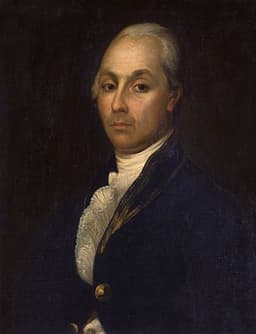
Alexander Radishchev
notableINFJ · b. 1749
Russia's first dissident, exiled to Siberia for his burning crusade against serfdom — the prophet-reformer INFJ.
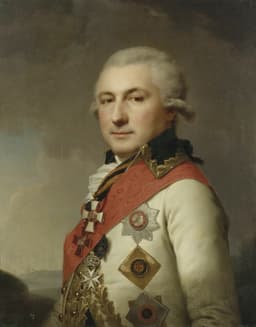
Jose de Ribas
notableENTP · b. 1749
The Neapolitan-born adventurer who became a Russian admiral and founded Odessa — the most improbable act of civic creation in the eighteenth century.

Ivan Rimsky-Korsakov
ESTP · b. 1754
Catherine the Great's beautiful young favorite who lost an empire to a year of careless pleasure — the ESTP as pure sensation.
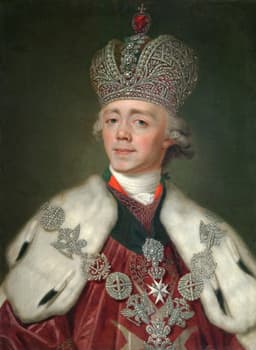
Paul I
notableESFJ · b. 1754
Catherine the Great's resentful, sidelined heir who drilled order into an empire and died in the coup his father once suffered.
Ekaterina Bastidon
ESFP · b. 1757
Derzhavin's first wife, nicknamed Plenira — a vivacious young noblewoman whose early death inspired some of his most heartfelt elegies.
Elizaveta Rubanovskaya
INFJ · b. 1757
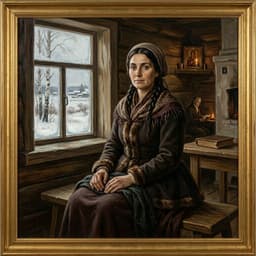
Radishchev's second wife, who followed him voluntarily into Siberian exile — loyalty enacted rather than merely professed.
Alexander Dmitriev-Mamonov
notableINTP · b. 1758
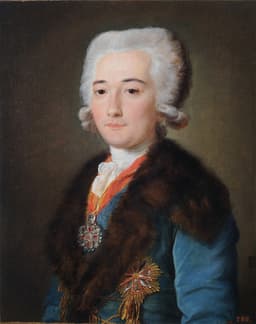
Catherine's restless favorite who confessed an affair, lost his place, and regretted it — an INTP undone by not knowing his wants.
Ekaterina Nelidova
notableENFP · b. 1758
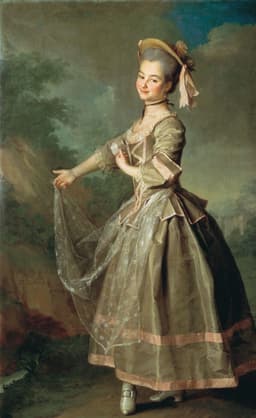
Plain but electric Smolny maid of honor who held real moral sway over the volatile Paul I — an ENFP of wit and conviction.
Maria Feodorovna
notableESTJ · b. 1759
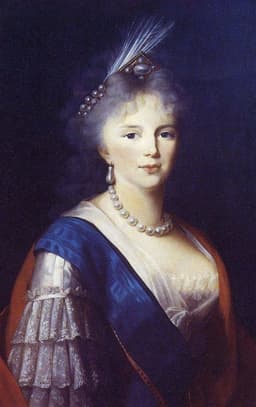
Empress, mother of two tsars, and tireless ESTJ administrator who built an empire's schools and charities.
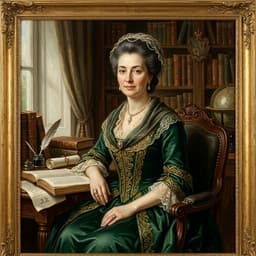
Darya Dyakova
ISTJ · b. 1760
Derzhavin's second wife, nicknamed Milena — a practical, intelligent noblewoman who managed his household and outlived the great poet by decades.
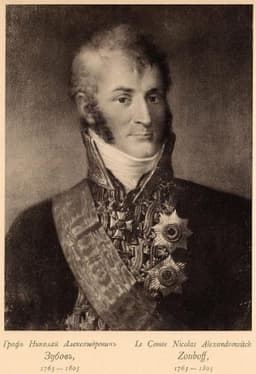
Nikolai Zubov
notableESTP · b. 1763
The eldest Zubov brother — a towering general and co-conspirator in the assassination of Tsar Paul I, who struck the blow but could not see past it.
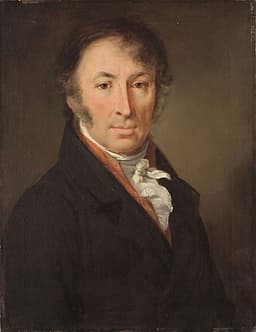
Nikolai Karamzin
notableINFP · b. 1766
Russia's first great historian and sentimentalist writer — the author of Poor Liza and the twelve-volume History of the Russian State.
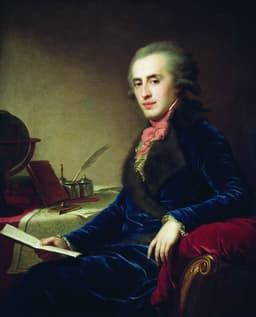
Platon Zubov
notableESFP · b. 1767
Catherine the Great's vain, greedy last favorite — an ESFP whose proximity to power made him a regicide who never saw it coming.
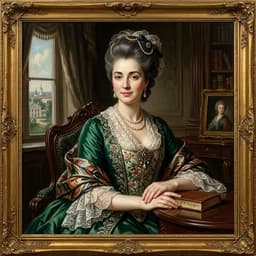
Elizaveta Protasova
INFP · b. 1768
A Nizhny Novgorod noblewoman who became the object of Karamzin's earliest romantic attachment — encoded quietly in his early sentimental writings.
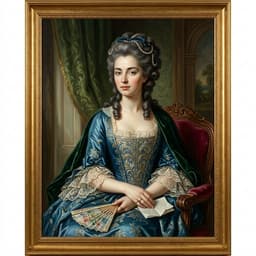
Ekaterina Kolyvanova
ENFJ · b. 1769
Derzhavin's ward and Prince Andrei Vyazemsky's wife — a Baltic German noblewoman who became the matriarch of one of Russia's most literary households.
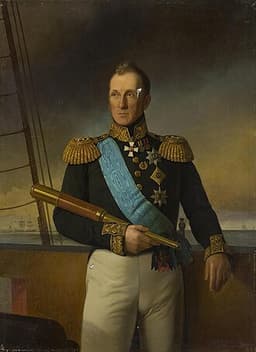
Samuel Greig the Younger
notableESTJ · b. 1775
The son of Admiral Samuel Greig who rose to command Russia's Black Sea Fleet — continuing a Scottish-Russian naval dynasty into the nineteenth century.
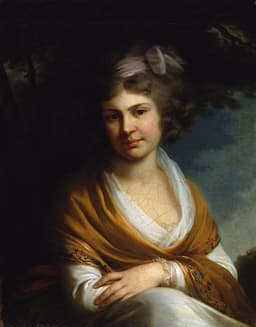
Natalia Suvorova
ISFJ · b. 1775
Suvorov's beloved daughter Suvorochka — the general's faithful correspondent and the woman who outlived both her legendary father and her difficult husband by decades.
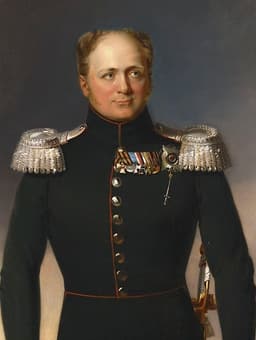
Alexander I
renownINFJ · b. 1777
The enigmatic 'Sphinx' tsar who defeated Napoleon, founded the Holy Alliance, and may have faked his own death — typed INFJ.
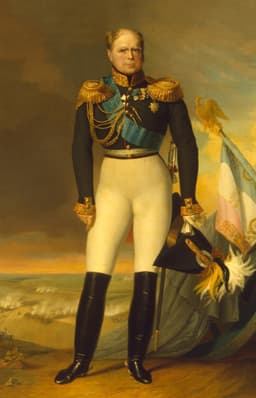
Constantine Pavlovich
notableESTP · b. 1779
The heir who refused the throne, whose secret renunciation sparked the 1825 Decembrist crisis — a blunt, soldierly ESTP.
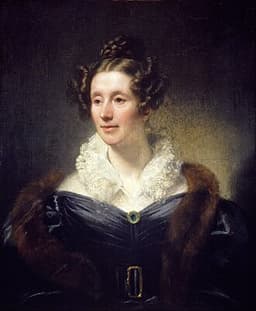
Mary Somerville
notableINTP · b. 1780
The Scottish mathematician who connected the physical sciences into a unified vision — linked to Catherinian Russia through her first marriage into the Greig naval family.
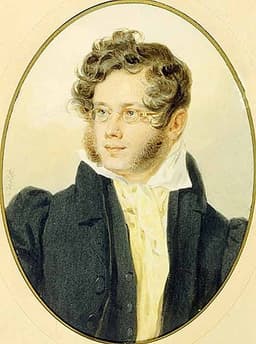
Pyotr Vyazemsky
notableENTP · b. 1792
Russian prince, poet, and critic — Pushkin's closest intellectual companion and one of the last Romantics, who survived long enough to see the entire age fade.
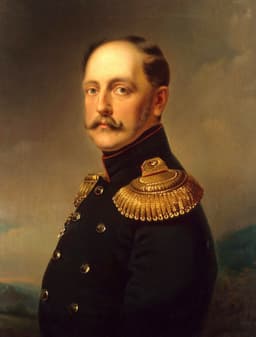
Nicholas I
notableISTJ · b. 1796
The ISTJ tsar who crushed the Decembrists on day one and ruled by order, duty, and rigid autocracy until Crimea broke him.
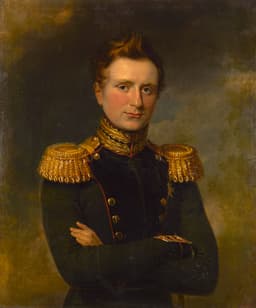
Michael Pavlovich
Untyped · b. 1798
The empire's blunt Grandmaster of Artillery, youngest son of Paul I — left untyped because the record preserves only his martial persona.
Anna Rubanovskaya
ISFJ
Radishchev's first wife, who died before his exile — a quiet presence whose memory he carried into the long years of banishment.
Benedicta
Untyped
A Baltic German noblewoman in Catherine II's orbit whose historical identity remains uncertain — a peripheral presence in the Catherinian court.
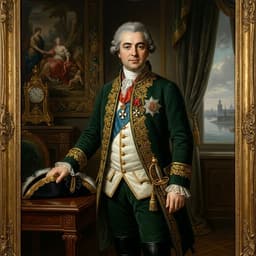
Prince Nikolai Putyatin
ISTP
A Russian military nobleman of Catherine's era whose quieter service connects the Putyatin and Sievers families through marriage.
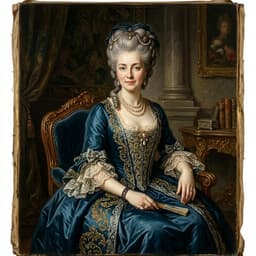
Elisabeth von Sievers
ENFJ
A Baltic German noblewoman who married into the Putyatin family, connecting Count Jacob Sievers's reformist world to Russian military nobility.
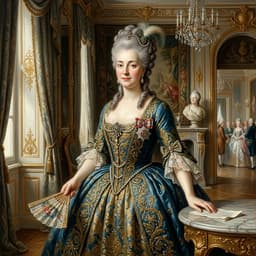
Vera Apraksina
ESFP
A vivid Apraksin noblewoman in Catherine II's court world, whose social vitality embodied the spirit of the empress's circle.
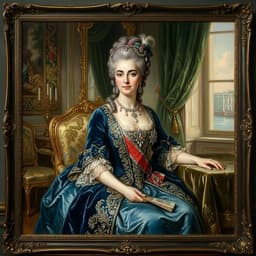
Baroness von Wrede
Untyped
A Baltic German noblewoman in Catherine II's court whose quiet presence is preserved more by family record than historical fame.
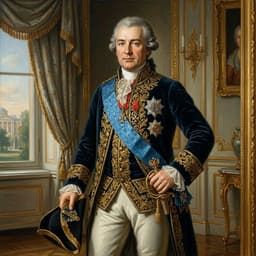
Prince Ivan Trubetskoy
ESFP
A nobleman of Catherine's Russia from one of its oldest princely families, whose vivid social temperament made him at home in the world of the court.
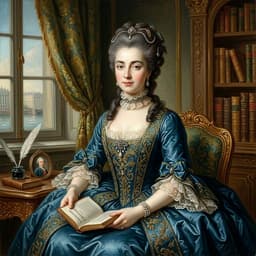
Anastasia Sokolova
ISFJ
A lady of Catherine's court connected to Ivan Betskoy's educational world — devoted, faithful, moving in the orbit of the Russian Enlightenment's practical work.
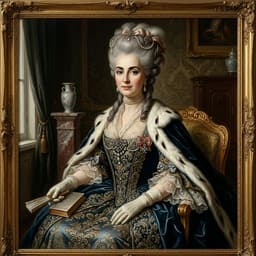
Countess Elizabeth Karlovna Sivers
Untyped
A Baltic German noblewoman of the Sievers family whose precise historical identity is preserved more through family connection than personal record.

Sarah Cook
ISFJ
The Scottish wife of Admiral Samuel Greig who anchored the Greig household in Kronstadt, raising the next generation of Russia's naval family far from Scotland.

Darya Shcherbatova
INFP
The INFP lady-in-waiting who won a favorite's love and an empress's exile through pure sincerity at Catherine's court.
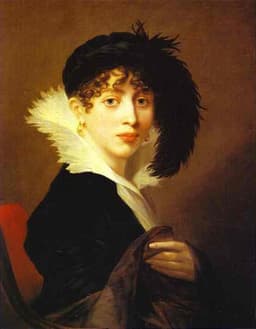
Stroganova
ISFP
Countess who traded wealth and rank to live openly with a disgraced favorite — the ISFP whose one act was pure conviction.


Sign up for monthly insights
Monthly insights into history's most influential figures — examined through psychology, context, and cognitive pattern. Less stereotype, more structure. History, but with a mind map.
Powered by Buttondown