 Historical Figure MBTI
#250 · 3-25-26 · Catherinian Russia
Alexei Orlov
Admiral · Conspirator · Victor of Chesma
1737 — 1808
6 min read
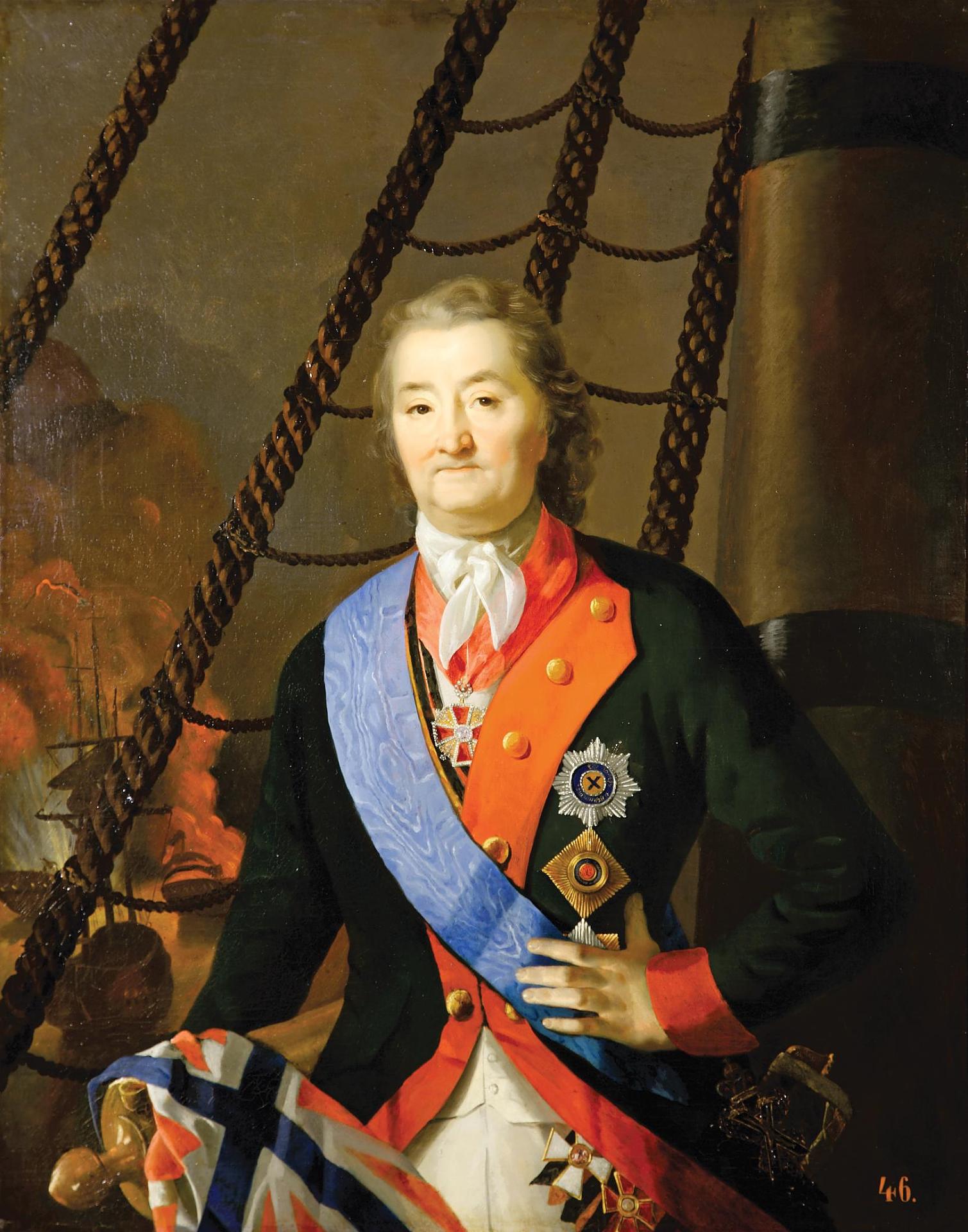
Portrait of Alexei Orlov
The Man Who Did the Things Others Could Not
He was the largest man in the room and the calmest—a giant with a saber scar across his cheek and a stillness that unnerved people who expected violence to announce itself. Grigory was the handsome brother, the face of the clan. Alexei was the one you sent for when something had to be done that no one wished to name aloud. In June of 1762 he rode through the night to fetch Catherine from Peterhof and put her at the head of the guards; weeks later, at Ropsha, he stood in the room in which the deposed emperor died.
The psychology beneath this career is that of the ISTP: dominant introverted thinking that reduces every situation to its working mechanics, auxiliary extraverted sensing attuned to the physical present, tertiary introverted intuition that read where a deception was heading, and inferior extraverted feeling that left him unmoved by the human cost of what he arranged. He was not cruel in the manner of a man who enjoys cruelty. He simply did not feel the resistance that stops most people.
Orlov was the ISTP stripped of every softening illusion—a man who saw each crisis as a mechanism to be operated, kept his nerve where others broke, and felt almost nothing where others would have flinched.
The Problem and Its Solution
Ti — dominant
The coup of 1762 was, beneath its drama, an engineering problem—how to move a German princess to the head of a regiment before the emperor could react—and Orlov solved it with the economy of a man assembling a machine. He knew which units could be turned, which officers to approach first. He did not agonize over the legitimacy of deposing a tsar. He worked the mechanism.
At Chesma in 1770, the same cast of mind made him a superb commander despite no formal training as a sailor. The Ottoman fleet had crowded itself into a bay so tightly that it had surrendered its advantage. The solution was fire—send in fireships, let the enemy's own density destroy it. Orlov understood ships the way he understood conspiracies: arrangements of force that, read correctly, told you exactly where to apply the lever.
Force in the Present Tense
Se — auxiliary
Orlov was, before anything else, a man of overwhelming physical presence—great height, a scar from a tavern brawl, a reputation as the most dangerous wrestler in the guards. He was not a strategist who commanded from a tent; he was a body in the room. Naval combat in the age of sail rewarded a commander who could read the scene and commit without paralysis. Orlov saw the configuration, recognized the opening, and acted.
The same appetite shaped his retirement. Pushed aside after Catherine cooled toward the Orlovs, he built, over years at his Moscow estate, the Orlov Trotter—a carriage horse that survives him by more than two centuries. A man of pure abstraction would have written memoirs. Orlov made a living, physical thing. The ISTP at rest does not theorize; it builds.
Reading the Long Game
Ni — tertiary
The 1762 conspiracy was not improvised in a night—it was months of groundwork, and Orlov grasped, as few conspirators did, how decisively the first hours would settle everything. The Tarakanova affair of 1775 shows the same faculty in its coldest register. A woman in Italy was styling herself “Princess Elizabeth,” claiming a right to the throne. Orlov neutralized her not by force but by deception: he courted her, staged a mock marriage, and persuaded her aboard a Russian ship in Livorno, where she was seized and carried to St. Petersburg to die.
What makes this chilling is the union of foresight with Ti's indifference. Orlov spent weeks performing tenderness toward a woman he intended to destroy, and there is no evidence the performance cost him anything. He did not need an immediate blow when a slow, certain one served Catherine better.
The Charm Without the Conscience
Fe — inferior
In Orlov, inferior Fe was nearly silent. He could perform warmth with real skill—the Tarakanova seduction proves he understood emotion well enough to counterfeit it—but the understanding was external and tactical, a tool rather than a feeling. That is why Ropsha sits so strangely in the record: there is no rage in it, no passion, only a problem closed. Orlov was governed by Ti and went where it led with an inferior Fe too weak to object.
His final decades show the inferior function in its long silence. Catherine gradually set the Orlovs aside; Alexei withdrew to Moscow, to his horses and his estates. He is not recorded as having repented or sought absolution. He died in 1808 with the bay of Chesma and the room at Ropsha equally behind him—carried evenly, and without apparent strain.
Why ISTP Over ESTP
Why not ESTP?
The ESTP shares Orlov's Se–Ti machinery but leads with Se: energized by the crowd, needing the visible reaction. Orlov was the opposite—the quiet one in a clan of showmen. Grigory, with his easy charm and need to be seen, reads far more ESTP; Alexei kept his counsel, did his work in the dark, and let his brother hold the spotlight. The Ti lead shows in his patience, his comfort with secrecy, and the long internal calculation that preceded every move.
The Tarakanova operation is the clearest tell. An ESTP chafes at long, patient deception—it wants the live encounter. Orlov ran a months-long con built on a cold prior reading of his target, sustaining a false self without any audience to feed him: an introverted thinker who could wait, in silence, for as long as the problem required.
Connected Figures
Further Reading
- Catherine the Great: Portrait of a Woman — Robert K. MassieThe fullest English-language account of Catherine's reign; covers Alexei Orlov's role in the 1762 coup, the death of Peter III, and the Tarakanova affair in close detail.
- Catherine the Great and Potemkin: The Imperial Love Affair — Simon Sebag MontefioreFocuses on the court that replaced the Orlov era; illuminates the political world Alexei helped build and from which the family was eventually edged out.
- The Romanovs: 1613–1918 — Simon Sebag MontefiorePlaces the Orlov clan within the broader dynastic arc; useful for understanding Chesma's strategic significance and the Ropsha murder's long echo.
