 Historical Figure MBTI
#251 · 3-25-26 · Catherinian Russia
Tarakanova
Pretender · Princess · Prisoner of the Fortress
c. 1745 — 1775
7 min read
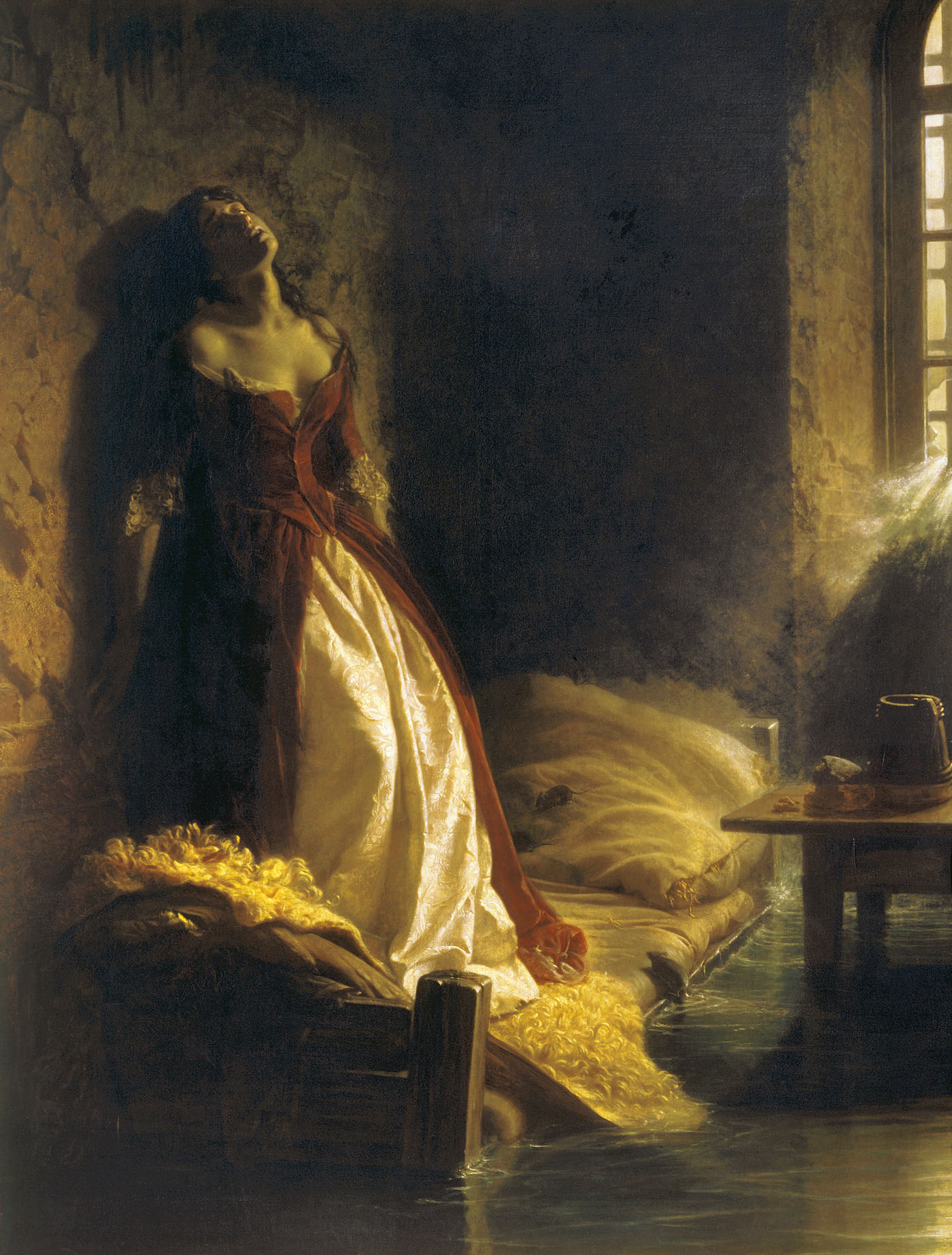
Portrait of Tarakanova
The Woman Who Was Her Own Invention
She arrived in European courts like a rumor that had decided to acquire a body. Beautiful, multilingual, exquisitely mannered, she moved through Venice and Paris under a rotating wardrobe of names—Madame de Tremouille, the Sultana Aleyna, Princess Volkonska, and at last the grand one she would die under: Princess Elizabeth, daughter of an empress. No record of her birth has ever been found. The historical figure we call “Princess” Tarakanova is a performance that outlived its performer—a self with no verifiable contents beneath the costume.
Around 1774 the performance acquired a political plot. She claimed to be the secret child of the late Empress Elizabeth and her favorite Alexei Razumovsky—and therefore the rightful heir to a throne occupied by Catherine the Great. Catherine, who had taken her own crown by coup, dispatched Alexei Orlov to Italy to end it. Orlov did not threaten her; he courted her, staged a love affair, and lured her aboard a warship under the pretense of a naval celebration. She was arrested at sea, carried to the Peter and Paul Fortress, and there—refusing to confess a name she may no longer have possessed—she died of tuberculosis in December 1775.
Her case suggests something stranger than ordinary fraud: a personality organized entirely around the impression she made on others, the inner self so thinly furnished it could be overwritten by whatever role the room demanded. That is the psychological signature of the ENFJ—dominant extraverted feeling that works an audience with uncanny fluency, auxiliary intuition that grasps the symbolic shape of a destiny before any evidence supports it, tertiary sensation hungry for the luxuries that sustain a role, and inferior thinking that never paused to ask whether the whole edifice could survive a cold interrogator.
Tarakanova was an ENFJ whose gift for becoming what others wished to see had consumed the person doing the becoming—a charmer so fluent in the longings of an audience that she could no longer locate, or perhaps had never possessed, a self underneath.
The Mirror That Charmed Its Watchers
Fe — dominant
Every contemporary described the same thing: an extraordinary quality of attention that made the person addressed feel singled out and understood. She did not merely lie to her admirers; she became, for each of them, the figure they most wanted to encounter—a noblewoman for the nobles, an exotic for the exoticists, a damsel of obscure greatness for the romantics. She could change her professed origins between dinners because there was no fixed self underneath to be strained.
The political claim was Fe scaled from the drawing room to the empire. She needed no documents to make Europe believe she was the lost daughter of Empress Elizabeth—she needed only to embody the part so convincingly that others supplied the belief. Fe-dominants persuade by resonance rather than argument, and her career was an exercise in resonance with no underlying fact to anchor it. It was also Fe that Orlov turned into the instrument of her ruin: when he arrived offering devotion and marriage, he was speaking her own native language back at her, and she was disarmed by being charmed in return.
The Destiny She Could See Before the Evidence
Ni — auxiliary
Of all the identities she might have improvised, she settled on the one with the most explosive symbolic charge in 1770s Europe: the secret Romanov heir, wronged true blood against the usurper. That is not a petty con artist's choice. It is the choice of an intuition that grasps the deep mythic shape of a moment—the rumor of a hidden legitimate child is one of the oldest combustible plots in dynastic politics, and she reached for it as though she could feel its potential energy.
The claim landed when Catherine's throne was already shadowed by the Cossack rebel Yemelyan Pugachev, who convulsed the empire by claiming to be Peter III. Tarakanova attached herself to the same vein of legitimist fantasy already drawing blood—which is why Catherine treated a debt-ridden adventuress in Italy as a genuine threat. But auxiliary Ni in the grip of dominant Fe is a vision unmoored from reality. She had no proof of birth, no faction inside Russia, no plan for what would happen if Europe actually believed her.
The Appetite for the Glittering Present
Se — tertiary
In a self-invented woman financing a royal persona on credit, tertiary Se was both the fuel of the performance and the trail that betrayed it. Tarakanova lived expensively wherever she went—a princess must be seen to live as one. The debts are not a footnote; they are evidence. The procession of aliases tracked the procession of cities she had to leave: the beautiful arrival, the dazzling season, the mounting bills, the quiet departure under a new name.
There is a final irony. Orlov's trap was baited with sensory abundance—a fleet, a celebration, the glamour of an admiral's devotion and a promised wedding. The very faculty that loved the glittering surface made the staged spectacle on the Livorno harbor irresistible. She walked onto the ship and into the magnificent scene, and the scene closed around her.
The Logic She Could Not Survive
Ti — inferior
Her story had no logical spine—no birth record, no chronology that survived scrutiny. As long as she stayed among audiences who wanted to believe, the absence of coherence never mattered. The fortress was where inferior Ti finally caught up. Catherine's interrogators demanded exactly the evidentiary consistency her personality was least equipped to produce: asked repeatedly who she was, she gave shifting stories, a childhood narrated differently on different days. Her refusal to name herself may not have been defiance but the deepest expression of her type's weakness—confronted by men who gave her nothing to work with, she found within only the costume and the role, and beneath them, nothing she could prove.
Why ENFJ Over INFJ
Why not INFJ?
The INFJ shares intuitive vision and emotional attunement, and a romantic pretender invites the reading. But the INFJ leads with introverted intuition and processes the world from a guarded interior—the vision is private, the self deeply held. Tarakanova was the reverse. Her primary orientation was outward, toward the room; she fed on the audience's reflection. The INFJ would have a self too defined to be dissolved by interrogation. Tarakanova's catastrophe was precisely that she had no such interior—her gift was dominant Fe's outward fluency, not Ni's inward certainty, which is why she could be unmade simply by being asked, coldly, to account for herself.
Her undoing confirms the function order: Orlov turned her own dominant gift against her on the harbor, and the fortress interrogators turned her inferior weakness against her in the cell. The ENFJ undone by a counter-performer and then by cold logic is a far more coherent figure than an INFJ would ever be.
Connected Figures
Further Reading
- Catherine the Great: Portrait of a Woman — Robert K. MassieThe definitive English-language biography of Catherine, covering the pretender crisis and Orlov's mission to Italy.
- Pretenders and Popular Monarchism in Early Modern Russia — Maureen PerrieA scholarly study of the Russian pretender tradition that contextualizes Tarakanova alongside Pugachev and other impostors.
- Catherine the Great and the Russian Nobility — Paul DukesExamines the political pressures Catherine faced from manufactured claimants and restive factions during her reign.
