 Historical Figure MBTI
#264 · 3-25-26 · Catherinian Russia
Alexei Razumovsky
Cossack · Secret Husband · Night Emperor
1709 — 1771
5 min read
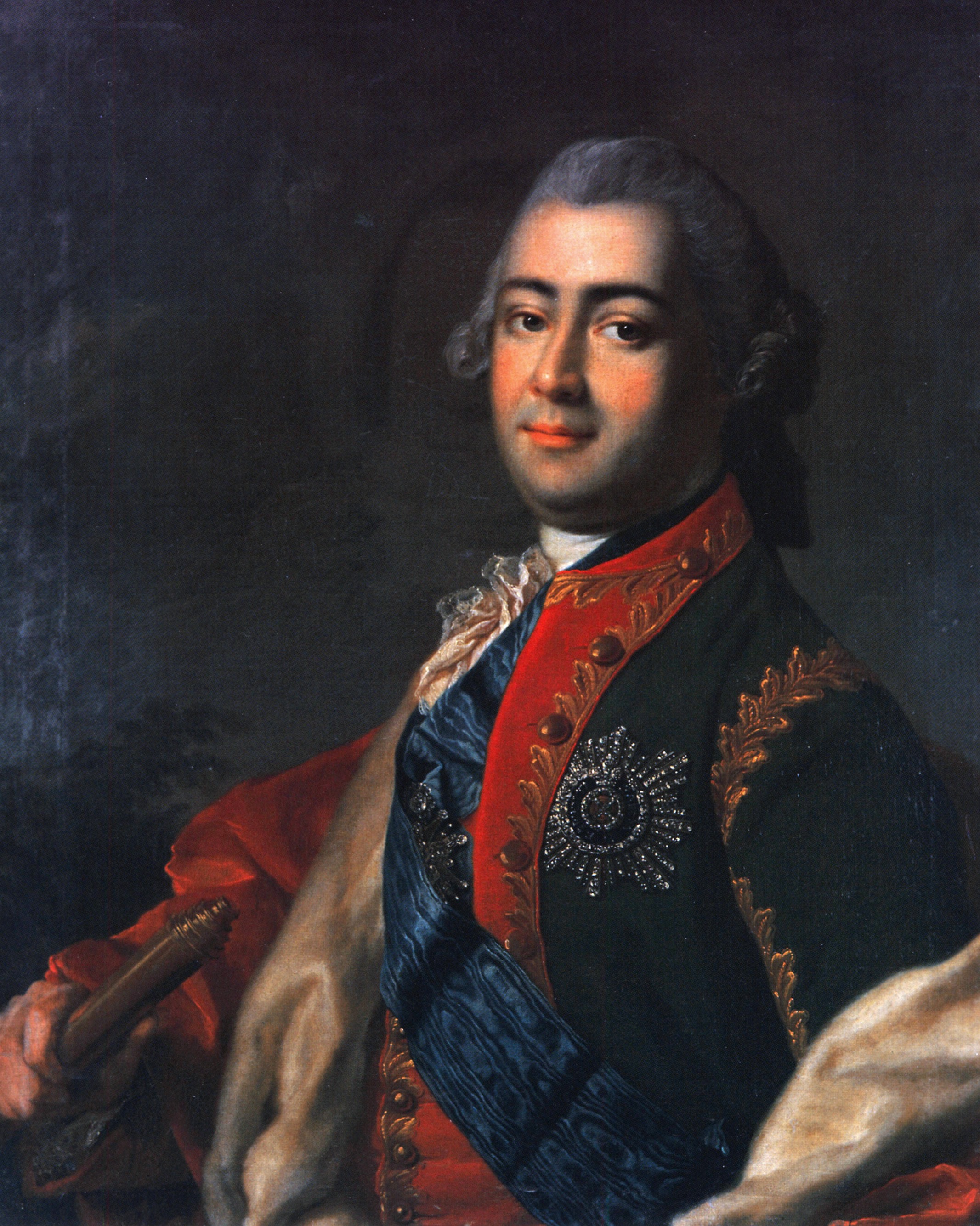
Portrait of Alexei Razumovsky
The Voice That Married an Empress
He was born in 1709 in a Ukrainian village, a herdsman's boy with one gift: he could sing. A passing imperial agent heard his voice in the village church and took him north to the chapel choir in St. Petersburg. There the Tsarevna Elizabeth—daughter of Peter the Great—heard him and fell in love. When she seized the throne in 1741, Razumovsky rose with her; by strong tradition the two were secretly married outside Moscow. For two decades he was the most powerful private man in the empire: the consort no document acknowledged, the “night emperor” who slept beside the sovereign and asked for almost nothing.
What makes him unique among royal favorites is how little he did with the power he was handed. He was gentle, devout, fond of food and music and his Ukrainian homeland, and almost wholly without political ambition—using his influence sparingly, to make his brother Kirill the Hetman and advance Ukraine, and keeping clear of court faction. He is the rare man at the summit of power who never wanted to be anywhere near it. That combination—deep private feeling, sensuous ease, indifference to abstract power—reads as the ISFP.
Razumovsky was the ISFP at the very center of an empire—a man of voice and feeling who was handed the keys to power and quietly declined to turn them, loyal to a person rather than a position, and content, when it ended, to disappear.
Loyal to a Person, Not a Position
Fi — dominant
Dominant Fi organizes a life around inner attachments it almost never compromises. In Razumovsky this shows in his bond with Empress Elizabeth. Other favorites attached themselves to the office; Razumovsky attached himself to the woman. When she died he did not maneuver to retain influence. He stepped back, because what he had valued was gone.
The defining story concerns his secret marriage documents. After Elizabeth's death, an emissary offered him formal recognition as consort if he would produce the proof. He took the papers from their casket, threw them into the fire, and said he had been nothing but a faithful slave of Her Majesty. It is the perfect Fi gesture: the refusal to convert private love into a public bargaining chip. His devoutness is the same function made visible—unforced piety carried into the most worldly court in Europe without ever being performed. He simply declined, without fuss, to become the man his position invited him to be.
The Voice and the Body
Se — auxiliary
Everything that lifted Razumovsky out of obscurity was sensory. He did not rise by wit or intrigue; he rose because of the physical fact of his voice and his presence—tall, dark, strikingly handsome, with an unstudied earthy charm. Auxiliary Se lives in the present moment: sound, taste, texture, the pleasures of the body. It gave his dominant Fi a warm, embodied form. Elizabeth fell in love not with an idea of him but with the sound he made and the room he filled.
His tastes confirm the type. Razumovsky loved a good table, drank freely, hunted, and kept music around him constantly. Famous at court less for any project than for his hospitality and bouts of bibulous good humor, he was not building toward anything. The Fi–Se pairing produces exactly this: deep private loyalty expressed through immediate sensory life, with no native interest in the long abstract game.
The Quiet Read of a Dangerous Court
Ni — tertiary
Tertiary Ni is not a strategic faculty; it is a quiet fatalistic read of pattern. In Razumovsky it shows as wisdom of withdrawal: he had watched across his decades at court what happened to men who grasped for power—favorites who climbed and were broken, intriguers who won a season and lost their heads. He understood, without theorizing it, that his position was inseparable from the woman who held him, and that mistaking the one for the other was the fatal error. The burning of the marriage papers is Ni's work as much as Fi's: a documented claim against a new sovereign was a weapon more likely to destroy its holder than elevate him. Because the function is tertiary, his Ni worked in the negative—telling him what to avoid. It made him safe rather than great.
The Power He Would Not Wield
Te — inferior
Inferior Te sits at the bottom of the ISFP stack, underdeveloped and largely uninteresting to its owner. Placed at the summit of imperial power, Razumovsky displayed no appetite for running it. He held no great office by his own striving, built no faction, and left administration to others. Where his influence did operate, it ran along Fi's channels: he had his brother Kirill educated abroad and installed as Hetman of Ukraine, and poured benefit into the lands he loved. Power used personally, locally, for those inside the circle of loyalty—never as an end in itself. A man with strong Te would have built something durable; Razumovsky built a comfortable private life and, when his empress was gone, let go of all of it. He died in 1771 rich and largely forgotten by the political nation—the one who had the power and simply did not want it.
Why ISFP Over ESFP
Why not ESFP?
The ESFP shares Razumovsky's warmth, sensory appetite, and love of music and company. But the ESFP leads with extraverted sensing and seeks the room, the crowd, the audience; its feeling is attuned to social approval. Razumovsky did the reverse. He had access to dominate any room in the empire and consistently chose not to. His warmth was private, his loyalty fixed inwardly on one person, and his deepest impulse was withdrawal, not display. That inward center—feeling first, sensation second—is the ISFP signature. The ESFP performs; Razumovsky, who could sing, declined to perform.
Razumovsky refused public claims, burned the proof of his own importance, advanced his family quietly, and vanished into private life the moment his attachment ended. The function governing him was the inward, value-anchored Fi of a man who only ever wanted to be true to one person and to be left in peace.
Connected Figures
Further Reading
- Daughter of Peter the Great — Robert Nisbet BainThe classic English-language biography of Empress Elizabeth — the primary source for Razumovsky's role at court.
- The Romanovs: 1613–1918 — Simon Sebag MontefiorePlaces Razumovsky within the dynasty's broader sweep; covers his relationship with Elizabeth and his retirement.
- Catherine the Great: Portrait of a Woman — Robert K. MassieThe fullest account of the Elizabethan court that Razumovsky inhabited, and of the transition to Catherine's reign.
