 Historical Figure MBTI
#252 · 3-25-26 · Catherinian Russia
Ekaterina Dashkova
Intellectual · Academy President · First Woman of Russian Science
1743 — 1810
8 min read
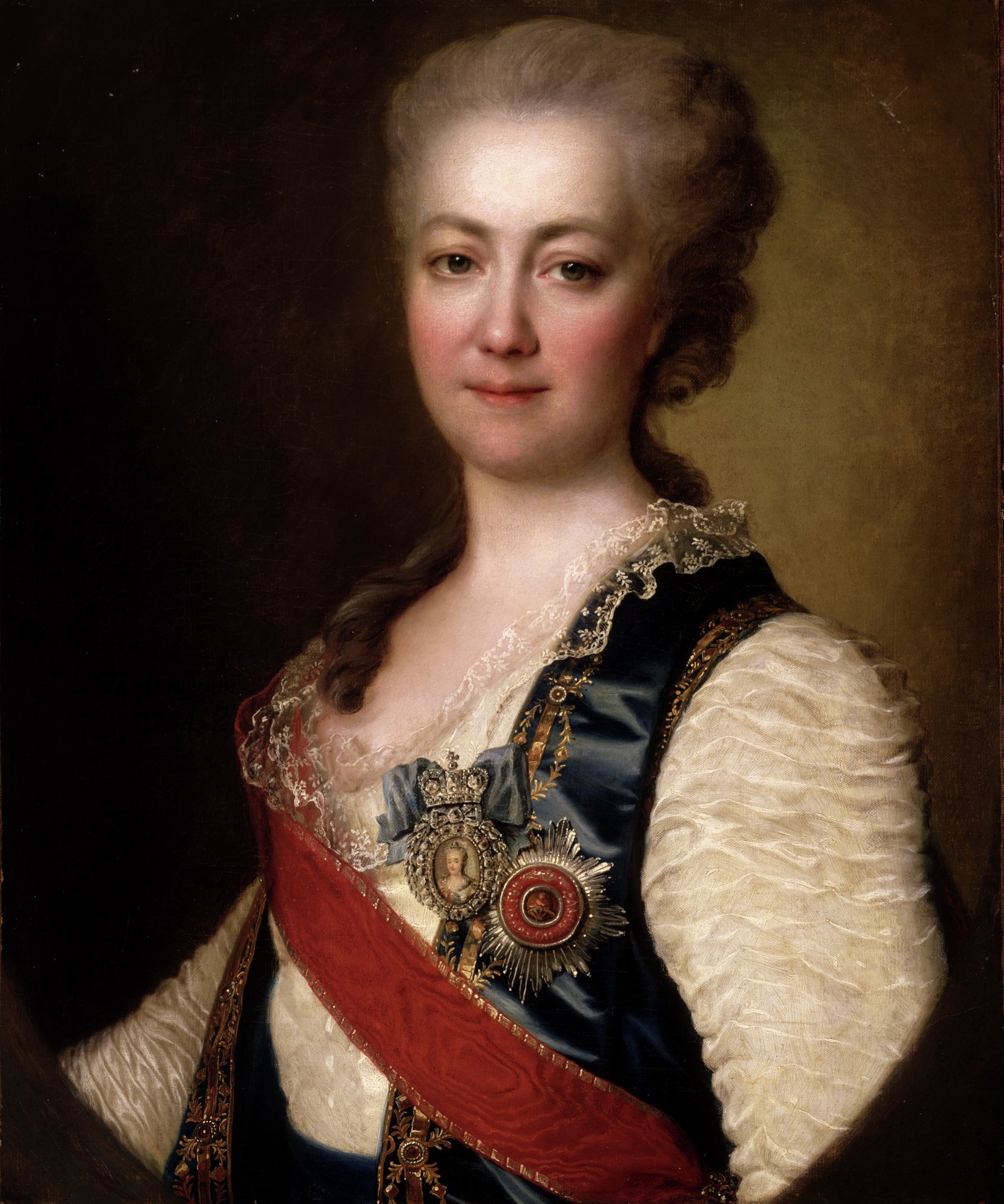
Portrait of Ekaterina Dashkova
The Woman Who Read Her Way Into History
When the sixteen-year-old Princess Ekaterina Dashkova first met the woman who would become Catherine the Great, she presented herself not as a courtier but as a fellow reader. Dashkova was a phenomenon: a noblewoman who treated ideas as the only currency worth hoarding, who would later argue serfdom with Diderot in Paris and end her life as the first woman in the world to direct a national academy of sciences. She was also vain, abrasive, and a self-mythologizer of genius. Her Memoirs remain one of the most candid—and least reliable—documents of the age.
The legend she built rested on the coup of June 1762. Dashkova, then nineteen, cast herself as the conspiracy's indispensable architect. The real machinery belonged to seasoned operators like Grigory Orlov. But she believed her own version with such conviction that it eventually fractured her friendship with the empress. Catherine did not forget who had really done the work, and Dashkova never forgave the empress for a debt that existed mostly in her own imagination.
The mind that produced both the achievement and the self-deception is recognizably that of the INTJ: dominant introverted intuition that grasped what an enlightened Russia could become; auxiliary extraverted thinking that built institutions and academies with executive rigor; tertiary introverted feeling that hardened into an inflexible code of honor; and inferior extraverted sensing that left her tone-deaf to the rooms she was forever misreading.
Dashkova was the INTJ who built a national academy of sciences and could not read a dinner table—a visionary administrator whose certainty about the long future was matched only by her blindness to the present moment.
The Girl Who Saw the Whole Map
Ni — dominant
By her teens Dashkova had decided what Russia lacked and what it might become: a nation that produced its own learning rather than importing it wholesale from France, a culture with a literary language equal to its political ambitions. This was not a program she arrived at gradually. It was a picture she possessed almost from the start, and she spent the rest of her life filling it in.
When Catherine offered her the directorship of the Imperial Academy of Sciences in 1783, Dashkova already knew what the institution should do. Within months she had conceived the project that would define her: a separate Russian Academy devoted to the language itself, and the production of the first comprehensive dictionary—the Slovar' Akademii Rossiyskoy, six volumes organized by etymological roots, driven to completion in a span that astonished her European contemporaries.
She wrote her Memoirs as though composing the historical record in advance, arranging the facts of her life to fit the meaning she had assigned them. Dashkova did not lie about the coup so much as remember it the way her sense of destiny required. The future she saw for Russian letters was largely correct. The past she narrated about herself was largely invented. Both came from the same faculty.
The Administrator of the Enlightenment
Te — auxiliary
What separated Dashkova from the ordinary salon intellectual was that she did not merely admire learning—she administered it. Taking charge of the Imperial Academy of Sciences, she inherited a heavily indebted institution and ran it like an executive: paid down its debts, restored its publishing operation, expanded its public lectures so ordinary Russians could attend. Te does not float above the machinery; it grips the levers.
The dictionary project shows the same faculty at its highest gear. She organized the labor, set the deadlines, contributed entries herself, and held the whole enterprise to a schedule that produced results while she still presided. The root-based architecture of the dictionary is itself a Te artifact: the conviction that a language, like an institution, can be rationalized and rendered efficient.
Te is also impatient with incompetence, and here Dashkova's strength shaded into her besetting flaw. She carried into her dealings with the empress the same auditor's eye she turned on the Academy's ledgers—and said so, bluntly, with a directness that read at court as insolence. The executive bluntness that fixed the Academy's finances repeatedly poisoned her relationships with the people whose patronage she depended on. She optimized systems brilliantly and people disastrously.
The Code She Would Not Bend
Fi — tertiary
Dashkova felt slights with an intensity that never dulled and interpreted every disagreement with the empress as a question of principle. When she believed she had been wronged—passed over, underpaid, denied the credit she was owed—she did not negotiate. She withdrew and retreated abroad, composing in her mind the moral ledger that would later become her Memoirs.
This Fi gave her real moral seriousness alongside the prickliness. Her years of European travel were a genuine pilgrimage toward people she revered on principle. With Diderot she argued the serfdom question not to win but to test her own beliefs aloud; he came away impressed by the moral force of a woman defending positions he found objectionable. The visit to Voltaire at Ferney was a secular communion. These were not networking trips.
But tertiary Fi is brittle. Her bitter estrangement from her son—whose marriage to a woman she considered beneath him she could neither prevent nor forgive—showed the same inflexibility she brought to court. Under Paul I, she was stripped of her offices and banished to a remote estate, which she bore with the grim stoicism of a woman who believed her honor would outlast her enemies. She was probably right about that. She was almost never right about how to keep them from becoming enemies.
The Room She Could Not Read
Se — inferior
Dashkova could see the future of Russian letters with prophetic clarity and could not see that lecturing the most powerful woman in Europe on her own failings was a poor way to keep her favor. Her famous tactlessness was not malice. It was an inferior Se that simply did not register the temperature of the present moment until it had already gone cold.
Her relationship with Catherine cooled not over any single rupture but through a steady accumulation of moments in which Dashkova failed to read the empress's patience running out. Where a courtier of even modest sensory awareness would have softened or simply waited, Dashkova pressed her case as though human relations were a ledger to be balanced rather than an atmosphere to be felt. She knew the long game perfectly and lost the short one constantly.
The actual rewards of her life—the directorships, the dictionary, a genuine place in European intellectual history—never quite satisfied her, because the present could never match the picture in her head of what she was owed. She lived slightly out of phase with her own moment: too far ahead in vision, too far behind in tact. The future vindicated her. The room she was standing in almost never did.
Why INTJ Over ENTJ
Why not ENTJ?
The case for ENTJ is real: Dashkova was a born administrator, blunt and impatient with inefficiency—all the marks of extraverted thinking in the lead. But the ENTJ leads with the world and reads it well; the executive extravert is socially fluent, attuned to the room, skilled at marshaling people as well as systems. Dashkova was the opposite. Her gift was the inner vision—held with a certainty that preceded any evidence—and her great weakness was precisely the reading of rooms the ENTJ does instinctively. Her Te was the instrument; her Ni was the source. An ENTJ would have managed Catherine. Dashkova could only lecture her.
The ENTJ's Te comes first and the intuition serves it, producing a leader who discovers goals through engagement with the world. Dashkova's intuition came first and her thinking served it: she knew what Russia needed before she had any practical means to provide it, and spent decades building the apparatus to realize a picture already complete in her mind. The self-mythology, the inflexible honor, the chronic misreading of the present—these are the signatures of a dominant introvert, not an extravert at home in the arena.
Connected Figures
Further Reading
- The Memoirs of Princess Dashkova — Ekaterina Dashkova, trans. Kiril FitzlyonHer own self-mythologizing account — essential and unreliable in equal measure.
- Dashkova: A Life of Influence and Exile — Alexander Woronzoff-DashkoffThe authoritative modern biography, drawing on archival materials across Dashkova's full career.
- Catherine the Great: Portrait of a Woman — Robert K. MassieThe definitive popular biography of Catherine, with substantial coverage of Dashkova's role.
- Russia in the Age of Catherine the Great — Isabel de MadariagaThe standard scholarly account of Catherinian Russia, indispensable context for Dashkova's academies.
