 Historical Figure MBTI
#253 · 3-25-26 · Catherinian Russia
Nikita Panin
Statesman · Diplomat · Architect of the Northern System
1718 — 1783
5 min read
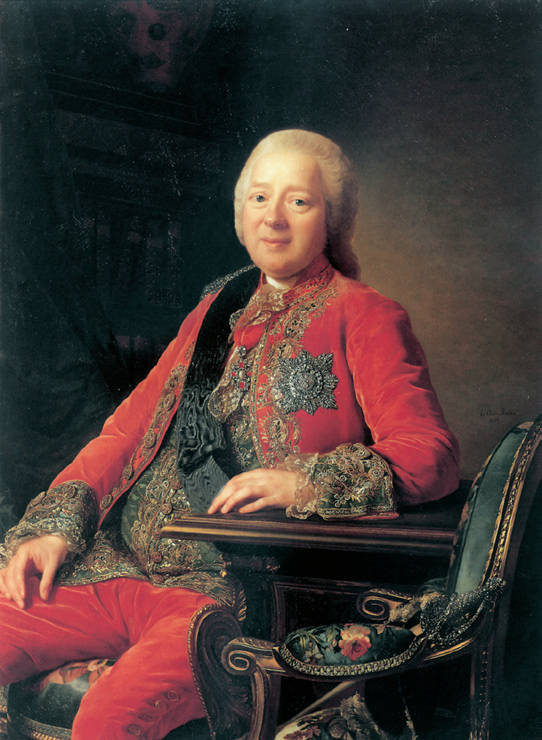
Portrait of Nikita Panin
The Architect Who Preferred the Drawing Board
Count Nikita Ivanovich Panin served Catherine the Great as de facto foreign minister for eighteen years, conducting that power as though it were a problem in geometry. Deliberate, cultivated, famously slow—he turned dispatches over for days before committing. Contemporaries who mistook his languor for indolence learned that the slowness was the method.
His masterwork was the “Northern System,” an attempt to bind Russia, Prussia, Britain, Denmark, Sweden, and Poland against the Bourbon-Habsburg south. As tutor to the young Grand Duke Paul, he pursued a parallel project: shaping a future emperor toward a constitution that would cage the autocracy that employed him. Both projects partly failed. Both bore the signature of the same mind.
That mind belonged to an INTP: dominant Ti organized European politics into coherent architecture; auxiliary Ne saw alliances branching from every move; tertiary Si gave him procedural caution; and inferior Fe left him chronically detached from the emotional weather of Catherine's court. Panin built blueprints for a world that the world declined to inhabit.
Panin was the INTP in power—a systematizer who could draft the architecture of a continental alliance and the constitution of an empire, and who lost both to the one variable his framework could never quite model: what other people actually wanted.
The System Behind the Throne
Ti — dominant
Dominant Ti builds a private model of how the world hangs together and refuses to act against it. The Northern System was not a response to any crisis; it was a framework derived from first principles into which every crisis could be slotted. His slowness was Ti's discipline: he turned a question until its logical shape became clear, and only then moved. His positions, once stated, had no loose threads to pull.
His constitutionalism flowed from the same source. Arbitrary rule was a badly designed system. His proposed Imperial Council was an engineer's correction: distribute the load and the structure becomes stable. He was loyal to Catherine, but more loyal to the blueprint—and never grasped that she would read the blueprint as a cage.
The Map of Contingencies
Ne — auxiliary
The Northern System was Ne mapped and then Ti pruned—an outward-fanning web of contingent relationships disciplined into a coherent design. Panin could see how a move in Stockholm reverberated in Warsaw and Constantinople, how an alliance contracted today constrained options a decade hence. He could hold the whole tree of European alignments in view at once.
Yet auxiliary Ne is a servant, not a master. Panin's intuition served his theory rather than challenging it. The Northern System assumed Prussia, Britain, and Poland could hold in stable alignment. Frederick the Great had his own designs; Britain drifted; Poland was carved up by the very partners meant to anchor it. Ne saw a thousand moves ahead within the framework, but rarely questioned the frame.
The same gift shaped his tutelage of Paul. He projected the boy forward, investing in a constitutional emperor that might one day arrive. It never did. Ne is good at hoping for such outcomes and bad at insuring against their failure.
The Comfort of Fixed Grooves
Si — tertiary
Tertiary Si gave Panin his attachment to routine and precedent. He liked his hours, his habits, and he wanted the world to match—treaties honored, the machinery running as built. The Northern System was, in temperament, a conservative project: it sought equilibrium, not expansion. But Si has its trap: his attachment to established methods made him slow to register that the ground had shifted. As Potemkin's faction rose and Catherine turned toward a southern policy, Panin kept tending his northern blueprint. The man who could not be hurried was, in the end, overtaken.
The Man Outside the Circle
Fe — inferior
Inferior Fe is the INTP's blind spot. Catherine ran her reign on charm and intimacy—power flowed through personal attachment. Panin stood outside that circle. He presented Catherine with a rationally superior design for limiting her power and could not feel how it would land: as a bid to cage her, a thing to be smiled at and buried. That a worse argument might prevail because the empress simply liked the man better was the kind of variable his framework discounted.
His displacement by Potemkin was an Fe defeat. Potemkin read Catherine emotionally and bent policy through that intimacy in a way Panin never could. The system-builder lost to the man who had read the room—outmaneuvered not by a better idea but by a warmer one.
Why INTP Over ENTP
Why not ENTP?
The ENTP leads with Ne, engaging the world combatively, generating positions faster than any one can be perfected, hungry for an audience. Panin was the opposite: deliberate, indifferent to performance, governed by a need for internal consistency. He did not multiply positions; he built one and refused to leave it. His intuition served his theory rather than outrunning it—the signature of auxiliary Ne under dominant Ti. The ENTP needs the stage; Panin needed the drawing board.
An ENTP of Panin's caliber would have been voluble, quick, relishing the contest of court. Panin let dispatches sit and valued framework coherence over winning a point. An ENTP's tertiary Fe also gives social fluency; Panin's chronic detachment is the blind spot that defines the INTP. He could model a continent and miss the feeling of the one woman whose favor decided everything.
Connected Figures
Further Reading
- Russia and the Age of Catherine the Great — Isabel de MadariagaThe definitive English-language study of Catherine's reign; traces Panin's Northern System and his eventual displacement in sustained detail.
- Catherine the Great: A Portrait of a Woman — Robert K. MassieAccessible narrative biography that gives full context for Panin's role as foreign minister and tutor to Paul.
- The Emergence of Russian Constitutionalism 1900–1904 — Terence EmmonsTraces the long constitutional impulse in Russian political thought from figures like Panin forward into the late imperial period.
