 Historical Figure MBTI
#249 · 3-25-26 · Catherinian Russia
Grigory Orlov
Guardsman · Conspirator · First Favorite
1734 — 1783
6 min read
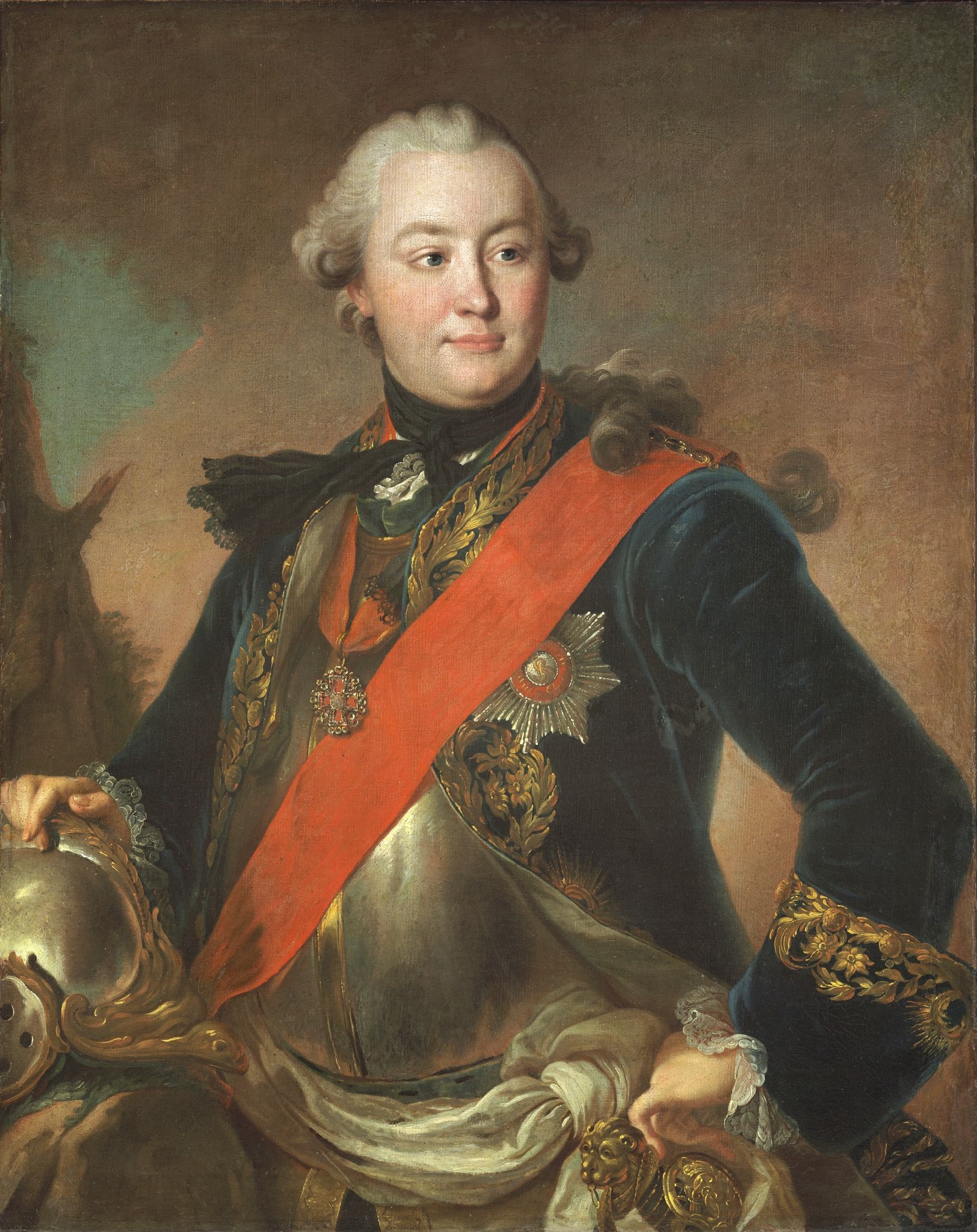
Portrait of Grigory Orlov
The Body in the Room
Grigory Orlov was a war hero, wounded three times at Zorndorf in 1758 and remembered less for strategic brilliance than for the electric fact of his presence. When the moment came to overthrow an emperor in 1762, it was Orlov walking the guards' barracks, charming and bribing until the soldiers followed. The Russia of 1762 turned on a man who was irresistible in a room.
That coup made Catherine the Great an empress and made Orlov, for a decade, the first man in her bed and the muscle behind her throne. He had everything power could offer except the patience to convert advantage into durable statecraft. He never learned to govern.
The type that explains him is the ESTP: dominant extraverted sensing that lives in the vivid present, auxiliary introverted thinking sharp enough for cannon angles and coup logistics, tertiary extraverted feeling that made him beloved, and an inferior introverted intuition blind to the abler man who would take his place.
Orlov was the ESTP at the height of its powers and at the limit of them—a man who could conquer any room he walked into and could not, for his life, see the room he would be walking into next.
The Man Made for the Moment
Se — dominant
At Zorndorf he distinguished himself not by maneuver but by raw nerve. In 1762 the conspiracy that put Catherine on the throne was not, at root, a plan; it was a performance, and Orlov was its lead—dispensing money, drink, and animal charisma until the soldiers followed. He reportedly boasted to Catherine that he could have overthrown her in a month if he chose, the remark of a man wholly absorbed in his own present strength.
The clearest demonstration came in 1771, when plague erupted in Moscow: he rode into a dying, panicked city, organized quarantine details, and quelled the disorder by being personally, visibly there. Crisis management Se excels at—concrete, physical, courageous. It was also the last great success of his life, and it was a fireman's triumph, not a statesman's.
The Gunner's Logic
Ti — auxiliary
Artillery is the most mathematical of the eighteenth-century arms—angles, charges, ranges—and Orlov was competent at it. Later, as first president of the Free Economic Society, he took a hands-on interest in practical improvement and applied science, the tinkering curiosity of auxiliary Ti with a concrete object.
But Ti in the ESTP serves present-tense demands; it does not build systems. The strategic architecture of the 1762 plot belonged to cooler heads around Catherine; the actual disposal of Peter III fell to the harder Alexei Orlov. Grigory could run a battery. He could not design a regime.
The Generous Heart
Fe — tertiary
Tertiary Fe gave Orlov his most attractive quality: genuine warmth that made him beloved rather than merely admired. He was open-handed, loyal to his brothers, incapable of the cold cruelty that thrived at court. Where other favorites schemed, Orlov mostly enjoyed. The soldiers followed partly because they liked the man. That likability was not a strategy.
But tertiary Fe seeks approval more than it shapes the social field to a long-term end. Orlov never built a faction or cultivated the patronage network that sustains power once the bedroom door closes. When the feeling cooled, he had nothing else to hold him in place—the same warmth that made him generous made him needy when the bond soured.
Blind to the Coming Man
Ni — inferior
Inferior Ni is the fault line that ran through Orlov's whole career. He lived so completely in the present that he never saw the slow erosion of his position until it was already irreversible—a decade of power, nothing made permanent, because the question “what happens when Catherine no longer needs me?” required imagination he did not possess.
The man who exposed this weakness was Grigory Potemkin—far-sighted where Orlov was physical, a builder of provinces rather than a charmer of barracks. Orlov was away at the Congress of Foksani in 1772 when his hold finally slipped; he rushed back toward St. Petersburg and was stopped on the road, his absence having proved how replaceable a man of pure presence can be.
Pensioned off with titles and estates, Orlov had no inner life of plans to fall back on. He declined into madness, haunted—some said—by the murdered Peter III. The man who never looked ahead spent his final years unable to escape what lay behind.
Why ESTP Over ISTP
Why not ISTP?
The ISTP shares Orlov's Se–Ti spine but leads with introverted thinking and prefers to work alone—the silent expert who needs no audience. Orlov was the reverse: his power came entirely from being among people, carrying a crowd by sheer presence. He needed the regiments to love him, the empress to want him. That crowd-facing energy is dominant Se with tertiary Fe, not the inward self-sufficiency of the Ti-leading ISTP. An ISTP makes a superb gunner and a poor coup leader; Orlov was the opposite.
An ISTP would not have minded losing a favorite's role; he would have retreated to his estates with relief. Orlov disintegrated—the signature of an extravert whose world is other people, not an introvert whose world is his own mastery.
Connected Figures
Further Reading
- Catherine the Great: Portrait of a Woman — Robert K. MassieThe definitive modern biography of Catherine — covers Orlov's role in the coup and his decade as first favorite in detail.
- Catherine the Great and Potemkin: The Imperial Love Affair — Simon Sebag MontefioreFocuses on Potemkin's partnership with Catherine, with sharp comparative portraits of the favorites who preceded him, including Orlov.
- The Romanovs: 1613–1918 — Simon Sebag MontefioreProvides wide dynastic context for the coup of 1762 and the Orlov brothers' place in it.
