 Historical Figure MBTI
#266 · 3-25-26 · Catherinian Russia
Elżbieta Szydłowska
Polish Noblewoman · Courtier
fl. 1760s
5 min read
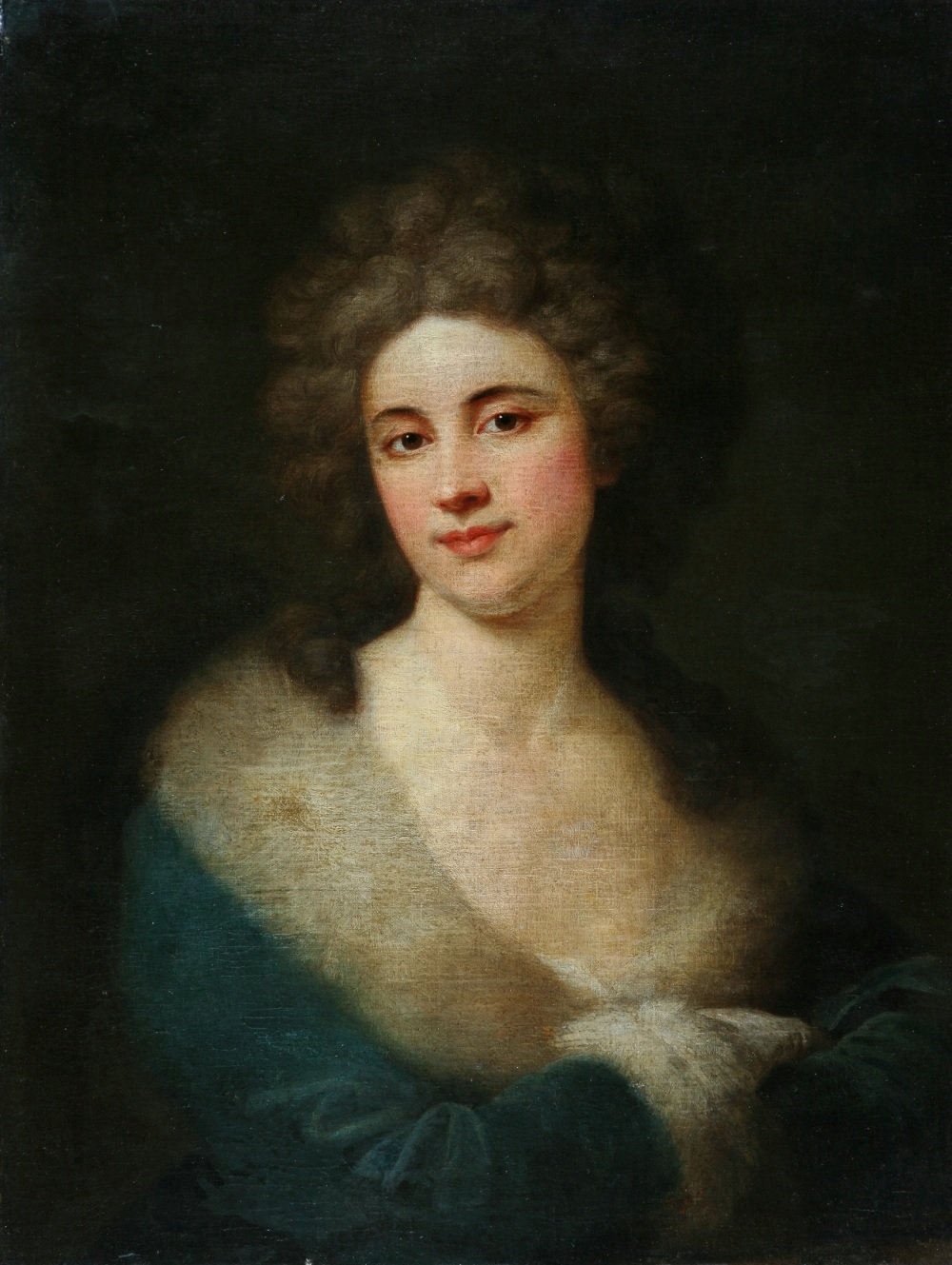
Portrait of Elżbieta Szydłowska
The Woman in the King's Shadow
History remembers Elżbieta Szydłowska—later Elżbieta Grabowska—by the place she occupied beside a falling throne. Born around 1748 or 1749 into the Polish lesser nobility, she became the constant companion, mistress, and—by strong tradition— the secret morganatic wife of Stanisław August Poniatowski, the last king of Poland. She bore him several children, ran the private machinery of his household, and stayed at his side through the catastrophe that swallowed his kingdom and his exile to St. Petersburg. And yet she remains almost a silhouette: present everywhere in the king's life, attested by others and rarely by herself.
That absence was her own design. Stanisław August's court teemed with mistresses who meddled and factions that schemed. Grabowska did none of it. She kept to the domestic sphere: the children, the table, the king's comfort and his nerves. Where other women of the period turned proximity to power into leverage, she turned it into shelter.
She is attested almost entirely through the king—his letters, his household, his final exile. The record keeps her role and loses her voice, and a temperament cannot be read from a silhouette.
A Quiet Ascent Beside a Doomed Crown
Elżbieta Szydłowska came from a noble but unremarkable family. She married into the Grabowski family and entered the orbit of the royal court at Warsaw; by the 1770s she had become attached to Stanisław August Poniatowski, and the attachment proved to be the defining fact of the rest of her life. It outlasted his other liaisons, his political fortunes, and Poland itself as an independent state.
The tradition that she was his morganatic wife—married privately, so that neither she nor her children could claim royal rank—runs strong through nineteenth-century accounts, though no surviving marriage record settles it. The children were raised within the ambit of the court, provided for and positioned for respectable lives: the discreet, well-managed afterlife of a relationship that was an open secret rather than a scandal.
What makes Grabowska unusual is how little she sought from the position. The Polish court of the partition era was a place where access to the king was a commodity. She did not build a faction, did not sell influence, did not appear in diplomatic dispatches as a player. She governed the king's rooms, not his realm.
Loyalty Through the Ruin of a Kingdom
Stanisław August's reign ended in catastrophe. The three partitions of 1772, 1793, and 1795 erased Poland from the map of Europe. The king who had presided over the landmark Constitution of 3 May 1791 was compelled to abdicate, then summoned to St. Petersburg as a pensioner of the Russian crown that had unmade him.
Through all of it, Grabowska stayed. She followed him to the Russian capital where Catherine had first made him and would, in death, be done with him. When Stanisław August died in St. Petersburg in February 1798, she was beside him. Her own death followed in 1810. There is no record of her seeking advantage from the Russian court, no sign that she traded on the dead king's memory. The loyalty appears to have been simply that—loyalty, carried past every point at which it could have profited her. Favorites usually dispersed when the favor ran out. Her constancy is the one thing the record renders unmistakably.
The Psychological Verdict
If one had to guess, the evidence points toward someone steady, private, and averse to spectacle—a person whose center of gravity lay in the relational rather than in ambition or public performance. She organized a household rather than a faction; she chose the near and the familiar over the grand and the strategic. Loyalty sustained through the destruction of a kingdom suggests a deep, person-centered attachment that did not bend to circumstance.
But to type her properly would be to invent her. Almost nothing survives in her own voice: no letters laying out how she reasoned, no diary tracing how she felt. A personality type is a claim about an inner architecture, and that architecture is exactly what the sources have not preserved. We see the shape she cast against the king's blazing, documented life, and a shadow cannot be cross-examined. She remains untyped: she chose to be legible only through someone else, and the history obliged.
Connected Figures
Further Reading
- The Last King of Poland — Adam ZamoyskiCovers Stanisław August Poniatowski's court and exile, where Szydłowska remained his lifelong companion.
- Catherine the Great and Potemkin: The Imperial Love Affair — Simon Sebag MontefiorePlaces the Polish court in the wider web of favorites and courtiers surrounding Catherine's empire.
- Russia in the Age of Catherine the Great — Isabel de MadariagaThe standard account of the era whose politics decided Poniatowski's fate, and with it Szydłowska's.
