 Historical Figure MBTI
#262 · 3-25-26 · Catherinian Russia
Michael Pavlovich
Grand Duke · Artillerist · Paul's Youngest
1798 — 1849
3 min read
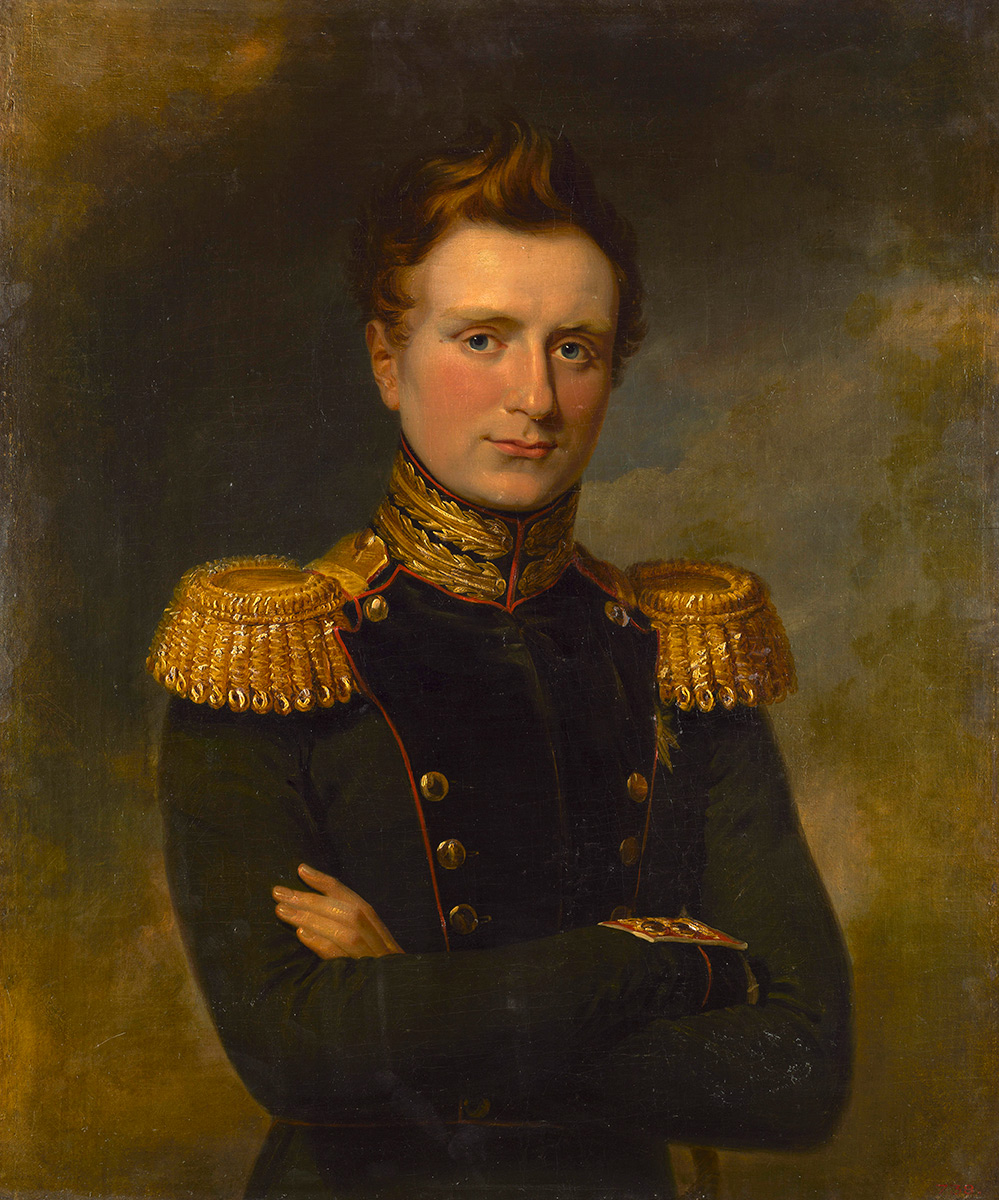
Portrait of Michael Pavlovich
The Man Behind the Parade Ground
Grand Duke Michael Pavlovich was born in 1798, the youngest son of Emperor Paul I and Empress Maria Feodorovna. By birth order he stood far from the throne — Alexander I and Nicholas I would wear it in succession; Constantine renounced it. What Michael wanted was the artillery, and he devoted his life to it: Grandmaster of Artillery for three decades, founder of the Mikhailovsky Artillery School, a martinet of the parade ground feared by subalterns, yet genuinely devoted to his men.
For all that, he remains strangely opaque. What survives is the official martial persona: the discipline, the drill, the brusque remarks. The inner life is barely documented. This is why he is best left untyped. We have a uniform and a voice of command; we do not have the man inside them.
Michael Pavlovich is preserved almost entirely as a function—Grandmaster of Artillery, martinet of the parade ground, blunt-tongued soldier-prince. The official persona is vivid; the interior is missing. He resists typing because the record kept only his rank.
The Soldier-Prince and His Artillery
Michael was four when his father was murdered in the Mikhailovsky Castle. He grew up under Alexander I with his vocation already settled: like Nicholas, he gravitated to ballistics, ordnance, and the methodical training of gunners—not cavalry dash. In 1819 he became Grandmaster of the Artillery.
The Mikhailovsky Artillery School gave gunnery officers a genuine technical education rather than parade-ground polish, and survived into the twentieth century. For a man remembered for shouting about the angle of a shako, it was a forward-looking act — artillery was a science before it was a spectacle, even if his manner ran entirely to the spectacle.
That manner was St. Petersburg legend. Michael was the archetypal Nicholaevan martinet—ferocious about drill and the smallest deviation of a button, his sardonic remarks quoted in barracks across the empire. Under Nicholas I he was the perfect instrument. Yet contemporaries also recorded the other side: he knew his men and commanded a real loyalty beneath the fear.
A Marriage Across a Temperamental Divide
In 1824 Michael married Princess Charlotte of Württemberg—Elena Pavlovna on her conversion. Elena was intellectually formidable; her salon became one of the most brilliant gatherings in St. Petersburg, a world she moved through easily.
Michael did not. His element was the manège and the gun park. He admired her without sharing her, and the marriage held across a divide the record sketches but never explains from his side—another gap where the documentation runs out. He died in 1849, still in harness, still the empire's gunner-in-chief.
The Psychological Verdict
The surface points toward a duty-bound temperament—obsessive about drill and procedure, technically masterful, ill at ease in Elena's salon, expressing everything through service rather than reflection. On its face: a sensing, judging soldier of the most concrete kind.
But the honest verdict is that we should not type him. Nearly everything preserved is the official martial persona—roles and behaviors, not interiority. A martinet's public severity can sit atop almost any private temperament. There are no diaries of self-doubt, no candid letters. What looks like a clear type is really a clear costume, and a uniform is not a soul.
Connected Figures
Further Reading
- Paul I of Russia, 1754-1801 — Roderick E. McGrewCovers the murdered emperor whose youngest son, Michael, inherited a divided Romanov family legacy.
- The Romanovs: Autocrats of All the Russias — W. Bruce LincolnTraces Michael Pavlovich's place among Paul's four sons and their competing claims to influence.
- Russia in the Age of Catherine the Great — Isabel de MadariagaSets the dynastic stage — Catherine's court — that shaped the world Michael was born into.
