 Historical Figure MBTI
#1042 · 8-4-26 · The Middle Kingdom
Amenemhat I
The Vizier Who Took the Crown
r. c. 1991 – 1962 BCE
5 min read
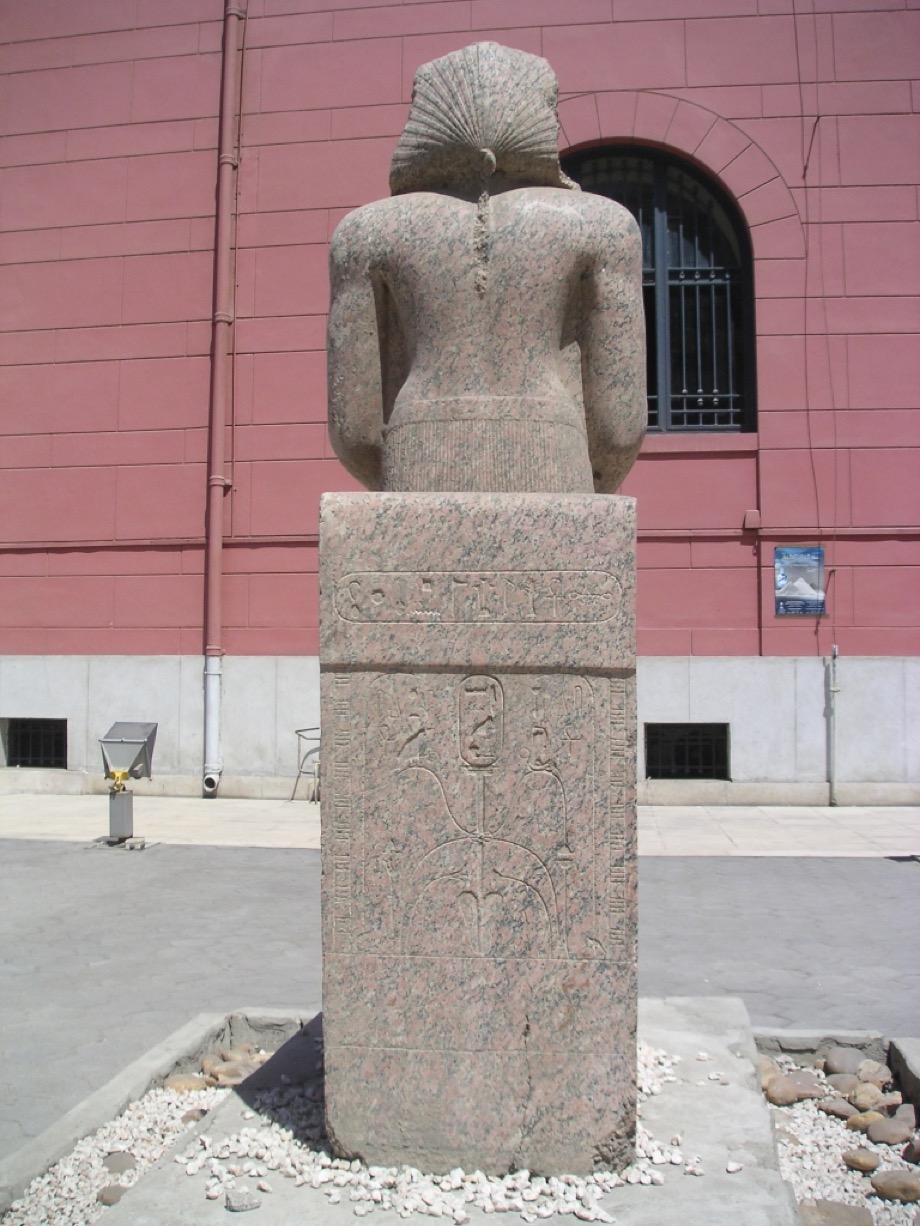
Statue of Amenemhat I
A Vizier Who Trusted No One
Amenemhat I did not inherit the throne of Egypt. He arrived at it — from the vizier's office, from the machinery of administration, having spent his career watching the previous dynasty exhaust itself. When it finally collapsed, he did not restore it. He replaced it, and he did so with the caution of a man who understood exactly how fragile the thing he had just seized really was.
That caution outlived him in an extraordinary document: the "Instructions of Amenemhat," a set of counsel supposedly dictated to his son Senusret I from beyond the grave, warning him never to let his guard down — not to servants, not to friends, not to brothers. Egyptian royal literature is full of self-praise and cosmic reassurance. This text is neither. It reads like a man who was ambushed once and never stopped replaying it, and it is the clearest surviving window into a INTJ mind that ancient Egypt left behind.
Amenemhat I governed the way an INTJ dominant in Ni watches a horizon no one else can see — plotting the kingdom's survival decades past his own death, and trusting almost nobody with the plan.
A Throne Secured for a Man Not Yet Born
The clearest evidence of Amenemhat's dominant Ni is not the coup that put him on the throne — it is what he built afterward to make sure the coup was the last one Egypt would need. He established the co-regency: formally elevating Senusret I to share the kingship years before his own death, overlapping their reigns so that the transfer of power would happen in daylight, under both their names, rather than in the vacuum a sudden death leaves behind. No prior pharaoh had needed to solve succession this way, because no prior pharaoh had taken the throne the way he had. He was not solving the problem in front of him; he was solving the problem two generations away.
The same pattern shows in his choice of capital. He abandoned Thebes, ancestral seat of the dynasty that had just reunified Egypt under Mentuhotep II, and founded a new residence city, Itjtawy, near the Faiyum — a location chosen not for sentiment but for its position between Upper and Lower Egypt, a fulcrum for governing a still-fragile reunified state. It is the decision of a mind running a long simulation of where the kingdom's stress points would be in fifty years, not where they were that season.
And then there is the "Instructions" itself, composed — or commissioned to be composed in his voice — as a private transmission of hard-won pattern-recognition to a single successor, never intended as public praise poetry. It is Ni turned inward on his own downfall: an attempt to extract the abstract lesson from a nearly fatal betrayal and hand it forward as doctrine.
The Vizier's Instinct for Structure
Before he was a king, Amenemhat was almost certainly the vizier Amenemhat who served under the last kings of the 11th Dynasty — the administrator who ran a mining expedition to Wadi Hammamat and, by most reconstructions, the man who actually operated the machinery of state while weaker pharaohs held the title. Te does not need a crown to express itself; it needs a system to run, and Amenemhat spent a career running one before he decided to own it outright.
Once king, that instinct became policy. He is credited with reorganizing Egypt's nome administration and reasserting central control over provincial governors who had grown semi-independent during the First Intermediate Period — not through personal charisma but through structural correction, redrawing the lines of authority so the machinery itself, not any single man's favor, held the kingdom together. It is the auxiliary function doing what Ni cannot: converting a vision of long-term stability into org charts, garrisons, and enforced boundaries.
The Wound Behind the Warning
Egyptian sources strongly suggest Amenemhat survived an assassination attempt, likely from within his own household, and the "Instructions" reads as its direct aftershock — not a policy paper but a wounded, deeply private reckoning with betrayal, addressed to the one person he still trusted enough to warn. "Trust no brother, know no friend, make no intimates," it says, and the register is not strategic detachment but something closer to grief filtered through a value system that had just been violated. That is tertiary Fi: a private, intensely felt moral core surfacing only once the Ni-Te machinery has already built the vehicle — a text nominally about governance — to carry it.
Why INTJ Over ENTJ
Why not ENTJ?
An ENTJ vizier-turned-king would have consolidated power outwardly and loudly — through visible campaigns, public assertions of authority, a reign narrated as triumph. Amenemhat did the opposite: he governed from behind a new, defensively chosen capital, addressed his deepest strategic reasoning to a single heir in a private text rather than to his court, and built his succession plan around avoiding exposure rather than projecting it. The energy is inward and guarded, not extraverted and commanding — Ni running the show, with Te executing quietly rather than leading the charge.
The "Instructions" settles it. An ENTJ's Te-dominant instinct is to organize the external world and state the plan; Amenemhat's instinct, after nearly losing his life to the people closest to him, was to withdraw the plan into a single trusted channel and warn that channel never to widen it. That is a dominant introverted intuitive protecting a vision by controlling who sees it — not an extraverted thinker building consensus around one.
Connected Figures
Further Reading
- Ancient Egyptian Literature, Vol. 1 — Miriam Lichtheim (trans.)Contains the full "Instructions of Amenemhat," the private text at the heart of this entry.
- The Middle Kingdom of Ancient Egypt — Wolfram GrajetzkiThe standard modern survey of the 12th Dynasty and its administrative reforms.
- The Rise and Fall of Ancient Egypt — Toby WilkinsonPlaces Amenemhat's seizure of power in the context of the First Intermediate Period's collapse and recovery.
- The Oxford History of Ancient Egypt — Ian Shaw (ed.)Reference chapters on Middle Kingdom kingship, succession, and the co-regency innovation.
