 Historical Figure MBTI
#731 · 6-1-26 · The Conquest of Mexico
Antonio de Montesinos
Friar · Preacher · The Sermon That Converted Las Casas
c. 1475 — 1540
3 min read
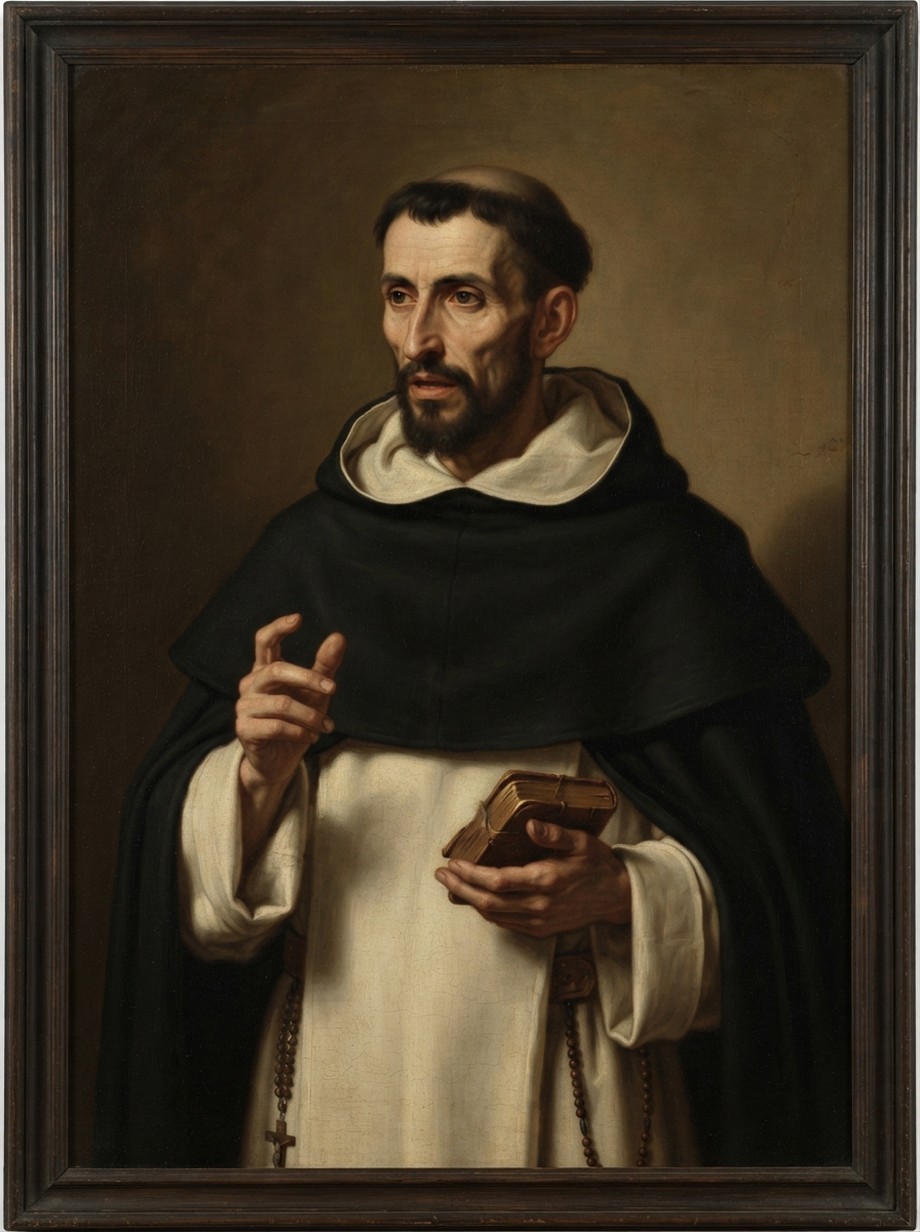
AI-assisted Portrait of Antonio de Montesinos
A Voice Crying in the Wilderness
On the fourth Sunday of Advent, 1511, a Dominican friar named Antonio de Montesinos climbed into a pulpit in Santo Domingo and told the assembled encomenderos of Hispaniola — the colony's wealthiest, most powerful men, gathered for what they expected to be an ordinary Mass — that they were bound for hell. He opened with a line from Isaiah: I am a voice crying in the wilderness. Then he asked them, plainly, the question the colony had spent two decades avoiding: "By what right or justice do you keep these Indians in such cruel and horrible servitude? ... Are they not men? Have they not rational souls?"
The sermon was not a single man's outburst. Montesinos delivered it as the agreed position of his small Dominican community, who had spent weeks debating what they had witnessed under the encomienda system and concluded that their silence made them complicit. The congregation erupted before he finished; the colonists complained to the Crown, and Montesinos was summoned to Spain to defend himself and his order. He held his ground there too, and the controversy he forced into the open contributed directly to the Laws of Burgos of 1512, the first — and largely toothless — royal attempt to regulate the treatment of Indigenous people in the Americas.
The sermon's immediate legislative harvest was thin. Its long-term harvest was not. Among the encomenderos in that Advent congregation sat a young colonist named Bartolomé de las Casas, who felt nothing that day but irritation — and who, years later, credited that single sermon as the seed of his own conversion, the moment that eventually led him to renounce his own encomienda and become the era's great reformer. Montesinos kept preaching against Indigenous enslavement for another three decades, in the Caribbean and then in Venezuela, where colonists hostile to his advocacy are reported to have killed him around 1540.
An INFJ who staked his own safety on a single sermon, then spent the rest of his life proving he had meant every word of it.
Connected Figures
Further Reading
- A Short Account of the Destruction of the Indies — Bartolomé de las CasasLas Casas's own polemic, written by the man who traced his conversion directly back to Montesinos's sermon.
- The Spanish Struggle for Justice in the Conquest of America — Lewis HankeThe standard English-language study of the debate Montesinos's sermon opened, through the Laws of Burgos and beyond.
