 Historical Figure MBTI
#1229 · 9-9-26 · The Mughal Empire
Asaf Khan
Imperial Noble · Broker of a Succession
1569–1641
6 min read
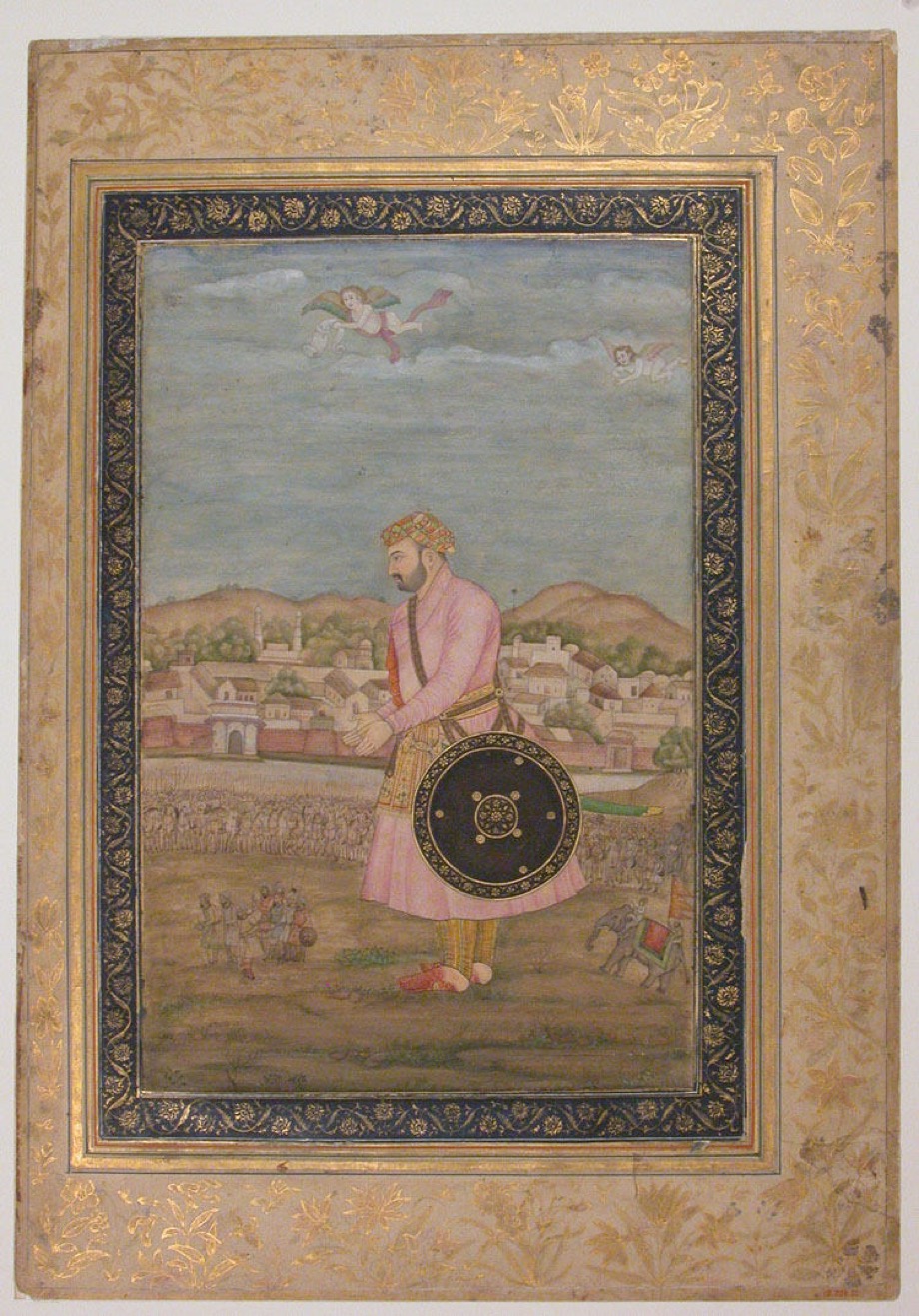
Portrait of Asaf Khan — 19th century (later depiction)
The Emperor Who Was a Means
When Jahangir died in 1627, his son Khurram was far from the imperial camp. Asaf Khan wanted Khurram on the throne, but could not simply suspend kingship until his arrival. He brought out Dawar Bakhsh, a grandson of Jahangir, and arranged for him to be proclaimed ruler. The temporary emperor gave a moving coalition a visible center. In the chronicler’s account, the men around Asaf Khan understood that the arrangement was designed to serve someone else.
This is the clearest opening onto his political character, and one of the darkest. Dawar was not a piece of furniture that could harmlessly be put away when the permanent king arrived. The succession ended in the elimination of rival princes. An account of Asaf Khan’s capacity for organization must keep that human consequence within view, especially when the sources present the victorious arrangement as the restoration of order.
Born in 1569 and remembered as a son of the Persian migrant Ghiyas Beg, Asaf Khan had become a substantial figure in Jahangir’s court long before this final maneuver. His sister Nur Jahan was empress; his daughter Arjumand Banu, better known as Mumtaz Mahal, was Khurram’s wife. Family ties connected him to the center and also divided his interests. The proposed ENTJ reading has low confidence: coordinated political choices are visible, but the private mind that made them is not.
The tentative ENTJ reading centers on Extraverted Thinking: Asaf Khan organized offices, allies and even a provisional kingship around the accession he wanted to secure.
Access Had to Become a Coalition
Asaf Khan’s court position involved more than appearing beside famous relatives. Jahangir’s memoir records visits to his house, elaborate hospitality and substantial gifts. A noble household could bring emperor and grandees into the same setting, display resources and reinforce the patron’s place within the circle of trust. Such occasions were part of political work. Their recorded expense makes clear that proximity to the sovereign had to be sustained through material commitments.
The dominant Extraverted Thinking interpretation becomes stronger when that household position is considered alongside the succession. An intention to support Khurram would have achieved little without messengers, cooperating nobles, troops and an answer to the immediate vacancy. Asaf Khan translated preference into a sequence of actions others could join. He could coordinate men whose interests were not identical because the arrangement offered them a recognizable route through a dangerous transition.
This does not mean every action was efficient or every participant obeyed without calculation. Nor should political organization be mistaken for an impersonal devotion to the state. His chosen emperor was his son-in-law. The network joined institutional responsibility to a family’s prospects so closely that separating them into public duty and private ambition would impose a distinction the court itself did not reliably maintain. The type describes a proposed style of acting, not a certificate of disinterested service.
A Throne Beyond the Present Reign
The marriage of his daughter to Khurram established an enduring connection with a prince who could become emperor. It also meant that the family surrounding Nur Jahan was not a unified bloc. Her daughter Ladli Begum married Shahryar, tying the empress to a different candidate. Asaf Khan’s relation to his sister therefore changed with the problem at hand. They could share an interest in prominence under Jahangir and disagree over which future ruler would preserve it.
Auxiliary Introverted Intuition is the proposed explanation for the concentration on a desired political endpoint. The proclamation of Dawar Bakhsh is especially revealing because its immediate appearance and intended outcome were different. A king was installed to make another king possible. Rather than treating every available claimant as equally suitable, Asaf Khan organized the interval around a particular future. It was a calculated projection, although the surviving narrative does not reveal how early he settled upon each step.
The absence of a fixed rule of primogeniture mattered. Khurram’s claim needed political and military support; seniority alone did not make the contest disappear. Asaf Khan’s achievement belonged to that competitive setting. His capacity lay in recognizing which acts would give a preferred claimant a practical advantage, but a successful outcome does not prove that he possessed perfect foresight. Luck, the cooperation of other grandees and the weakness of opponents remained necessary parts of the result.
The Opponent Was in Lahore
Shahryar claimed sovereignty at Lahore and used the treasury there to attract supporters. Asaf Khan moved against him with Dawar Bakhsh publicly accompanying the advance. The arrangement combined an armed challenge with a visible claim to legitimacy. Shahryar’s defeat and confinement removed the most immediate competing center. Nur Jahan’s communications were restricted, limiting her ability to turn her former influence into a countercoalition.
Tertiary Extraverted Sensing offers a cautious language for this willingness to act on the available situation. Asaf Khan did not wait for every uncertainty to resolve before advancing. He made use of bodies, roads, treasuries and the public presence of a prince. But the operation was embedded in a larger objective, not simply a taste for danger. The evidence supports situational responsiveness more securely than it supports any claim about his enjoyment of military action.
His conduct during Mahabat Khan’s seizure of Jahangir in 1626 supplies a necessary counterweight. Asaf Khan did not emerge as the unshakable rescuer; the crisis exposed his vulnerability and produced reversals for the imperial party. Reading backward from the triumph of 1627 would erase that failure. A plausible character study allows the same man to coordinate an accession and misjudge an earlier emergency. Competence becomes more historically useful when it remains specific rather than absolute.
Testing the ENTJ Reading
Why not ESTJ?
ESTJ could explain his mastery of court practice, management of an aristocratic household and practical coordination. ENTJ receives a narrow preference because the strongest evidence involves rearranging existing instruments to secure a projected outcome, particularly a provisional emperor serving a later accession. The distinction remains tentative; using an expedient during a crisis does not establish a lifelong preference for strategic abstraction.
Inferior Introverted Feeling is especially difficult to reconstruct. Supporting his daughter’s husband against the interests of his sister reveals a choice between kinship commitments, but it does not disclose the private emotions accompanying that choice. Neither a cold strategist nor a loyal family patriarch exhausts the evidence. The more defensible reading stays with the acts, their intended result and their cost.
Connected Figures
Further Reading
- The Jahangirnama: Memoirs of Jahangir, Emperor of India — Jahangir; translated by Wheeler M. ThackstonDocuments Asaf Khan’s place in the court before the succession.
- The Shah Jahan Nama of Inayat Khan — Inayat Khan; translated by A. R. Fuller, edited by W. E. Begley and Z. A. DesaiA court history of the reign his succession work helped establish; read with its dynastic perspective in view.
- The Princes of the Mughal Empire, 1504–1719 — Munis D. FaruquiExplains princely institutions, competitive succession and the violence surrounding Shah Jahan’s accession.
- Nur Jahan: Empress of Mughal India — Ellison Banks FindlyTraces the family alliance and the political division between Asaf Khan and his sister.
- The Emperors’ Album: Images of Mughal India — Stuart Cary Welch, Annemarie Schimmel, Marie L. Swietochowski and Wheeler M. ThackstonCombines imperial portraiture with biographies grounded in Mughal sources.
