 Historical Figure MBTI
#1228 · 9-9-26 · The Mughal Empire
Mirza Ghiyas Beg
Imperial Administrator · Father of Nur Jahan
Died 1622; born mid-16th century
5 min read
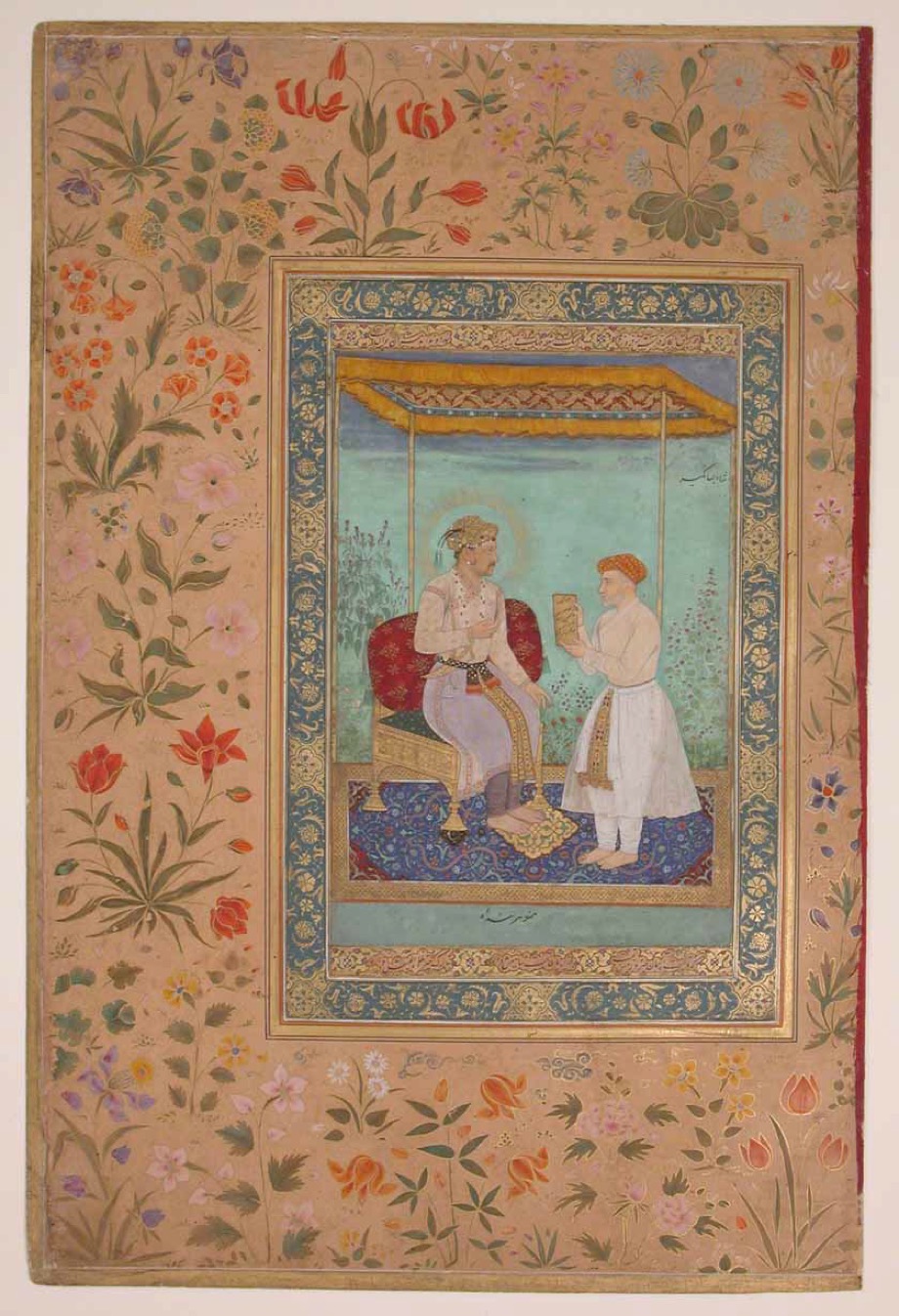
Portrait of Mirza Ghiyas Beg (I’timad al-Daula) with Jahangir — c. 1615
Before He Was the Empress’s Father
Mirza Ghiyas Beg is most visible today in a tomb that his daughter commissioned. The marble mausoleum at Agra makes family remembrance tangible; it also threatens to swallow the career it commemorates. Nur Jahan’s father was not simply a beneficiary who materialized when she married Jahangir. He had already made the difficult transition from Persian migrant to experienced Mughal official, learning how to make himself useful within an empire whose wealth depended on records, grants and the continuing movement of its court.
His birth date is uncertain. The better documented beginning is a family of Persian literary and administrative service, followed by migration to India in the 1570s. Accounts of desperate poverty on the journey became part of the story of Nur Jahan’s rise. Their vividness should not substitute for evidence of his later decisions. His title, Itimad-ud-Daulah, associated him with the support of the state, but an honorific is also an emperor’s act of promotion, not an independent measure of character.
The proposed ISTJ reading is low confidence. A long fiscal career makes the interpretation plausible, but occupation cannot supply the missing interior life. What survives is a pattern of trusted service, cultivated literacy and continued usefulness under two emperors, together with troubling testimony about how an accomplished official could exploit the position he held.
The tentative ISTJ interpretation rests on Introverted Sensing: Ghiyas Beg’s authority appears to have accumulated through practiced judgment and continuity of service, although the evidence remains largely official.
Knowledge Carried Into Service
Ghiyas Beg’s Persian inheritance joined poetry to administration. Mughal chroniclers remembered his understanding of literary style and his skill in handwriting alongside his ability to conduct business. These were connected competencies in a Persianate court: a document needed appropriate language as well as a practical result. His advancement depended on making inherited education work in a new political environment, where familiarity with forms could become a resource for an emperor.
Introverted Sensing is an editorial explanation for the steadiness of that accumulated expertise. It suggests reliance on knowledge tested through repeated service rather than a sequence of spectacular departures. Yet migration itself warns against treating him as immobile or timid. He crossed into a new system and rose within it. The useful contrast is between adaptability grounded in experience and an imagined personality afraid of all change; the record supports the former much more readily than the latter.
Nor does the retrospective praise disclose his daily method. We lack the detailed working notebooks that would show how he compared a new case with an earlier one. The inference therefore belongs to the shape of the career, not to an invented scene of a meticulous clerk arranging his papers. That distinction keeps the interpretation from pretending that a bureaucratic title is a psychological interview.
The Business of Imperial Trust
Under Akbar he acquired administrative responsibilities before Nur Jahan became an imperial wife. Under Jahangir, her marriage in 1611 accelerated the family’s ascent. Ranks and honors increased as personal trust, demonstrated competence and household connection reinforced one another. The story permits neither a pure meritocracy nor a simple account of nepotism. His experience made family promotion useful to the ruler, while family access enlarged the opportunities through which experience could become power.
Auxiliary Extraverted Thinking provides language for the practical side of this service. Ghiyas Beg’s work belonged to the conversion of revenue and paperwork into the functioning of a court. Jahangir’s memoir repeatedly registers such work through appointments and rewards. These entries reveal how administration became visible to the sovereign, though they cannot measure every consequence for the cultivators, petitioners and subordinate officials who stood farther from him.
The moral record complicates any celebration of orderly competence. Mu’tamad Khan’s account praises Ghiyas Beg’s generosity and literary accomplishment while also alleging bold acceptance of bribes. The accusation is testimony to evaluate, not a license to imagine every transaction corrupt. It nevertheless prevents equating effectiveness with integrity. A man could help the machinery of empire run and use privileged access for personal enrichment; personality language should not wash that tension away.
Testing the ISTJ Reading
Why not ESTJ?
The public responsibilities and active management could support an ESTJ reading. ISTJ receives a slight preference because his prominence appears built on continuity of acquired expertise rather than an independently documented drive to reorganize the court. The distinction is weakly evidenced: royal chronicles preserve the work expected of him much better than the personal preference behind it.
Tertiary Introverted Feeling and inferior Extraverted Intuition remain particularly uncertain. Family attachment and remembered generosity do not reveal an inner hierarchy of values, while migration shows that unfamiliar possibilities were hardly absent from his life. The complete stack is a tentative framework; the historically secure claim is a sustained administrative career.
Connected Figures
Further Reading
- The Jahangirnama: Memoirs of Jahangir, Emperor of India — Jahangir; translated by Wheeler M. ThackstonThe emperor’s account of promotions, family bereavements and Ghiyas Beg’s death.
- Nur Jahan: Empress of Mughal India — Ellison Banks FindlyExplains the family connections that enlarged his influence without replacing his earlier career.
- The Central Structure of the Mughal Empire — Ibn HasanA study of offices and administrative practice, useful for distinguishing a minister’s role from personal temperament.
- Architecture of Mughal India — Catherine B. AsherProvides the architectural context for the monument commissioned after his death.
