 Historical Figure MBTI
#353 · 4-1-26 · The French Revolution
Count Axel von Fersen
Swedish Count · Marie Antoinette's Devoted Friend · Architect of the Flight to Varennes
1755 — 1810
6 min read
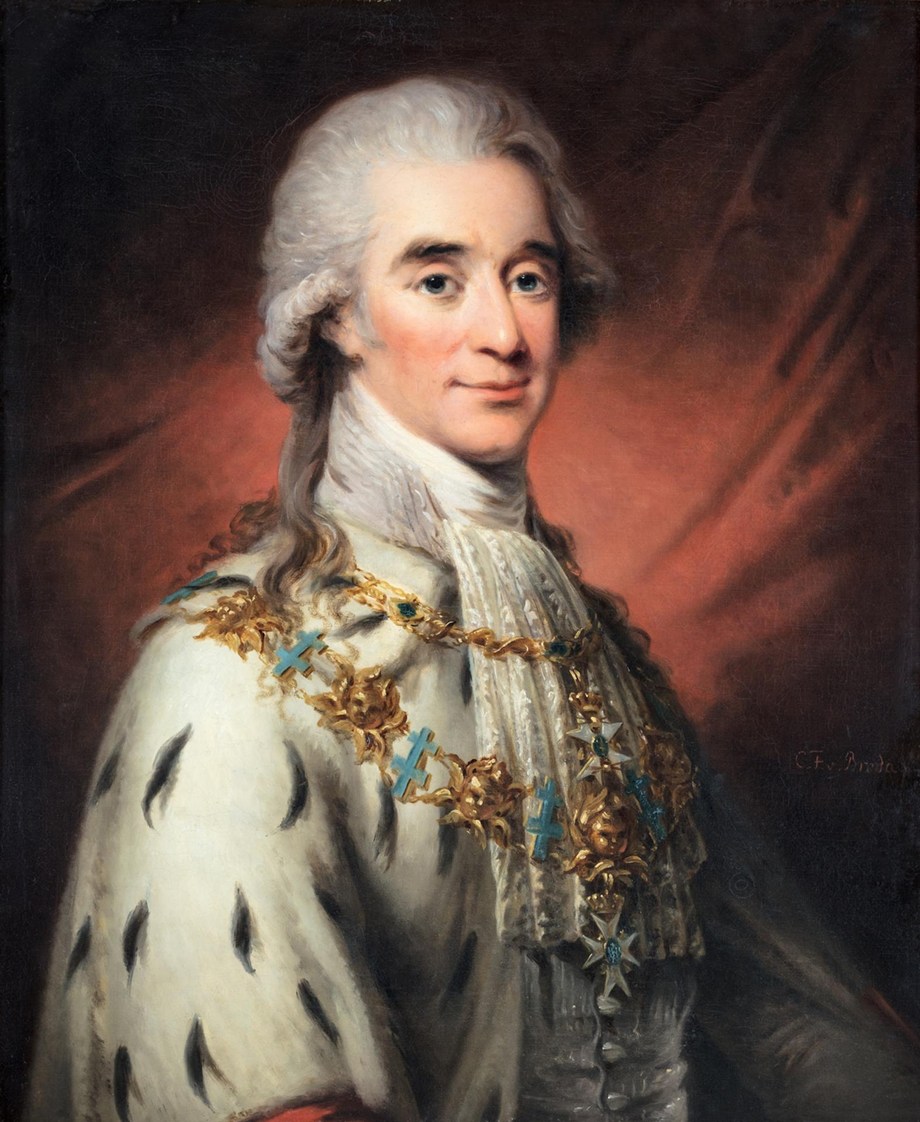
Portrait of Count Axel von Fersen
The Coachman of a Doomed Devotion
On the night of 20 June 1791, dressed as a coachman and answering to a false name, Count Axel von Fersen the Younger drove the King and Queen of France out of Paris. He had planned the escape down to its last relay of horses. He drove as far as Bondy, then was ordered to part from them and ride for the border alone. The flight ended at Varennes, where the King was recognized and turned back to the scaffold.
Fersen (1755–1810) met Marie Antoinette at a masked ball in 1774 and organized the rest of his life around her—a relationship so guarded it survives only in coded letters and lines he later inked out. When the Revolution closed in, he did not save himself. Louis XVI went to the guillotine in January 1793; the queen followed in October. Fersen grew cold and in 1810 was beaten to death by a Stockholm mob. The psychology beneath this self-destroying life was the ISFJ's: dominant Si making loyalty a vocation; Fe in self-sacrificing care; Ti as armor; and inferior Ne blind to the world killing everything he loved.
Fersen was the ISFJ at the edge of martyrdom—a dominant-Si constancy that fixed itself on one queen and one cause and held fast through every warning, and an auxiliary Fe that spent his fortune, his career, and at last his life in the quiet, dutiful, hopeless work of trying to save her.
The Constancy of a Soldier
Si — dominant
Dominant Si is the function of faithfulness: it binds the self to what it has known and loved, treats commitments as vows. Fersen met Marie Antoinette as a very young man and organized the rest of his existence around that attachment for thirty-six years—through her marriage, her disgrace, her imprisonment, her death—and then around her memory for the seventeen years he outlived her. It was fidelity raised to a calling.
Varennes was a feat of dominant-Si logistics: the coach commissioned, horses arranged, the route rehearsed until he could drive it in the dark. He thought in concrete particulars and trusted no scheme he could not reduce to practical steps. The escape failed because others departed from his plan. His love lived in coded letters and remembered rooms; when the world he served was destroyed, he kept faith with the dead long after it was useless—a heart so anchored it cannot be pried loose even when the anchor is gone.
Care to the Point of Self-Erasure
Fe — auxiliary
Auxiliary Fe gave Fersen's constancy its object and its tenderness. His devotion was directed at a particular suffering family and expressed in the unglamorous labor of keeping them safe: carrying letters, arranging money, lobbying ministers, smuggling himself into a guarded palace at deadly risk. What is most ISFJ about him is the privacy of all this feeling. His Fe ran deep and quiet—the warmth of a man who would do anything for the few he loved and disclose it to no one. He wanted to be useful, not celebrated.
The cost was Fersen himself. Auxiliary Fe in an ISFJ can pour out so completely that the giver is consumed. He sacrificed his career, his fortune, and his safety to a devotion that returned nothing but grief. When the queen died, what remained was a hardened, joyless man who had given everything to one family, and the family was gone.
The Armor of Reserve
Ti — tertiary
Tertiary Ti produced a controlled reserve—keeping one's own counsel, mastering technical detail, presenting a smooth, opaque surface. Contemporaries remarked on Fersen's beauty and coldness in the same breath; behind that reserve was a capable mind that could draft a cipher and hold a dozen dangerous threads without strain. The Varennes plan demanded exactly this: think in private, keep his mouth shut in a court that leaked like a sieve. Others trusted him with their secrets because he so plainly kept his own. After the queen's death the reserve curdled into hauteur—a coldness Stockholm crowds read as contempt, and that a mob felt free to punish.
Blind to the Coming World
Ne — inferior
Inferior Ne is the ISFJ's blind spot: a weak grasp of futures that do not resemble the past. When the world stops behaving as it always has, the Si-dominant mind is caught flat. Fersen never truly understood the Revolution. He grasped it as a criminal disorder to be reversed, a temporary madness from which the natural order could be restored by the right rescue. He could not feel that something genuinely new had been born—an order with no mercy for those who had embodied the old one.
A man with stronger Ne might have seen that the monarchy was not in crisis but in an ending. Fersen kept planning rescues into a foreclosed future. In June 1810 he rode into a public funeral he had been warned might turn against him, trusting order to hold as it always had. The mob beat him to death in the open street. The faithful Si servant of a vanished world could not imagine the new one—and it destroyed him the same way it had destroyed the queen he loved.
Why ISFJ Over ESFJ
Why not ESFJ?
The ESFJ shares Si and Fe but leads with Fe—predicting a far more outward, sociable, atmosphere-managing person than Fersen ever was. The ESFJ reads a room and works it, seeks harmony actively and needs it returned. Fersen was the opposite: famously reserved, formal, even cold, binding his deepest devotion to secrecy. His feeling was real but buried, expressed in quiet protection and private letters rather than social radiance. That inwardness—Si-first, Fe held close—is the ISFJ's, not the ESFJ's. His care was a vow kept in the dark, not warmth broadcast to a circle.
He drove the coach himself and rode off alone into the dark. He returned in disguise and told almost no one. He kept faith with the dead for seventeen embittered years while the world passed him by. That is the behind-the-scenes ISFJ—the guardian who loves by protecting and protects in silence—and not the outward, harmonizing ESFJ.
Connected Figures
Further Reading
- Marie Antoinette: The Journey — Antonia FraserThe fullest English biography of the queen, with substantial coverage of Fersen's devotion and the Flight to Varennes.
- The Flight to Varennes — Timothy TackettA focused narrative of the June 1791 escape attempt — the event Fersen organized and that defined his life.
- Marie Antoinette: The Last Queen of France — Évelyne LeverFrench biography rich in court detail; treats the Fersen relationship with nuance and primary sources.
- The Oxford History of the French Revolution — William DoyleEssential context for the world Fersen tried — and failed — to save.
