 Historical Figure MBTI
#341 · 3-31-26 · The Habsburg Court
Marie Antoinette
Archduchess of Austria · Queen of France · The Doomed Dauphine
1755 — 1793
11 min read
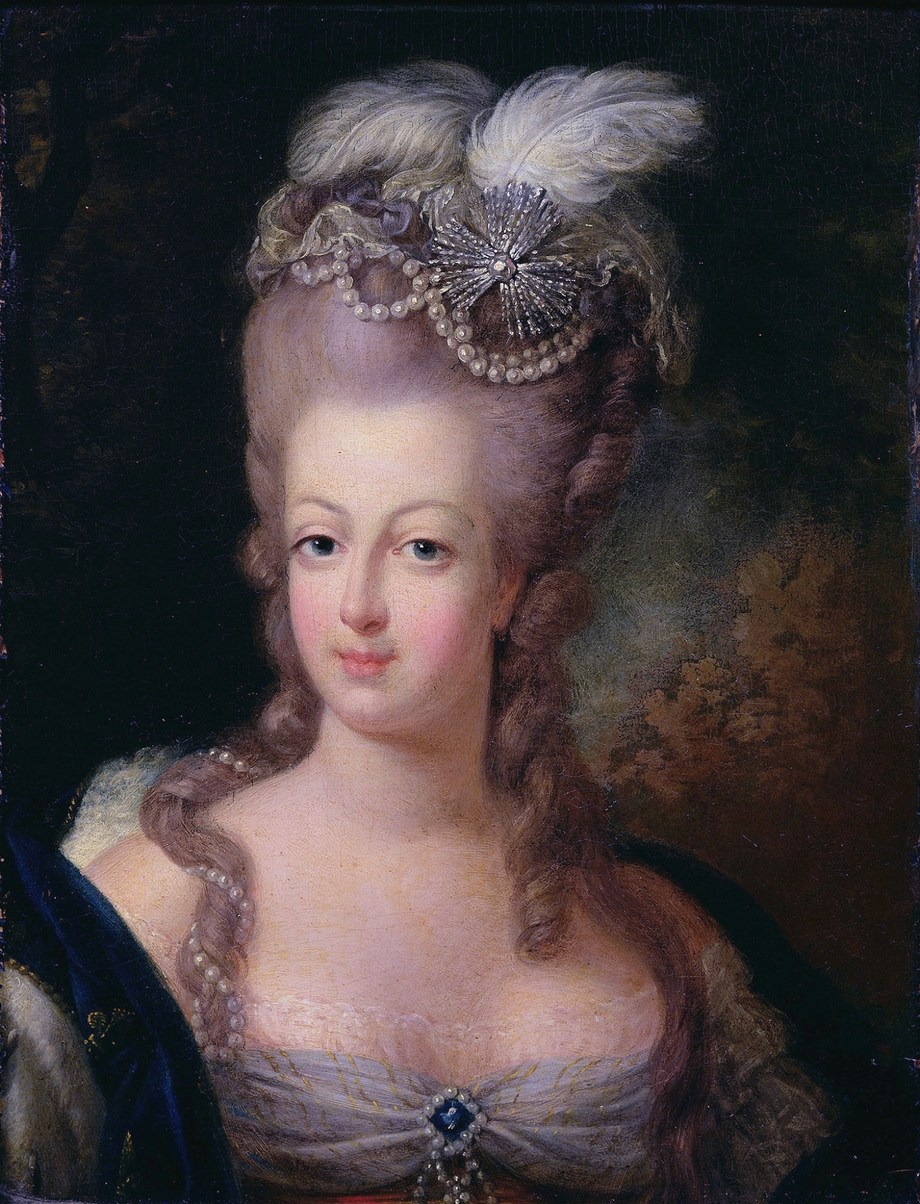
Portrait of Marie Antoinette
The Queen Who Lived for the Moment
She came over the Rhine in the spring of 1770 as a piece of diplomacy made flesh. At a pavilion built on an island in the river near Strasbourg, the fourteen-year-old Archduchess Maria Antonia was stripped of every Austrian thread she wore, dressed again in French silk, and handed across an invisible border to become the dauphine of France — the final, living seal on the Franco-Austrian alliance her mother had spent a war and a lifetime constructing. She arrived at Versailles charming, pretty, quick, and almost entirely unformed: a girl who had been educated for marriage rather than for thought, who danced beautifully and read badly, and who walked into the most rigidly ceremonious court in Europe with a temperament that wanted, above everything, to be amused.
Marie Antoinette (1755 — 1793) was the youngest surviving daughter of Maria Theresa, and in almost every register she was her mother's opposite. Where the empress governed an empire like a household and never let pleasure interrupt duty, the daughter governed nothing and let duty interrupt pleasure as little as she could manage. As queen of France from 1774 she retreated from the suffocating theater of Versailles into a private world of her own design: the Petit Trianon, the small château Louis XVI gave her as a refuge; the Hameau, her play-village of thatched cottages; the gambling tables, the masked balls, the private theatricals, the towering coiffures and ceaseless inventions of her dressmaker Rose Bertin. She spent fortunes. She made enemies without meaning to and kept friends with a loyalty that outran her judgment. Politically naive, generous, impulsive, and incurious about consequence, she became the lightning rod of a collapsing regime —Madame Déficit, scapegoat of the Diamond Necklace Affair, the woman to whom an unfeeling age would forever, and falsely, attribute the words “let them eat cake.”
The mind running beneath all of it was that of the ESFP: a dominant extraverted sensing alive to beauty, fashion, pleasure, and the immediate texture of the sensory present; an auxiliary introverted feeling that showed itself in the fierce private loyalties — to her friends, her children, eventually the husband she had not chosen — that were the truest thing about her; a tertiary extraverted thinking that could organize a fete but never a budget; and an inferior introverted intuition that left her, almost to the end, without any instinct for where the gathering storm was heading. She did not see the Revolution coming because she lived too completely in the present to see anything coming. And then, when it came, the frivolous queen astonished everyone who had ever written her off.
Marie Antoinette was the ESFP on a throne — a dominant extraverted sensing that lived for beauty, spectacle, and the pleasure of the present moment, warmed by an auxiliary Fi whose deep personal loyalties were the one thing in her that the gilded surface never touched.
The Hunger for the Beautiful Present
Se — dominant
Dominant extraverted sensing lives in the world of the immediate — color, texture, music, movement, the felt richness of the present moment — and it is restless to the point of suffering when that world goes flat. Almost everything Marie Antoinette is remembered for is Se reaching for sensation. The fashions were not vanity in the ordinary sense; they were an appetite. She made the dressmaker Rose Bertin and the hairdresser Leonard into something like cabinet ministers of pleasure, and the poufs that rose two and three feet above her head were Se treating the body itself as a stage for the sensory imagination. She loved the opera, the ballet, the masked balls of Paris, the gaming tables, the gardens she remade at the Petit Trianon. None of it was about ideas. All of it was about the texture of being alive right now.
The deeper Se signature was her need to escape ceremony into experience. Versailles ran on ritual — the public rising, the public dining, the etiquette that governed who might hand the queen her chemise — and to Marie Antoinette this elaborate apparatus was simply boredom dressed as duty. She fled it. The Petit Trianon was a kingdom where she controlled the guest list and abolished the rules; the Hameau, with its working dairy and costumed milkmaids, was an entire landscape built so she could feel rustic simplicity as a sensory pleasure rather than understand it as a fact of poor people's lives. The Se type does not theorize about a pastoral; it wants to stand in one. She built herself a place to stand.
This is also why the abstractions of statecraft slid off her so completely. A regime in fiscal collapse, a treasury bleeding toward bankruptcy — these were not things she could see, because they had no sensory presence. A new gown she could see. A fete she could plan to the last candle. The catastrophe building in the ledgers of the controller-general was, to a dominant Se temperament, simply not there. She was not stupid; she was present-bound, and the present, for most of her reign, was beautiful.
The Loyalties She Could Not Govern By
Fi — auxiliary
Beneath the surface that looked so heedless ran a current of intense, private feeling. Auxiliary introverted feeling is not the public, group-binding warmth of an Fe empress like her mother; it is personal, particular, and stubborn — a loyalty to specific people that answers to nothing but its own inner sense of what matters. Marie Antoinette's Fi expressed itself almost entirely in her chosen intimates. She loved her friends — the princesse de Lamballe, the duchesse de Polignac — with a lavish, possessive devotion that scandalized a court accustomed to colder transactions, rewarding them with offices and money in ways that were politically disastrous and emotionally sincere. She did not distribute her favor strategically, the way a ruler must. She gave it to the people she actually cared for, and let the consequences fall where they would.
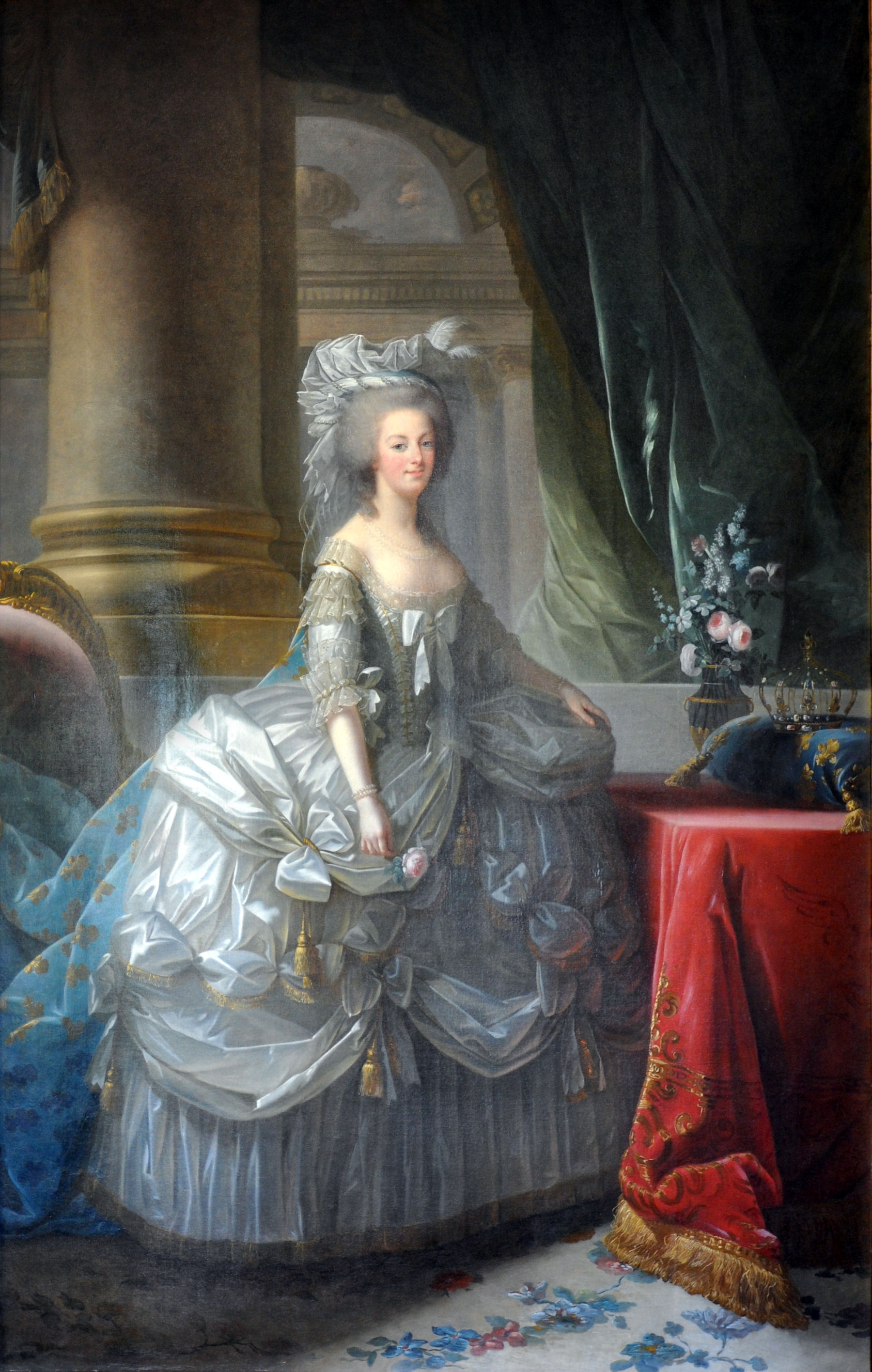
Motherhood was where this Fi ran deepest. After seven years of a humiliatingly unconsummated marriage, Marie Antoinette poured into her children a tenderness that surprised observers who had filed her under frivolity. She remade her public image, in the Vigée Le Brun portraits, around the figure of the devoted mother. This was not strategy. It was the one register of her life in which the ESFP's private valuing ran all the way down, and it would carry her, in the end, further than anyone expected.
The same Fi explains the slow, unlooked-for warming toward Louis XVI. Theirs had begun as an arranged match between two children who had nothing in common — he shy, bookish, and slow; she quick, dazzling, and starved for stimulation he could not provide. But the auxiliary Fi of an ESFP attaches by sustained presence, not by chosen design, and across two decades a real loyalty grew. By the catastrophe years it had become something like devotion. The frivolous queen who married a stranger for an alliance stood by that stranger when standing by him cost her everything — because her feeling, once given, did not know how to be withdrawn.
The Organizer of Fetes, Not of States
Te — tertiary
Tertiary extraverted thinking in an ESFP is real but narrow: it can organize, manage, and command within the domains the dominant function cares about, and it goes blank everywhere else. Marie Antoinette could run things — provided the thing was a pleasure. She managed a court-within-a-court at the Petit Trianon with genuine executive energy; she directed her own theatrical productions, oversaw the building and replanting of her gardens, marshaled the armies of dressmakers and decorators required to keep her private world running. When she wanted something arranged, it got arranged.
But Te in the tertiary position carries no native sense of cost, consequence, or system. Money simply disappeared. The accounts of the queen's household are a study in a temperament that could plan a ball to the franc and yet had no working concept of a budget — because a budget is an abstraction about the future, and her practical intelligence only ever engaged with the concrete thing in front of it. The same woman who could orchestrate a garden party for hundreds could not grasp why the nickname Madame Déficit was attaching itself to her, or why a nation watching its poor go hungry would not forgive the expense.
When the demand was for genuine statecraft — for strategy, negotiation, the cold weighing of factions and outcomes — her Te had nothing to offer. In the crisis years she did try to act politically: she lobbied for ministers, pressed her Austrian connections, involved herself in the doomed flight to Varennes. But these were the improvisations of a tertiary function operating far outside its range, all tactics and no strategy, and they consistently made things worse.
The Storm She Never Saw Coming
Ni — inferior
Inferior introverted intuition is the blind spot of the ESFP: the inability to read the trend beneath the surface, to feel where things are tending, to sense the shape of a future that has not yet arrived. The dominant Se lives so fully in the present that the long arc of consequence becomes nearly invisible. The whole tragedy of Marie Antoinette's public life is a tragedy of absent foresight: the fortunes spent on the Petit Trianon while France slid toward bankruptcy; the casual favoritism that manufactured enemies; the careless ease with which she handed pamphleteers the image they needed — all of it flowed from a temperament that could not see the gathering storm because it had no organ for seeing storms.
The Diamond Necklace Affair of 1785 is the perfect case. A swindle in which con artists used a forged version of the queen's signature to acquire a fabulously expensive necklace in her name — a fraud she had nothing to do with — became, in the public imagination, proof of everything they already believed about her greed and corruption. An intuitive temperament might have grasped the danger: that her reputation had already curdled to the point where the truth no longer mattered. She grasped none of it. She was bewildered by the hatred, genuinely unable to feel the pattern that everyone outside the palace walls could already see forming.
Then the inferior function did what inferior functions sometimes do under the pressure of total catastrophe — it stopped mattering, and something else came forward. Stripped of the gilded present that had been her whole element, she met the one thing her temperament had never prepared her for — sustained, inescapable adversity — with a composure that astonished her jailers and her enemies. At her trial in 1793, accused of monstrous things, she answered with dignity, and when the charge turned to her son, with a flash of feeling that moved even the women in the gallery. At the guillotine she was calm. The ESFP who had lived entirely for the moment met her last moment with a grace that her gilded youth had given no one any reason to expect.
Why ESFP Over ISFP
Why not ISFP?
The ISFP shares the same Se–Fi pairing and the same love of beauty and immediate experience. But the ISFP is inward: it feels most itself in privacy, withdraws from crowds, and creates or savors beauty quietly rather than performing it. Marie Antoinette was the opposite kind of creature. She needed the room — the ball, the audience, the spectacle, the company of friends — and the moments she most wanted were the public, social, performed ones, not the solitary contemplation an ISFP retreats toward. Even her famous escapes were not into solitude but into a more intimate sociability: the Petit Trianon was not a hermitage but a salon with a hand-picked guest list; the Hameau was a stage set for a costumed party. She was happiest surrounded. That hunger for the room, for the beautiful public present, is exactly what made her so dazzling, so ruinously expensive, and so easy for a starving nation to hate.
Connected Figures
Further Reading
- Marie Antoinette: The Journey — Antonia FraserThe definitive popular biography — meticulous, sympathetic, and magnificent in its handling of the revolutionary years.
- Queen of Fashion: What Marie Antoinette Wore to the Revolution — Caroline WeberA brilliant study of dress as political language, showing how the queen's fashion choices were acts of self-expression and self-defense alike.
- Marie Antoinette — Stefan ZweigThe classic literary biography — psychologically acute, elegantly written, and still the best introduction to the inner woman.
- The Trial of Marie Antoinette — Catherine DelorsFocuses on the October 1793 trial, reconstructing the charges and Marie Antoinette's remarkable composure under them.
- Versailles: A Biography of a Palace — Tony SpawforthEssential context for the world she inhabited — the court machinery, the etiquette, and the gilded cage she spent her reign fleeing.
